Cleaner Shrimpオトヒメエビ
Stenopus hispidusLC— Least Concern
The cleaner shrimp is a strikingly banded reef shrimp that runs a "cleaning station," picking parasites and dead tissue off client fish — even predatory species — which tend to leave it alone in exchange for the service.
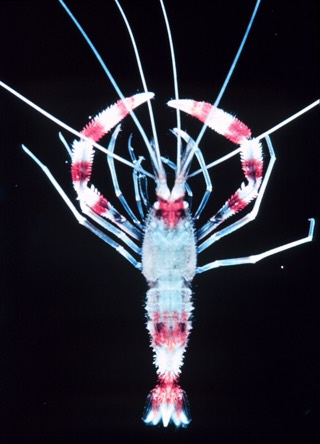 Cleaner Shrimp (reference photo)
.jpg)
Species Data
- Classification
- Decapoda / Stenopodidae Source
- Size
- Adult body length about 40–60 mm
- Diet
- Carnivore Known for its cleaning behavior, crawling over the bodies of fish to remove and eat food scraps and parasites
- Distribution
- Widely distributed across tropical coral reefs worldwide; in Japan it is found along the Pacific coast south of the Bōsō Peninsula, inhabiting shallow rocky reefs and coral reefs. Source
- Sources
- ja.wikipedia.org
Did You Know?
- Its Japanese name, Otohime-ebi ("Princess Otohime shrimp"), comes from a resemblance between its vividly colored body, long antennae, and outstretched legs and the mythical sea princess Otohime. Source
- Even predatory fish that would normally eat small shrimp tend to leave cleaner shrimp alone; their distinctive coloring is thought to act as a signal that they provide a cleaning service rather than being prey. Source
Where to See This Species
Operating facilities registered on this site: Japan 1
Kagoshima City AquariumKagoshimaFrom Kagoshima-Chuo Station, take the tram (Route 2) to the Suizokukan-guchi stop and walk 8 minutes.
Conservation Story
Conservation Status
Least Concern (LC)
Sources
Support Conservation
A visit is a small, positive way to support the daily lives of the animals you care about.
- Visit
- A visit itself helps support the facility.
- Animal Supporter Programs & Giving
- Find ways to support the facility through its official website.
- Furusato Nozei
- Municipally run facilities may share official guidance for this Japanese hometown-tax program.
FAQ
- What does the cleaner shrimp actually clean?
- It picks parasites, dead skin, and food debris off the bodies of reef fish that visit its cleaning station, benefiting both species. Source
- Why don't predatory fish eat cleaner shrimp?
- Its bright, distinctive coloring is thought to signal to fish that it offers a beneficial cleaning service, which appears to discourage predators from eating it. Source
- How big does a cleaner shrimp get?
- Adults typically reach about 40-60 mm in body length. Source
- How many operating facilities are registered here?
- Operating facilities registered on this site: Japan 1 Source
Books & gear
Source: ja.wikipedia.org en.wikipedia.org