Sturgeonチョウザメ
Huso dauricusCR— Critically Endangered
The kaluga (Huso dauricus) is a giant sturgeon native to the Amur River basin on the Russia-China border, with a semi-anadromous life history that occasionally brings individuals into coastal waters near Hokkaido, Japan. Among the largest freshwater fish in the world, it can exceed 5.6 m in length and 1,000 kg in weight, and adults become apex piscivorous predators of other fish. Severe overfishing has driven a population decline of more than 90% over the past 90 years, and it is classified as Critically Endangered by the IUCN.
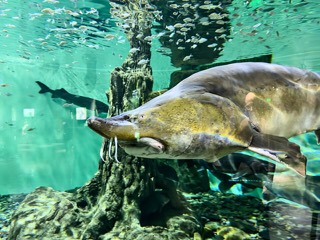 Sturgeon (reference photo)
-1.jpg)
Species Data
- Classification
- Acipenseriformes / Acipenseridae Source
- Size
- Records of a total length of 5.6 m and weight of over 1,000 kg make it one of the world's largest freshwater fish
- Lifespan
- Up to about 55 years
- Diet
- Piscivore Juveniles eat benthic organisms such as mollusks, crustaceans, and small fish, while adults become piscivorous apex predators, preying on large fish such as pike, carp, herring, and salmon
- Distribution
- Native to the Amur River basin on the Russia-China border, with some individuals ranging into coastal waters near Hokkaido, Japan; the species is semi-anadromous. Source
- Sources
- en.wikipedia.org ja.wikipedia.org
Did You Know?
- Kaluga in the Amur River have been recorded at up to 5.6 m long and over 1,000 kg, making it one of the largest freshwater fish in the world. Source
- As adults they become apex piscivorous predators of other fish, earning the nickname "freshwater killer whale." Source
- Due to overfishing and habitat degradation, the population has declined by more than 90% over the past 90 years, and the species is listed as Critically Endangered by the IUCN. Source
Where to See This Species
Operating facilities registered on this site: Japan 4
Saitama SuizokukanSaitamaAbout 15 minutes (about 7 km) by taxi from Hanyu Station or Kazo Station on the Tobu Isesaki Line.
Yamanashi Kenritsu Fujiyuusuinosato SuizokukanYamanashi5 minutes from the Yamanakako Interchange on the Higashi-Fuji-Goko Road, 20 minutes from the Kawaguchiko Interchange on the Chuo Expressway.
SENDAI UMINO-MORI AQUARIUMMiyagiOpened in 2015
Toba AquariumMieOpened in 1955
Former facilities
Keikyuuaburatsubomarin ParkKanagawaOpened in 1968
Closed: 2021-09-30 Official Site
Enoshima SuizokukanKanagawaOpened in 1954
Closed: 2004-01 Official Site
Conservation Story
Conservation Status
Critically Endangered (CR)
Sources
Support Conservation
A visit is a small, positive way to support the daily lives of the animals you care about.
- Visit
- A visit itself helps support the facility.
- Animal Supporter Programs & Giving
- Find ways to support the facility through its official website.
- Furusato Nozei
- Municipally run facilities may share official guidance for this Japanese hometown-tax program.
FAQ
- How big can a kaluga sturgeon get?
- It can reach up to about 5.6 m in length and over 1,000 kg in weight, making it one of the largest freshwater fish on Earth. Source
- What does the kaluga sturgeon eat?
- Juveniles feed on bottom-dwelling shellfish and crustaceans, while adults become apex predators that hunt other fish such as pike, carp, herring, and salmon. Source
- Why is the kaluga sturgeon critically endangered?
- Decades of overfishing for its meat and caviar have caused its population to fall by more than 90% over the past 90 years. Source
- How many operating facilities are registered here?
- Operating facilities registered on this site: Japan 4 Source
Books & gear
Source: ja.wikipedia.org en.wikipedia.org