Raccoonアライグマ
Procyon lotorLC— Least Concern
The raccoon is a highly adaptable, nocturnal omnivore native to North America, easily recognized by its black facial mask and ringed tail. Prized for its dexterous, highly sensitive front paws, it thrives in forests, wetlands, and urban areas alike. Though listed as Least Concern by the IUCN, escaped and released pets have established large invasive populations in Japan and parts of Europe.
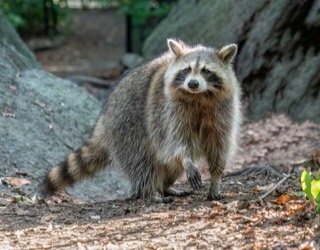 Raccoon (reference photo)
.jpg)
Species Data
- Classification
- Carnivora / Procyonidae Source
- Size
- Body length 41.5–60 cm, tail 20–40.5 cm
- Weight
- 2–22 kg (may exceed 20 kg in captivity)
- Lifespan
- Wild: about 13–16 years / captive: record of 22.5 years
- Diet
- Omnivore Omnivorous, eating an extremely wide range of foods including amphibians, reptiles, fish, birds (and eggs), mammals, insects, crustaceans, and plant matter such as fruit; especially fond of crayfish
- Activity
- Nocturnal
- Distribution
- Native to North America, ranging from Canada to Panama. Escaped and released pets established feral populations across Japan from the 1970s onward, and the species was designated an Invasive Alien Species there in 2005. Source
- Sources
- ja.wikipedia.org en.wikipedia.org
Did You Know?
- Almost two-thirds of the area responsible for sensory perception in the raccoon's cerebral cortex is specialized for interpreting tactile impulses, a higher proportion than in any other studied animal. Source
- The species name lotor is Latin for "washer," inspired by the dousing behavior seen in captivity, though this differs from actual foraging behavior in the wild. Source
- In Japan, agricultural damage attributed to feral raccoons reached about 280 million yen in fiscal 2009, roughly doubling within just a few years. Source
Where to See This Species
Operating facilities registered on this site: Japan 15
Ishikawa DoubutsuenIshikawaAbout 60 minutes from the Kanazawa-Morimoto Interchange on the Hokuriku Expressway, about 40 minutes from the Kanazawa-Nishi Interchange, and about 20 minutes from the Komatsu Interchange.
Utsunomiya DoubutsuenTochigiAbout 5 minutes from the Utsunomiya IC on the Tohoku Expressway; free parking for 1,000 cars.
OkuhidakumabokujouGifu2535 Hitoegane, Okuhida Onsengo, Takayama, Gifu.
Kiryuugaoka DoubutsuenGunmaIf driving, set your car navigation to "Kiryugaoka Amusement Park" (Kiryugaoka Yuenchi) rather than "Kiryugaoka Zoo" to reach the parking lot (searching by the zoo name may give an incorrect route).
Noichi Zoological Park of Kochi PrefectureKochiA 20-minute walk or 13-minute rental-bicycle ride from Noichi Station on the Tosa Kuroshio Railway Gomen-Nahari Line.
Sapporoshimaruyama DoubutsuenHokkaidoOpened in 1951
Hirakawa ZooKagoshimaAbout a 20-minute walk from Goino Station on the JR Ibusuki-Makurazaki Line, or take a bus bound for Taniyama / Dobutsuen from Fukuhira Nokyo-mae to the last stop.
Akitashioomoriyama DoubutsuenAkitaFrom bus stop 7 at the west exit of the JR Akita Station bus terminal, take the Akita Chuo Kotsu "Araya Line" bus for about 30 minutes.
Suzaka ZooNaganoFrom the Suzaka-Nagano-Higashi IC on the Joshin-etsu Expressway, take Route 403, turn right at the Kotaka-machi intersection, turn left at the Kami-Hatcho intersection, cross Garyu Bridge, and turn left for the south entrance.
Chiba Zoological ParkChibaOpened in 1985
Nagasaki Bio ParkNagasakiOpened in 1980
TOBU ZOOSaitamaFrom Tobu-Dobutsu-Koen Station (west exit), about 10 minutes on foot (600 m) or about 5 minutes by bus.
Iida Shiritsu DoubutsuenNaganoAddress: 33 Ogimachi, Iida, Nagano.
Higashiyama Zoo and Botanical GardensAichiOpened in 1937
Japan Monkey CentreAichiAbout a 20-minute walk from the East Exit of Meitetsu Inuyama Station (go straight along the tree-lined road for about 300 m, turn left at the Umetsubo Kosenkyo Kita intersection, and follow the road for a little over 1 km).
Source links to official sites, official YouTube channels, and news aggregators such as Zoo Ring. Visit the publisher for the full item.
Conservation Story
Conservation Status
Least Concern (LC)
Sources
Support Conservation
A visit is a small, positive way to support the daily lives of the animals you care about.
- Visit
- A visit itself helps support the facility.
- Animal Supporter Programs & Giving
- Find ways to support the facility through its official website.
- Furusato Nozei
- Municipally run facilities may share official guidance for this Japanese hometown-tax program.
- Support Ishikawa Doubutsuen
- Support Utsunomiya Doubutsuen
- Support Okuhidakumabokujou
- Support Kiryuugaoka Doubutsuen
- Support Noichi Zoological Park of Kochi Prefecture
- Support Sapporoshimaruyama Doubutsuen
- Support Hirakawa Zoo
- Support Akitashioomoriyama Doubutsuen
- Support Suzaka Zoo
- Support Chiba Zoological Park
- Support Nagasaki Bio Park
- Support TOBU ZOO
- Support Iida Shiritsu Doubutsuen
- Support Higashiyama Zoo and Botanical Gardens
- Support Japan Monkey Centre
FAQ
- What do raccoons eat?
- Raccoons are omnivores with a diet of roughly 40% invertebrates, 33% plant material, and 27% vertebrates, shifting from insects and worms in spring and summer to calorie-rich nuts and fruits in fall. Source
- Are raccoons native to Japan?
- No. Raccoons are native to North America. Pets imported to Japan from the 1970s escaped or were released and established wild populations nationwide, leading to the species being designated an Invasive Alien Species in 2005. Source
- Why do raccoons seem to "wash" their food?
- Their scientific name lotor means "washer" because captive raccoons often douse food in water, a behavior linked to their extraordinarily sensitive front paws rather than actual cleaning. Source
- How many operating facilities are registered here?
- Operating facilities registered on this site: Japan 15 Source
Books & gear
Source: ja.wikipedia.org en.wikipedia.org