Siamangフクロテナガザル
Symphalangus syndactylusEN— Endangered
The siamang is the largest of the gibbons, a black-furred ape native to the forests of Sumatra and the Malay Peninsula. It is famous for its inflatable throat pouch, which it uses along with its mate to perform loud, coordinated duet calls that reinforce their monogamous pair bond. Classified as Endangered by the IUCN, it faces mounting pressure from habitat loss to palm oil plantations and the illegal pet trade.
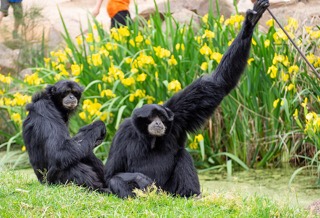 Siamang (reference photo)
_at_Taronga_Western_Plains_Zoo,_Dubbo,_NSW.jpg)
Species Data
- Classification
- Primates / Hylobatidae Source
- Size
- Head-body length 71–90 cm (height about 1 m)
- Weight
- 10–14 kg (about twice the weight of other gibbon species)
- Lifespan
- Can live over 40 years in captivity
- Diet
- Omnivore Omnivorous, eating various plant parts; the Sumatran subspecies is strongly frugivorous, with fruit making up as much as 60% of the diet. Figs are the main food source, and at least 160 plant species are eaten
- Activity
- Diurnal; spends more than half the day resting and the remainder feeding and traveling
- Distribution
- Found on Sumatra Island and the Malay Peninsula, inhabiting forests from lowland areas up to elevations of 3,800 meters. Source
- Sources
- ja.wikipedia.org en.wikipedia.org
Did You Know?
- The siamang is the largest of all gibbon species, weighing roughly twice as much as other gibbons. Source
- Both sexes have a large throat pouch that can inflate to nearly the size of their own head, allowing them to produce loud, far-carrying calls. Source
- Siamangs are typically monogamous, and mated pairs strengthen their bond through loud, well-patterned duet calls. Uniquely among gibbons, two toes on each foot are partially joined by a membrane. Source
Where to See This Species
Operating facilities registered on this site: Japan 5
Hirakawa ZooKagoshimaAbout a 20-minute walk from Goino Station on the JR Ibusuki-Makurazaki Line, or take a bus bound for Taniyama / Dobutsuen from Fukuhira Nokyo-mae to the last stop.
Chiba Zoological ParkChibaOpened in 1985
Tennoji ZooOsakaOpened in 1915
Higashiyama Zoo and Botanical GardensAichiOpened in 1937
Source links to official sites, official YouTube channels, and news aggregators such as Zoo Ring. Visit the publisher for the full item.
Conservation Story
Conservation Status
Endangered (EN)
Sources
Support Conservation
A visit is a small, positive way to support the daily lives of the animals you care about.
- Visit
- A visit itself helps support the facility.
- Animal Supporter Programs & Giving
- Find ways to support the facility through its official website.
- Furusato Nozei
- Municipally run facilities may share official guidance for this Japanese hometown-tax program.
FAQ
- How is the siamang different from other gibbons?
- It is the largest gibbon species, weighing roughly twice as much as other gibbons, and is the only one with a large inflatable throat pouch used for loud calls and two partially webbed toes on each foot. Source
- Why do siamang pairs call together?
- Mated pairs, which are typically monogamous, perform loud, coordinated "duet" calls using their inflatable throat pouches to reinforce their pair bond and defend their territory. Source
- Is the siamang endangered?
- Yes, the IUCN classifies it as Endangered, with habitat loss from palm oil plantations and the illegal pet trade—which targets infants—as the primary threats. Source
- How many operating facilities are registered here?
- Operating facilities registered on this site: Japan 5 Source
Books & gear
Source: ja.wikipedia.org en.wikipedia.org