Steller Sea Lionトド
Eumetopias jubatusNT— Near Threatened
The Steller sea lion is the largest of the eared seals, ranging across the North Pacific from California to Japan. It hauls out on rocky coastlines by day and forages for fish and cephalopods at night, and males form defended breeding harems each summer. The IUCN lists the species as Near Threatened, reflecting a severe historical decline in its western stock alongside recovery in the east.
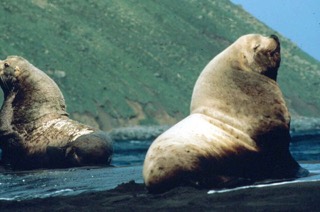 Steller Sea Lion (reference photo)

Species Data
- Classification
- Carnivora / Otariidae Source
- Size
- Males up to about 330 cm / females about 290 cm
- Weight
- About 350–1,120 kg
- Diet
- Carnivore Eats fish such as rockfish, capelin, walleye pollock, and flounder, as well as cephalopods such as squid and octopus
- Activity
- Rests on rocky shores during the day and hunts at night within 20–30 km of the coast
- Distribution
- The Steller sea lion ranges across the North Pacific from north-central California through Oregon, Washington, British Columbia, and Alaska, across the Aleutian Islands to Kamchatka, the Sea of Okhotsk, and the northern coast of Honshu. Source
- Sources
- ja.wikipedia.org en.wikipedia.org
Did You Know?
- It is the largest of the eared seals, and among all pinnipeds is exceeded in size only by a few species such as the walrus and elephant seals. Source
- During the breeding season, males establish and defend territorial harems, often fasting for extended periods while guarding their females. Source
- In Japanese waters, the species causes significant fishery damage, with annual losses exceeding one billion yen reported since 1992, even as the local population has declined. Source
Where to See This Species
Operating facilities registered on this site: Japan 7
Otaru AquariumHokkaidoOpened in 1958
Kamogawa Sea WorldChibaAbout 2 hours from Tokyo Station on the Wakashio limited express to JR Awa-Kamogawa Station, then about 10 minutes by free shuttle bus (departing from the West Exit bus stop).
Aquamarine FukushimaFukushimaOpened in 2000
Miyajima Public AquariumHiroshimaOpened in 2011
Katsurahama AquariumKochiOpened in 1931
Kinosaki Marine WorldHyogoAbout 10 minutes by Zentan Bus from JR Kinosaki-Onsen Station; get off at the Hiyoriyama (Marine World) bus stop.
Toba AquariumMieOpened in 1955
Source links to official sites, official YouTube channels, and news aggregators such as Zoo Ring. Visit the publisher for the full item.
Conservation Story
Conservation Status
Near Threatened (NT)
Sources
Support Conservation
A visit is a small, positive way to support the daily lives of the animals you care about.
- Visit
- A visit itself helps support the facility.
- Animal Supporter Programs & Giving
- Find ways to support the facility through its official website.
- Furusato Nozei
- Municipally run facilities may share official guidance for this Japanese hometown-tax program.
FAQ
- How big are Steller sea lions?
- They are the largest eared seals, with males averaging around 3 meters long and weighing up to 1,120 kg, far larger than females. Source
- Are Steller sea lions endangered?
- The IUCN lists them as Near Threatened. The western stock in the North Pacific declined severely from the 1970s onward, while the eastern stock has recovered enough to be delisted from US endangered species protection. Source
- What do Steller sea lions eat?
- They are opportunistic feeders on fish such as pollock, herring, capelin, and flatfish, as well as squid and octopus. Source
- How many operating facilities are registered here?
- Operating facilities registered on this site: Japan 7 Source
Books & gear
Source: ja.wikipedia.org en.wikipedia.org www.iucnredlist.org