Gray Wolfタイリクオオカミ
Canis lupusLC— Least Concern
The gray wolf (Canis lupus) is the largest living member of the dog family, historically ranging across Eurasia and North America. A highly social carnivore, it hunts large ungulates in family-based packs and can travel tens of kilometers a night, especially in winter. Though widespread globally, it is extinct in Japan and classified as Least Concern overall despite regional declines.
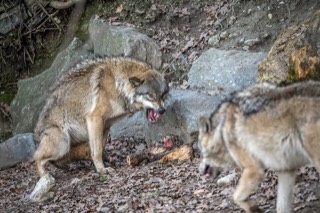 Gray Wolf (reference photo)

Species Data
- Classification
- Carnivora / Canidae Source
- Size
- 100–160 cm (height 60–90 cm)
- Weight
- 25–50 kg (males are 10–20% larger than females)
- Lifespan
- Wild: 5–10 years (rarely over 10) / captive: average about 15 years, zoo record 20 years
- Diet
- Carnivore Carnivorous, hunting ungulates such as deer, wild boar, wild sheep and goats, and bison; also preys on small animals and livestock
- Activity
- Mainly nocturnal; especially in winter, hunts through the night and travels long distances
- Distribution
- Historically distributed across Eurasia and North America, though persecution by humans has reduced its range to roughly a third of its historic extent. It is extinct in Japan and the British Isles. Source
- Sources
- ja.wikipedia.org en.wikipedia.org
Did You Know?
- Packs are typically family units of a mated pair and their offspring; the once-popular 'alpha/beta' hierarchy model is now considered outdated. Source
- Wolves are largely monogamous, with mated pairs usually remaining together for life. Source
- Tama Zoological Park is the only Japanese facility keeping the European wolf subspecies, with breeding underway since 2001 and its first successful birth in April 2026. Source
Where to See This Species
Operating facilities registered on this site: Japan 2
Hirakawa ZooKagoshimaAbout a 20-minute walk from Goino Station on the JR Ibusuki-Makurazaki Line, or take a bus bound for Taniyama / Dobutsuen from Fukuhira Nokyo-mae to the last stop.
Source links to official sites, official YouTube channels, and news aggregators such as Zoo Ring. Visit the publisher for the full item.
Conservation Story
Conservation Status
Least Concern (LC)
Sources
Support Conservation
A visit is a small, positive way to support the daily lives of the animals you care about.
- Visit
- A visit itself helps support the facility.
- Animal Supporter Programs & Giving
- Find ways to support the facility through its official website.
- Furusato Nozei
- Municipally run facilities may share official guidance for this Japanese hometown-tax program.
FAQ
- Are gray wolves found in Japan today?
- No. The Japanese wolf subspecies went extinct in the early 20th century, and the gray wolf species no longer occurs in the wild in Japan. Source
- How do wolf packs work?
- Packs are usually family groups formed around a single breeding pair and their offspring, not a rigid dominance hierarchy as once believed. Source
- How many operating facilities are registered here?
- Operating facilities registered on this site: Japan 2 Source
Books & gear
Source: ja.wikipedia.org en.wikipedia.org