North American Beaverアメリカビーバー
Castor canadensisLC— Least Concern
The North American beaver is the continent's largest rodent, famous for building dams and lodges from branches, mud, and stones that reshape entire waterways. As a keystone species, its engineering creates wetlands that support a wide range of other wildlife. Once nearly wiped out by the fur trade, beaver populations have recovered substantially under conservation management and the species is classified as Least Concern.
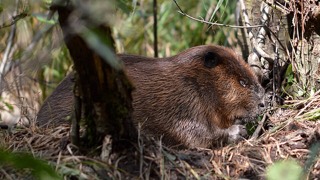 North American Beaver (reference photo)
_-_Algonquin_Provincial_Park,_Ontario_01.jpg)
Species Data
- Classification
- Rodentia / Castoridae Source
- Size
- Body length 74–90 cm (plus a further 20–35 cm including the tail)
- Weight
- Average about 20 kg (range 11–32 kg)
- Lifespan
- Wild: 10–15 years / captive: record of 25 years
- Diet
- Herbivore Herbivorous, preferring poplar and feeding mainly on the bark of birch, maple, willow, alder, and other trees; also eats aquatic plants in spring
- Activity
- Mainly nocturnal
- Distribution
- Native to North America from southern Alaska through Canada and the continental United States to northern Mexico, with introduced populations in Patagonia, Finland, and Karelia. Source
- Sources
- ja.wikipedia.org en.wikipedia.org
Did You Know?
- The largest known beaver dam, discovered via satellite imagery in 2007 in Alberta, Canada, measures about 850 meters (2,790 ft) long. Source
- As a keystone species, beavers create wetlands and ponds that boost biodiversity for aquatic plants, insects, fish, and birds. Source
- Once numbering 100–200 million before the fur trade decimated the species, populations have rebounded to an estimated 10–15 million through conservation efforts. Source
Where to See This Species
Operating facilities registered on this site: Japan 12
Utsunomiya DoubutsuenTochigiAbout 5 minutes from the Utsunomiya IC on the Tohoku Expressway; free parking for 1,000 cars.
Noichi Zoological Park of Kochi PrefectureKochiA 20-minute walk or 13-minute rental-bicycle ride from Noichi Station on the Tosa Kuroshio Railway Gomen-Nahari Line.
Sapporoshimaruyama DoubutsuenHokkaidoOpened in 1951
Saikaikokuritsu Kouen Kujuukushima DoushokubutsuenNagasakiOpened in 1961
Chiba Zoological ParkChibaOpened in 1985
Toba AquariumMieOpened in 1955
TOBU ZOOSaitamaFrom Tobu-Dobutsu-Koen Station (west exit), about 10 minutes on foot (600 m) or about 5 minutes by bus.
Hitachishikamine DoubutsuenIbarakiAbout 5 minutes from the Hitachi-Chuo Interchange on the Joban Expressway via National Route 6.
Iida Shiritsu DoubutsuenNaganoAddress: 33 Ogimachi, Iida, Nagano.
Hamamatsu Zoological GardensShizuokaOpened in 1950
Higashiyama Zoo and Botanical GardensAichiOpened in 1937
Wakayamajou Kouen DoubutsuenWakayamaOpened in 1919
Former facilities
North Safari SapporoHokkaidoOpened in 2005
Closed: 2025-09-30 Official Site
- のいちdeエンジョイSW2026 スマホでクイズラリーの解答
- 実は結構力持ち!! #東武動物公園 #アメリカビーバー #ビーバー #ビーバーファミリー #力持ち #動物 #zoo #動物園
- AQUARIUM × ART átoa #vlog #アート #ビーバー #atoa #アトア #水族館 #神戸 #kobe #수족관 ##고베 #aquarium #アメリカビーバー
- 【アメリカビーバーの三つ仔】飼育係が作った愛情たっぷりの一年分の記録をまるまる見せちゃいます!【東武動物公園】
- 【東山動植物園公式】アメリカビーバー~2026東山動植物園ナイトZOO(ナイトズー)~《 アメリカビーバー ビーバー 》 #short
- うとうとビーバー💤 #東武動物公園 #癒し #zoo #動物 #かわいい #animals #動物園 #アメリカビーバー #ビーバー #あんず
Source links to official sites, official YouTube channels, and news aggregators such as Zoo Ring. Visit the publisher for the full item.
Conservation Story
Conservation Status
Least Concern (LC)
Sources
Support Conservation
A visit is a small, positive way to support the daily lives of the animals you care about.
- Visit
- A visit itself helps support the facility.
- Animal Supporter Programs & Giving
- Find ways to support the facility through its official website.
- Furusato Nozei
- Municipally run facilities may share official guidance for this Japanese hometown-tax program.
- Support Utsunomiya Doubutsuen
- Support Noichi Zoological Park of Kochi Prefecture
- Support Sapporoshimaruyama Doubutsuen
- Support Saikaikokuritsu Kouen Kujuukushima Doushokubutsuen
- Support Chiba Zoological Park
- Support Toba Aquarium
- Support TOBU ZOO
- Support Hitachishikamine Doubutsuen
- Support Iida Shiritsu Doubutsuen
- Support Hamamatsu Zoological Gardens
- Support Higashiyama Zoo and Botanical Gardens
- Support Wakayamajou Kouen Doubutsuen
FAQ
- Why do beavers build dams?
- Beavers build dams to raise water levels around their lodges, creating a safe, predator-resistant pond and easier access to food and building material. Source
- How big can a beaver dam get?
- The largest known beaver dam, found in Alberta, Canada via satellite imagery in 2007, stretches roughly 850 meters — more than half a mile long. Source
- Do beavers eat fish?
- No. Beavers are strict herbivores that feed on bark, twigs, and aquatic plants; despite their aquatic lifestyle, fish are not part of their diet. Source
- How many operating facilities are registered here?
- Operating facilities registered on this site: Japan 12 Source
Books & gear
Source: ja.wikipedia.org en.wikipedia.org