African Bush Elephantアフリカゾウ
Loxodonta africanaEN— Endangered
The African bush elephant is the largest living land animal, roaming the savannas, woodlands, and grasslands of sub-Saharan Africa in tightly bonded, matriarch-led family groups. It is a mixed feeder that eats roughly 150 kg of grasses and woody vegetation a day and can live 60 to 75 years in the wild. Decades of poaching for ivory have driven steep population declines, and the IUCN now lists the species as Endangered.
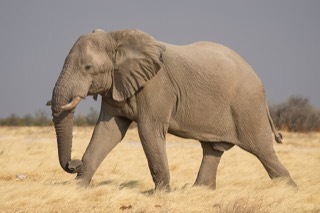 African Bush Elephant (reference photo)

Species Data
- Classification
- Proboscidea / Elephantidae Source
- Size
- Body length about 6–7.5 m, shoulder height about 3–3.9 m (record about 3.96 m)
- Weight
- Average 5.2–6.9 tons, maximum over 10 tons
- Lifespan
- Wild: about 60–75 years
- Diet
- Herbivore Herbivorous, feeding mainly on grasses and also on woody plants, consuming about 150 kg of vegetation a day; also needs 180–230 liters of water daily
- Activity
- Lives in matriarchal herds and ranges widely to feed both day and night
- Distribution
- African bush elephants range across sub-Saharan Africa, including Uganda, Kenya, Tanzania, Botswana, Zimbabwe, Namibia, Zambia, Angola, Malawi, Mali, Rwanda, Mozambique, and South Africa. Source
- Sources
- ja.wikipedia.org en.wikipedia.org
Did You Know?
- African bush elephants possess around 1,948 functional olfactory receptor genes, far more than the roughly 396 found in humans, giving them an exceptionally keen sense of smell. Source
- Females have a gestation period of about 22 months — the longest of any mammal — with birth intervals typically spanning 3.9 to 4.7 years. Source
- Between 2003 and 2015, rangers documented the illegal killing of at least 14,606 elephants across 29 countries. Intense poaching pressure has even driven an increase in naturally tuskless females. Source
Where to See This Species
Operating facilities registered on this site: Japan 13
Adventure WorldWakayamaOpened in 1978
Gokatsuraike Animal ParkMieAbout 10 minutes from the Seiwa-Taki Interchange.
Tobe Zoological Park of Ehime PrefectureEhimeOpened in 1988
Kushiroshi DoubutsuenHokkaidoAbout 55 minutes from JR Kushiro Station by Akan Bus, or about 27 minutes (18 km) by car, taxi, or rental car.
Gunmasafari ParkGunmaOpened in 1979
Hiroshima City Asa Zoological ParkHiroshimaFrom JR Hiroshima Station, take the Sanyo Main Line or Kabe Line to Shin-Hakushima Station, transfer to the Astram Line to Kamiyasu Station, then take a bus to "Asa Dobutsu Koen" (about 45 minutes in total).
Shuunanshitokuyama DoubutsuenYamaguchiOpened in 1960
Akitashioomoriyama DoubutsuenAkitaFrom bus stop 7 at the west exit of the JR Akita Station bus terminal, take the Akita Chuo Kotsu "Araya Line" bus for about 30 minutes.
Sendaishiyagiyama Doubutsu KouenMiyagiTake the Sendai Subway Tozai Line to Yagiyama Zoological Park Station; the zoo is right by the elevator from Central Exit 1 (about 12 minutes from Sendai Station).
TOBU ZOOSaitamaFrom Tobu-Dobutsu-Koen Station (west exit), about 10 minutes on foot (600 m) or about 5 minutes by bus.
Tohoku SafariParkFukushimaAddress: 1 Sawamatsukura, Nihonmatsu, Fukushima.
Nasu SafariParkTochigiAbout 15 minutes from the Nasu IC or about 25 minutes from the Kuroiso-Itamuro IC on the Tohoku Expressway.
Higashiyama Zoo and Botanical GardensAichiOpened in 1937
- 開園からともに歴史を歩んできたアフリカゾウへ感謝を込めて🐘 #アドベンチャーワールド
- アフリカゾウにタケノコをあげてみた!2026 【東武動物公園 公式YouTubeチャンネル】
- 【メリット】とべ動物園で「アフリカゾウにとって暑くなるほど都合がいいこと」他 本日の注目情報セレクション
- アフリカゾウのキョウコちゃん #東武動物公園 #アフリカゾウ #キョウコちゃん #ぞうさん
Source links to official sites, official YouTube channels, and news aggregators such as Zoo Ring. Visit the publisher for the full item.
Conservation Story
Conservation Status
Endangered (EN)
Sources
Support Conservation
A visit is a small, positive way to support the daily lives of the animals you care about.
- Visit
- A visit itself helps support the facility.
- Animal Supporter Programs & Giving
- Find ways to support the facility through its official website.
- Furusato Nozei
- Municipally run facilities may share official guidance for this Japanese hometown-tax program.
- Support Adventure World
- Support Gokatsuraike Animal Park
- Support Tobe Zoological Park of Ehime Prefecture
- Support Kushiroshi Doubutsuen
- Support Gunmasafari Park
- Support Hiroshima City Asa Zoological Park
- Support Shuunanshitokuyama Doubutsuen
- Support Akitashioomoriyama Doubutsuen
- Support Sendaishiyagiyama Doubutsu Kouen
- Support TOBU ZOO
- Support Tohoku SafariPark
- Support Nasu SafariPark
- Support Higashiyama Zoo and Botanical Gardens
FAQ
- How long do African bush elephants live?
- In the wild, African bush elephants typically live 60 to 75 years. Source
- Why are African bush elephants endangered?
- Poaching for ivory has been the main driver of decline. Rangers documented at least 14,606 illegal killings across 29 countries between 2003 and 2015 alone, and the species is now classified as Endangered by the IUCN. Source
- How much do African bush elephants eat and drink each day?
- An adult eats around 150 kg of grasses and woody plants per day and needs about 180 to 230 liters of water. Source
- How many operating facilities are registered here?
- Operating facilities registered on this site: Japan 13 Source
Books & gear
Source: ja.wikipedia.org en.wikipedia.org