Bactrian Camelフタコブラクダ
Camelus bactrianusNE— Not Evaluated
The Bactrian camel is a two-humped camel domesticated across the steppes and deserts of Central Asia, prized for its ability to endure extreme cold, heat, and long stretches without water. Its fat-storing humps and tolerance for dry, salty, or prickly vegetation let it thrive where few other large mammals can. While the roughly 2 million domesticated camels are not evaluated by the IUCN, the genetically distinct wild Bactrian camel is critically endangered.
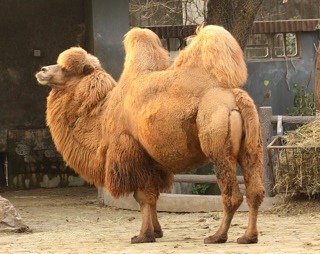 Bactrian Camel (reference photo)

Species Data
- Classification
- Artiodactyla / Camelidae Source
- Size
- Body length about 220–350 cm, height about 190–250 cm
- Weight
- About 300–1,000 kg (males average about 600 kg, females about 480 kg)
- Lifespan
- Average about 20–30 years; one individual kept at Nogeyama Zoo in Japan died at an estimated 38 years
- Diet
- Herbivore Herbivorous, eating a wide range of plants including dry, thorny, salty, and bitter species; rumination lets it extract nutrients efficiently from low-quality vegetation
- Distribution
- Domesticated Bactrian camels are kept across the Central Asian steppes and the Gobi Desert, numbering roughly 2 million. Genetic studies show they are a distinct species from the wild Bactrian camel (Camelus ferus), found only around northwestern China and Mongolia's Altai Mountains, and are not descended from it. Source
- Sources
- ja.wikipedia.org en.wikipedia.org
Did You Know?
- The two humps store fat rather than water, and they shrink noticeably during periods of food scarcity. Source
- Bactrian camels can drink up to 57 liters of water at once when it is available, yet can survive for months without drinking at all. Source
- The Indian Army uses Bactrian camels in the Ladakh region, where they carry loads of up to 170 kg at elevations above 5,200 meters. Source
Where to See This Species
Operating facilities registered on this site: Japan 6
Adventure WorldWakayamaOpened in 1978
Yokohama Shiritsu Nogeyama DoubutsuenKanagawaOpened in 1951
TOBU ZOOSaitamaFrom Tobu-Dobutsu-Koen Station (west exit), about 10 minutes on foot (600 m) or about 5 minutes by bus.
Himeji Shiritsu DoubutsuenHyogoOpened in 1951
Fuji Safari ParkShizuokaOpened in 1980
Conservation Story
Conservation Status
Not Evaluated (NE)
Sources
Support Conservation
A visit is a small, positive way to support the daily lives of the animals you care about.
- Visit
- A visit itself helps support the facility.
- Animal Supporter Programs & Giving
- Find ways to support the facility through its official website.
- Furusato Nozei
- Municipally run facilities may share official guidance for this Japanese hometown-tax program.
FAQ
- What do Bactrian camel humps store?
- Fat, not water. The humps shrink when food is scarce as the camel draws on the stored fat for energy. Source
- Are domesticated Bactrian camels the same as wild Bactrian camels?
- No. Genetic studies show domesticated Bactrian camels and the wild Bactrian camel (Camelus ferus) are distinct species that diverged roughly a million years ago; the domestic form does not descend from the wild one. Source
- How much water can a Bactrian camel drink?
- It can drink up to 57 liters in one sitting when water is available, but it can also go for months without drinking any water at all. Source
- How many operating facilities are registered here?
- Operating facilities registered on this site: Japan 6 Source
Books & gear
Source: ja.wikipedia.org en.wikipedia.org