Ruffed Lemurエリマキキツネザル
Varecia variegataCR— Critically Endangered
The black-and-white ruffed lemur is a strikingly patterned, highly frugivorous primate found only in the eastern rainforests of Madagascar. Unlike most primates, its infants cannot cling to their mother and are instead raised in nests, sometimes with communal care from multiple females. Hunting and slash-and-burn agriculture have caused an estimated 80% population decline over just 21 years, and the IUCN lists the species as Critically Endangered.
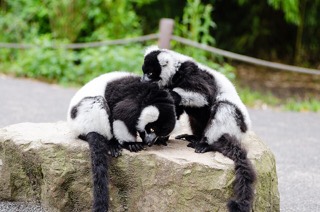 Ruffed Lemur (reference photo)

Species Data
- Classification
- Primates / Lemuridae Source
- Size
- Head-body length about 50–55 cm, tail about 60–65 cm
- Weight
- About 3–4.5 kg
- Lifespan
- Captive: up to about 36 years
- Diet
- Herbivore Strongly frugivorous, with fruit making up about 92% of the diet; also eats nectar, flowers, leaves, seeds, and fungi
- Activity
- Diurnal; adapted to arboreal life in the high canopy
- Distribution
- The black-and-white ruffed lemur is endemic to the eastern rainforests of Madagascar, inhabiting low- to mid-elevation primary forest. Source
- Sources
- ja.wikipedia.org en.wikipedia.org
Did You Know?
- Its fondness for the nectar of the traveler's palm has led researchers to propose that the species co-evolved as a pollinator of the plant, potentially making it one of the largest living pollinators. Source
- Unlike most primates, infants cannot cling to their mothers. Females instead build nests to leave their young in while foraging, and communal nesting with shared parental care has been observed. Source
- The species is known for loud, roaring chorus calls lasting several seconds, and females hold unusually strong social dominance over males, likely tied to the high energy demands of raising offspring. Source
Where to See This Species
Operating facilities registered on this site: Japan 6
Utsunomiya DoubutsuenTochigiAbout 5 minutes from the Utsunomiya IC on the Tohoku Expressway; free parking for 1,000 cars.
Iwate SafariParkIwateAbout 45 minutes from the Ichinoseki IC, about 30 minutes from the Wakayanagi-Kannari IC, or about 25 minutes via National Route 284.
Chiba Zoological ParkChibaOpened in 1985
IKEDA ZOOOkayamaFrom the West Exit of JR Okayama Station, take an Okaden Bus bound for Chuo Byoin (Central Hospital) to the Kyoyama Iriguchi stop, then walk about 12 minutes.
Wakayamajou Kouen DoubutsuenWakayamaOpened in 1919
Source links to official sites, official YouTube channels, and news aggregators such as Zoo Ring. Visit the publisher for the full item.
Conservation Story
Conservation Status
Critically Endangered (CR)
Sources
Support Conservation
A visit is a small, positive way to support the daily lives of the animals you care about.
- Visit
- A visit itself helps support the facility.
- Animal Supporter Programs & Giving
- Find ways to support the facility through its official website.
- Furusato Nozei
- Municipally run facilities may share official guidance for this Japanese hometown-tax program.
FAQ
- Why is the black-and-white ruffed lemur critically endangered?
- Hunting for bushmeat and habitat loss from slash-and-burn agriculture have driven an estimated 80% population decline over 21 years, placing it on the IUCN's Critically Endangered list. Source
- How do black-and-white ruffed lemurs raise their young?
- Unlike most primates, newborns cannot cling to their mother's fur. Mothers build nests to house their infants while they forage, and related females sometimes share nesting and childcare duties. Source
- What do black-and-white ruffed lemurs eat?
- They are highly frugivorous, with fruit making up about 92% of their diet, supplemented by nectar, flowers, leaves, and seeds. Source
- How many operating facilities are registered here?
- Operating facilities registered on this site: Japan 6 Source
Books & gear
Source: ja.wikipedia.org en.wikipedia.org