Hippopotamusカバ
Hippopotamus amphibiusVU— Vulnerable
The hippopotamus (Hippopotamus amphibius) is a massive semi-aquatic herbivore of sub-Saharan Africa's rivers and lakes, spending days submerged to regulate body temperature before grazing on land at night. Despite its plant-based diet, it is considered one of Africa's most dangerous animals. Classified as Vulnerable by the IUCN, it has been extirpated from several countries within its historic range.
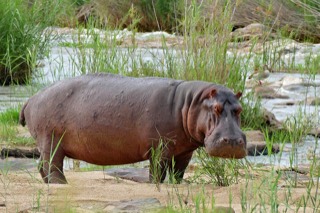 Hippopotamus (reference photo)
_(16485955207).jpg)
Species Data
- Classification
- Artiodactyla / Hippopotamidae Source
- Size
- 290–505 cm
- Weight
- Males average about 1,480 kg, females about 1,365 kg (large individuals reach 2,660 kg)
- Lifespan
- Wild: 40–50 years / captive: record of 65 years
- Diet
- Herbivore Herbivorous, feeding almost exclusively on grass; eats about 40 kg a night while traveling 3–5 km
- Activity
- Nocturnal; spends the day in water or mud to regulate body temperature
- Distribution
- Found in rivers and lakes across sub-Saharan Africa; the species has been extirpated from Algeria, Egypt, Eritrea, Mauritania, and Liberia. Source
- Sources
- ja.wikipedia.org en.wikipedia.org
Did You Know?
- Its skin secretes a reddish mucus that acts as a natural sunscreen, protecting against UV rays and bacterial infection. Source
- Its closest living relatives are cetaceans (whales and dolphins), from which it diverged roughly 55 million years ago. Source
- By weight, it ranks as the third-heaviest living land animal after elephants and rhinoceroses. Source
Where to See This Species
Operating facilities registered on this site: Japan 23
Adventure WorldWakayamaOpened in 1978
Ishikawa DoubutsuenIshikawaAbout 60 minutes from the Kanazawa-Morimoto Interchange on the Hokuriku Expressway, about 40 minutes from the Kanazawa-Nishi Interchange, and about 20 minutes from the Komatsu Interchange.
Obihiro DoubutsuenHokkaidoFrom Obihiro Station, take the Tokachi Bus (Route 70, bound for Ozora Danchi) for about 18 minutes to the Dobutsuen-mae stop, then walk about 300 m; or take the Takushoku Bus for about 16 minutes to the Midorigaoka 6-chome Hakubutsukan Iriguchi stop, then walk about 600 m.
Tobe Zoological Park of Ehime PrefectureEhimeOpened in 1988
Asahiyama ZooHokkaidoOpened in 1967
Utsunomiya DoubutsuenTochigiAbout 5 minutes from the Utsunomiya IC on the Tohoku Expressway; free parking for 1,000 cars.
Kyoto City ZooKyotoOpened in 1903
Kumamotoshi DoushokubutsuenKumamotoTake the tram bound for Kengun and get off at the Doshokubutsuen-Iriguchi stop, then walk 10 minutes.
Sapporoshimaruyama DoubutsuenHokkaidoOpened in 1951
Hirakawa ZooKagoshimaAbout a 20-minute walk from Goino Station on the JR Ibusuki-Makurazaki Line, or take a bus bound for Taniyama / Dobutsuen from Fukuhira Nokyo-mae to the last stop.
Shuunanshitokuyama DoubutsuenYamaguchiOpened in 1960
Nagasaki Bio ParkNagasakiOpened in 1980
Tennoji ZooOsakaOpened in 1915
TOBU ZOOSaitamaFrom Tobu-Dobutsu-Koen Station (west exit), about 10 minutes on foot (600 m) or about 5 minutes by bus.
Nasu SafariParkTochigiAbout 15 minutes from the Nasu IC or about 25 minutes from the Kuroiso-Itamuro IC on the Tohoku Expressway.
Hitachishikamine DoubutsuenIbarakiAbout 5 minutes from the Hitachi-Chuo Interchange on the Joban Expressway via National Route 6.
Himeji Shiritsu DoubutsuenHyogoOpened in 1951
Fuji Safari ParkShizuokaOpened in 1980
Fukuoka Zoo & Botanical GardenFukuokaOpened in 1953
Higashiyama Zoo and Botanical GardensAichiOpened in 1937
Iwate SafariParkIwateAbout 45 minutes from the Ichinoseki IC, about 30 minutes from the Wakayanagi-Kannari IC, or about 25 minutes via National Route 284.
- 2026年 カバの丸ごとスイカタイム🍉🦛
- ニュースフラッシュ 2026年9月26日号
- カバ🦛に超巨大スイカをあげてみたら豪快すぎた!園内の動物たちも大喜び🍉【ジャンボスイカ】
- 大きな口を開けて待っているカバ🦛限定エサあげ体験の様子をお届けします!#富士サファリパーク #カバ #エサあげ体験 #静岡
- カバの展示場をつくっちゃうよ~ Part16
- 【熱血実況】サイとカバへのおやつ体験!重量級の迫力とスポーツ中継級の実況で見ているこっちまで力が入ります🦏🦛🔥 🎙️実況:@jikkyo_baby さん #アドベンチャーワールド
Source links to official sites, official YouTube channels, and news aggregators such as Zoo Ring. Visit the publisher for the full item.
Conservation Story
Conservation Status
Vulnerable (VU)
Sources
Support Conservation
A visit is a small, positive way to support the daily lives of the animals you care about.
- Visit
- A visit itself helps support the facility.
- Animal Supporter Programs & Giving
- Find ways to support the facility through its official website.
- Furusato Nozei
- Municipally run facilities may share official guidance for this Japanese hometown-tax program.
- Support Adventure World
- Support Ishikawa Doubutsuen
- Support Obihiro Doubutsuen
- Support Tobe Zoological Park of Ehime Prefecture
- Support Asahiyama Zoo
- Support Utsunomiya Doubutsuen
- Support Kyoto City Zoo
- Support Kumamotoshi Doushokubutsuen
- Support Sapporoshimaruyama Doubutsuen
- Support Hirakawa Zoo
- Support Shuunanshitokuyama Doubutsuen
- Support OJI ZOO
- Support Nagasaki Bio Park
- Support Tennoji Zoo
- Support Ueno Zoo
- Support TOBU ZOO
- Support Nasu SafariPark
- Support Hitachishikamine Doubutsuen
- Support Himeji Shiritsu Doubutsuen
- Support Fuji Safari Park
- Support Fukuoka Zoo & Botanical Garden
- Support Higashiyama Zoo and Botanical Gardens
- Support Iwate SafariPark
FAQ
- Why does the hippo spend so much time in water?
- It stays submerged in water or mud during the day to regulate its body temperature, emerging at dusk to graze on land. Source
- What is the hippo's closest living relative?
- Genetic evidence shows cetaceans (whales and dolphins) are its closest living relatives, having diverged from a common ancestor about 55 million years ago. Source
- How many operating facilities are registered here?
- Operating facilities registered on this site: Japan 23 Source
Books & gear
Source: ja.wikipedia.org en.wikipedia.org