Domestic Sheepヒツジ
Ovis ariesNE— Not Evaluated
The domestic sheep is one of humanity's oldest livestock species, descended from the wild mouflon and domesticated in Mesopotamia roughly 11,000 years ago. A grazing herbivore with a strongly gregarious flocking instinct and an unusually wide field of vision, it has since spread worldwide, with a global population exceeding a billion animals raised for wool, meat, and milk.
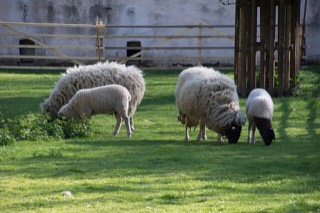 Domestic Sheep (reference photo)
.jpg)
Species Data
- Classification
- Artiodactyla / Bovidae Source
- Weight
- Females about 45–100 kg, males 45–160 kg
- Lifespan
- Average 10–12 years (some individuals live up to 20)
- Diet
- Herbivore Herbivorous ruminant, feeding mainly on grass as well as bark, buds, and flowers; eats a wide range of plants
- Activity
- Diurnal, grazing from dawn to dusk and resting to ruminate in between
- Distribution
- Descended from wild mouflon of Europe and Asia, sheep were domesticated in Mesopotamia between roughly 11,000 and 9,000 BC and spread worldwide from there. As of 2019, about 1.2 billion domestic sheep were kept globally. Source
- Sources
- ja.wikipedia.org en.wikipedia.org
Did You Know?
- Sheep have a remarkably wide field of vision, spanning roughly 270 to 320 degrees, allowing them to see almost directly behind themselves without turning their heads. Source
- Sheep are strongly gregarious and become highly stressed when separated from the flock. They can also recognize individual sheep and human faces, remembering up to 50 different faces for more than two years. Source
- In the earliest stages of domestication, sheep were valued mainly for their fat and wool, with meat and milk production only becoming primary uses later—goats had already been domesticated for those purposes first. Source
Where to See This Species
Operating facilities registered on this site: Japan 17
Gokatsuraike Animal ParkMieAbout 10 minutes from the Seiwa-Taki Interchange.
Shirotori ZooKagawaBy car, about 10 minutes from the Hiketa Interchange on the Takamatsu Expressway via National Route 11 toward Takamatsu.
Okazakishihigashi Kouen DoubutsuenAichiAbout 1 km toward Toyota from the Okazaki IC on the Tomei Expressway.
Kyoto City ZooKyotoOpened in 1903
Kiryuugaoka DoubutsuenGunmaIf driving, set your car navigation to "Kiryugaoka Amusement Park" (Kiryugaoka Yuenchi) rather than "Kiryugaoka Zoo" to reach the parking lot (searching by the zoo name may give an incorrect route).
Sapporoshimaruyama DoubutsuenHokkaidoOpened in 1951
Shuunanshitokuyama DoubutsuenYamaguchiOpened in 1960
Suzaka ZooNaganoFrom the Suzaka-Nagano-Higashi IC on the Joshin-etsu Expressway, take Route 403, turn right at the Kotaka-machi intersection, turn left at the Kami-Hatcho intersection, cross Garyu Bridge, and turn left for the south entrance.
Sendaishiyagiyama Doubutsu KouenMiyagiTake the Sendai Subway Tozai Line to Yagiyama Zoological Park Station; the zoo is right by the elevator from Central Exit 1 (about 12 minutes from Sendai Station).
Chiba Zoological ParkChibaOpened in 1985
Naganoshichausuyama DoubutsuenNaganoThe nearest station is JR Shinonoi Station.
Tennoji ZooOsakaOpened in 1915
Iida Shiritsu DoubutsuenNaganoAddress: 33 Ogimachi, Iida, Nagano.
Hamamatsu Zoological GardensShizuokaOpened in 1950
Toyamashifamiri ParkToyamaOpened in 1984
Higashiyama Zoo and Botanical GardensAichiOpened in 1937
Wakayamajou Kouen DoubutsuenWakayamaOpened in 1919
Temporarily closed facilities
Satsukiyama DAYZOOOsakaOpened in 1957
Temporarily closed Official Site
- 大きな声で呼んでいるのは…?#東武動物公園 # #動物 #zoo #動物園 #ヒツジ #ドロップ
- 視線を感じて振り返ると… #東武動物公園 #ヒツジ #ココア #ドロップ # #動物 #zoo #動物園
- 強風で折れたヤナギの枝を食べる #ヒツジ です。
- 甘え上手なヒツジのサクレ
- ヒツジの赤ちゃん 初毛刈りのご様子【東武動物公園 公式YouTubeチャンネル】
- ヒツジ鳴き声20260727e
Source links to official sites, official YouTube channels, and news aggregators such as Zoo Ring. Visit the publisher for the full item.
Conservation Story
Conservation Status
Not Evaluated (NE)
Sources
Support Conservation
A visit is a small, positive way to support the daily lives of the animals you care about.
- Visit
- A visit itself helps support the facility.
- Animal Supporter Programs & Giving
- Find ways to support the facility through its official website.
- Furusato Nozei
- Municipally run facilities may share official guidance for this Japanese hometown-tax program.
- Support Gokatsuraike Animal Park
- Support Shirotori Zoo
- Support Okazakishihigashi Kouen Doubutsuen
- Support Kyoto City Zoo
- Support Kiryuugaoka Doubutsuen
- Support Sapporoshimaruyama Doubutsuen
- Support Shuunanshitokuyama Doubutsuen
- Support Suzaka Zoo
- Support Sendaishiyagiyama Doubutsu Kouen
- Support Chiba Zoological Park
- Support Naganoshichausuyama Doubutsuen
- Support Tennoji Zoo
- Support Iida Shiritsu Doubutsuen
- Support Hamamatsu Zoological Gardens
- Support Toyamashifamiri Park
- Support Higashiyama Zoo and Botanical Gardens
- Support Wakayamajou Kouen Doubutsuen
FAQ
- When were sheep first domesticated?
- Sheep were domesticated from wild mouflon in Mesopotamia between about 11,000 and 9,000 BC, making them one of the earliest domesticated livestock species. Source
- How good is a sheep's vision?
- Sheep have a panoramic field of vision spanning roughly 270 to 320 degrees, letting them watch for predators nearly all the way around themselves without moving their heads. Source
- Why do sheep flock together so strongly?
- Sheep have a powerful gregarious instinct as a defense against predators and become highly stressed when isolated from the flock; they can also recognize and remember dozens of individual sheep and human faces for years. Source
- How many operating facilities are registered here?
- Operating facilities registered on this site: Japan 17 Source
Books & gear
Source: ja.wikipedia.org en.wikipedia.org