Indian Peafowlインドクジャク
Pavo cristatusLC— Least Concern
The Indian peafowl is a large, brilliantly colored pheasant native to the Indian subcontinent, where males are famous for their iridescent blue neck and elaborate train of eye-spotted feathers used in courtship displays. Omnivorous ground foragers, they eat insects, small reptiles, seeds, and plant matter, and have been introduced to parks and gardens worldwide. Classified as Least Concern, the species is revered in India, where it is the national bird.
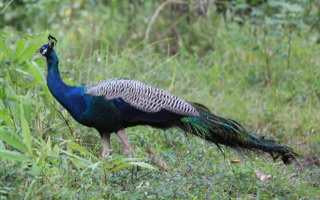 Indian Peafowl (reference photo)

Species Data
- Classification
- Galliformes / Phasianidae Source
- Size
- Males total length 180–230 cm (including train) / females 86–90 cm
- Weight
- Males 4–6 kg / females 2.8–4 kg
- Lifespan
- Wild: about 15 years / captive: up to 23 years
- Diet
- Omnivore Omnivorous, eating insects, arthropods, small reptiles and amphibians, leaves, fruit, and seeds
- Distribution
- Native to the Indian subcontinent, ranging from the Indus valley in the northwest to Assam in the northeast and throughout southern India and Sri Lanka. Source
- Sources
- ja.wikipedia.org en.wikipedia.org
Did You Know?
- In India it is valued as a beneficial bird that preys on venomous snakes and scorpions, and it is the country's national bird. Source
- The iridescent colors of the male's train come not from pigments but from the microscopic structure of the feathers, which scatters light. Source
- In Edo-period Japan there were "peacock teahouses" (kujaku-jaya), establishments where patrons could enjoy tea while viewing these birds. Source
Where to See This Species
Operating facilities registered on this site: Japan 15
Adventure WorldWakayamaOpened in 1978
Wan Park Kouchianimaru LandKochiAddress: 6-9-1 Sanbashi-dori, Kochi (inside Wanpark Kochi).
Izu Shaboten ZooShizuokaOpened in 1959
Kyoto City ZooKyotoOpened in 1903
Kiryuugaoka DoubutsuenGunmaIf driving, set your car navigation to "Kiryugaoka Amusement Park" (Kiryugaoka Yuenchi) rather than "Kiryugaoka Zoo" to reach the parking lot (searching by the zoo name may give an incorrect route).
Saitamakenkodomodoubutsu Shizen KouenSaitamaOpened in 1980
Sapporoshimaruyama DoubutsuenHokkaidoOpened in 1951
Sabaeshinishiyama DoubutsuenFukuiOpened in 1985
Hirakawa ZooKagoshimaAbout a 20-minute walk from Goino Station on the JR Ibusuki-Makurazaki Line, or take a bus bound for Taniyama / Dobutsuen from Fukuhira Nokyo-mae to the last stop.
Suzaka ZooNaganoFrom the Suzaka-Nagano-Higashi IC on the Joshin-etsu Expressway, take Route 403, turn right at the Kotaka-machi intersection, turn left at the Kami-Hatcho intersection, cross Garyu Bridge, and turn left for the south entrance.
TOBU ZOOSaitamaFrom Tobu-Dobutsu-Koen Station (west exit), about 10 minutes on foot (600 m) or about 5 minutes by bus.
Hamamatsu Zoological GardensShizuokaOpened in 1950
Fukuoka Zoo & Botanical GardenFukuokaOpened in 1953
Higashiyama Zoo and Botanical GardensAichiOpened in 1937
Wakayamajou Kouen DoubutsuenWakayamaOpened in 1919
- 【夏姿】鯖江市立西山動物園で「夏でも飾り羽を広げて見せるインドクジャク」他 本日の注目情報セレクション
- アミメキリン「ハニー」のお誕生日会を開催しました!【動画あり】
- 「クジャオとアン」#インドクジャク #アミメキリン
Source links to official sites, official YouTube channels, and news aggregators such as Zoo Ring. Visit the publisher for the full item.
Conservation Story
Conservation Status
Least Concern (LC)
Sources
Support Conservation
A visit is a small, positive way to support the daily lives of the animals you care about.
- Visit
- A visit itself helps support the facility.
- Animal Supporter Programs & Giving
- Find ways to support the facility through its official website.
- Furusato Nozei
- Municipally run facilities may share official guidance for this Japanese hometown-tax program.
- Support Adventure World
- Support Wan Park Kouchianimaru Land
- Support Izu Shaboten Zoo
- Support Kyoto City Zoo
- Support Kiryuugaoka Doubutsuen
- Support Saitamakenkodomodoubutsu Shizen Kouen
- Support Sapporoshimaruyama Doubutsuen
- Support Sabaeshinishiyama Doubutsuen
- Support Hirakawa Zoo
- Support Suzaka Zoo
- Support TOBU ZOO
- Support Hamamatsu Zoological Gardens
- Support Fukuoka Zoo & Botanical Garden
- Support Higashiyama Zoo and Botanical Gardens
- Support Wakayamajou Kouen Doubutsuen
FAQ
- Why do peacocks have such colorful tail feathers?
- The train's iridescent colors come not from pigments but from the microscopic structure of the feathers, which scatters and refracts light. Source
- What do Indian peafowl eat?
- They are omnivores, feeding on insects, small reptiles and amphibians, seeds, fruit, and plant leaves. Source
- Where are Indian peafowl originally from?
- They are native to India, Sri Lanka, southern Nepal, and parts of Pakistan and Bangladesh, and have since been introduced to countries such as Australia and Japan. Source
- How many operating facilities are registered here?
- Operating facilities registered on this site: Japan 15 Source
Books & gear
Source: ja.wikipedia.org en.wikipedia.org