Japanese Serowニホンカモシカ
Capricornis crispusLC— Least Concern
The Japanese serow (Capricornis crispus) is a stocky, goat-like bovid endemic to Japan and the only wild bovid species living in the country today. Found in mountain forests on Honshu, Shikoku, and Kyushu, it is a solitary, territorial browser that marks its range with scent glands. Once nearly hunted to extinction, it was designated a Special Natural Monument in 1955 and has since recovered to Least Concern status.
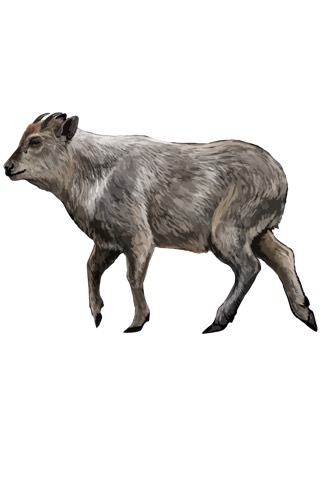 Japanese Serow (reference photo)

Species Data
- Classification
- Artiodactyla / Bovidae Source
- Size
- 105–112 cm (height 68–75 cm, tail 6–7 cm)
- Weight
- 30–45 kg
- Lifespan
- Wild: about 15 years / captive: up to 33 years (record holder "Kuro")
- Diet
- Herbivore Herbivorous, eating broad-leaved herbs, leaves, young shoots, bark, and fruit
- Activity
- Diurnal; does not migrate seasonally
- Distribution
- Endemic to Japan, distributed across mountainous regions of Honshu east of Kyoto Prefecture, plus Shikoku and Kyushu. Source
- Sources
- ja.wikipedia.org en.wikipedia.org
Did You Know?
- It is the only wild bovid living in modern Japan and was designated a Special Natural Monument in 1955. Source
- Both sexes carry non-shedding conical horns and live as solitary, territorial animals. Source
- Overhunting reduced the population to an estimated 2,000-3,000 individuals by around 1955, but protection measures allowed it to recover to Least Concern status. Source
Where to See This Species
Operating facilities registered on this site: Japan 8
Wan Park Kouchianimaru LandKochiAddress: 6-9-1 Sanbashi-dori, Kochi (inside Wanpark Kochi).
Kiryuugaoka DoubutsuenGunmaIf driving, set your car navigation to "Kiryugaoka Amusement Park" (Kiryugaoka Yuenchi) rather than "Kiryugaoka Zoo" to reach the parking lot (searching by the zoo name may give an incorrect route).
Saitamakenkodomodoubutsu Shizen KouenSaitamaOpened in 1980
Naganoshichausuyama DoubutsuenNaganoThe nearest station is JR Shinonoi Station.
Iida Shiritsu DoubutsuenNaganoAddress: 33 Ogimachi, Iida, Nagano.
Toyamashifamiri ParkToyamaOpened in 1984
Higashiyama Zoo and Botanical GardensAichiOpened in 1937
Source links to official sites, official YouTube channels, and news aggregators such as Zoo Ring. Visit the publisher for the full item.
Conservation Story
Conservation Status
Least Concern (LC)
Sources
Support Conservation
A visit is a small, positive way to support the daily lives of the animals you care about.
- Visit
- A visit itself helps support the facility.
- Animal Supporter Programs & Giving
- Find ways to support the facility through its official website.
- Furusato Nozei
- Municipally run facilities may share official guidance for this Japanese hometown-tax program.
FAQ
- Is the Japanese serow the only wild bovine in Japan?
- Yes. It is the only wild ruminant of the cattle family (Bovidae) native to modern Japan. Source
- Why is it a protected species?
- After overhunting reduced its population to an estimated 2,000-3,000 individuals by 1955, Japan designated it a Special Natural Monument, and its numbers have since recovered. Source
- How many operating facilities are registered here?
- Operating facilities registered on this site: Japan 8 Source
Books & gear
Source: ja.wikipedia.org en.wikipedia.org