Llamaラマ
Lama glamaNE— Not Evaluated
The llama is a domesticated South American camelid descended from the wild guanaco, bred in the Andes for thousands of years as a pack and fiber animal. It thrives at high altitude on coarse forage and is valued for its soft, low-lanolin wool. Not evaluated on the IUCN Red List as a domestic species, llamas remain central to Andean rural life today.
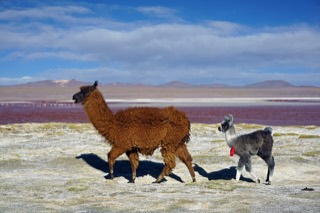 Llama (reference photo)

Species Data
- Classification
- Artiodactyla / Camelidae Source
- Size
- Height about 1.2 m, head-body length about 2 m
- Weight
- 70–140 kg (average about 94.7 kg for males and 102.3 kg for females)
- Lifespan
- 15–25 years, rarely over 30
- Diet
- Herbivore Herbivorous, digesting pasture grass, alfalfa, corn silage, and similar feed; does not ruminate but has a three-chambered stomach
- Distribution
- A domesticated South American camelid descended from the wild guanaco, raised for millennia in the high Andes of Peru and Bolivia. Source
- Sources
- ja.wikipedia.org en.wikipedia.org
Did You Know?
- Llamas can carry about 25 to 30% of their body weight over 8 to 13 km, a trait long exploited as pack animals in the Andes. Source
- In the treeless high Andes, llama dung remains a valuable fuel source in rural areas. Source
- Gelded males or non-breeding females are often used as untrained guard animals, protecting other livestock herds from predators. Source
Where to See This Species
Operating facilities registered on this site: Japan 14
Obihiro DoubutsuenHokkaidoFrom Obihiro Station, take the Tokachi Bus (Route 70, bound for Ozora Danchi) for about 18 minutes to the Dobutsuen-mae stop, then walk about 300 m; or take the Takushoku Bus for about 16 minutes to the Midorigaoka 6-chome Hakubutsukan Iriguchi stop, then walk about 600 m.
Izu Shaboten ZooShizuokaOpened in 1959
Utsunomiya DoubutsuenTochigiAbout 5 minutes from the Utsunomiya IC on the Tohoku Expressway; free parking for 1,000 cars.
Okazakishihigashi Kouen DoubutsuenAichiAbout 1 km toward Toyota from the Okazaki IC on the Tomei Expressway.
Suzaka ZooNaganoFrom the Suzaka-Nagano-Higashi IC on the Joshin-etsu Expressway, take Route 403, turn right at the Kotaka-machi intersection, turn left at the Kami-Hatcho intersection, cross Garyu Bridge, and turn left for the south entrance.
Chiba Zoological ParkChibaOpened in 1985
Nagasaki Bio ParkNagasakiOpened in 1980
TOBU ZOOSaitamaFrom Tobu-Dobutsu-Koen Station (west exit), about 10 minutes on foot (600 m) or about 5 minutes by bus.
Nasu SafariParkTochigiAbout 15 minutes from the Nasu IC or about 25 minutes from the Kuroiso-Itamuro IC on the Tohoku Expressway.
Hitachishikamine DoubutsuenIbarakiAbout 5 minutes from the Hitachi-Chuo Interchange on the Joban Expressway via National Route 6.
Himeji Shiritsu DoubutsuenHyogoOpened in 1951
Hamamatsu Zoological GardensShizuokaOpened in 1950
Fuji Safari ParkShizuokaOpened in 1980
Former facilities
North Safari SapporoHokkaidoOpened in 2005
Closed: 2025-09-30 Official Site
- 【大苦戦】ラマの毛刈りでツバの洗礼を受けまくる飼育員たち
- ラマのチーズくんです🧀#東武動物公園#zoo#動物#animals#ラマ#癒し
- 青草ビュッフェを満喫中! #ラマ
- 【動物】東公園動物園のラマさん紹介
- ジュン7才の誕生日会
- #癒しの10秒サファリ #食べたいのに… #ラマ #あかちゃん #part3 #サファリ #姫セン #Shorts #癒しの10秒サファリ
Source links to official sites, official YouTube channels, and news aggregators such as Zoo Ring. Visit the publisher for the full item.
Conservation Story
Conservation Status
Not Evaluated (NE)
Sources
Support Conservation
A visit is a small, positive way to support the daily lives of the animals you care about.
- Visit
- A visit itself helps support the facility.
- Animal Supporter Programs & Giving
- Find ways to support the facility through its official website.
- Furusato Nozei
- Municipally run facilities may share official guidance for this Japanese hometown-tax program.
- Support Obihiro Doubutsuen
- Support Izu Shaboten Zoo
- Support Utsunomiya Doubutsuen
- Support Okazakishihigashi Kouen Doubutsuen
- Support Suzaka Zoo
- Support Chiba Zoological Park
- Support Nagasaki Bio Park
- Support Ueno Zoo
- Support TOBU ZOO
- Support Nasu SafariPark
- Support Hitachishikamine Doubutsuen
- Support Himeji Shiritsu Doubutsuen
- Support Hamamatsu Zoological Gardens
- Support Fuji Safari Park
FAQ
- What is the difference between a llama and an alpaca?
- Both are domesticated South American camelids, but llamas are larger and were traditionally bred as pack animals, while the smaller alpaca was bred mainly for its fine wool. Source
- How much weight can a llama carry?
- A llama can typically carry about 25 to 30% of its body weight over distances of 8 to 13 km, a trait that made it valuable as an Andean pack animal. Source
- Where do llamas come from?
- Llamas were domesticated from the wild guanaco in the Andes of South America and have been raised in Peru and Bolivia for thousands of years. Source
- How many operating facilities are registered here?
- Operating facilities registered on this site: Japan 14 Source
Books & gear
Source: ja.wikipedia.org en.wikipedia.org