Oriental Storkコウノトリ
Ciconia boycianaEN— Endangered
The Oriental stork is a large, endangered stork closely related to the white stork, found in Japan, China, Korea, and Siberia. It is a carnivorous hunter of fish, frogs, snakes, and small mammals in wetlands and rice paddies. Once extinct in the wild in Japan, it has been reestablished there through captive breeding and release programs, with a wild-hatched chick recorded in 2007 for the first time in 40 years.
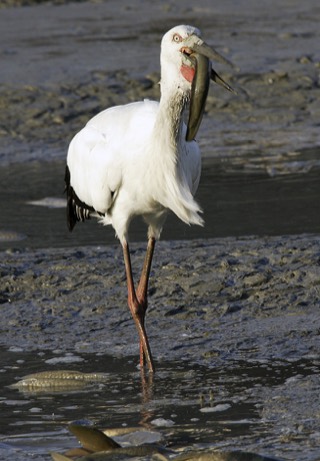 Oriental Stork (reference photo)

Species Data
- Classification
- Ciconiiformes / Ciconiidae Source
- Size
- Total length 110–115 cm, wingspan about 195 cm
- Weight
- 3–5 kg
- Lifespan
- Captive: average about 35 years. Lifespan in the wild is unknown
- Diet
- Carnivore Carnivorous, eating fish, frogs, snakes, bird eggs and chicks, rodents, and insects
- Distribution
- Found in Japan, China, Korea, and Siberia; formerly extirpated from Japan and the Korean Peninsula, the species is now the focus of active reintroduction programs in both countries. Source
- Sources
- ja.wikipedia.org
Did You Know?
- With an underdeveloped syrinx, adults do not vocalize; instead they rapidly clap their bills together in a behavior called "clattering" to express threat or courtship. Source
- A wild hatchling was reported in Japan for the first time in 40 years in May 2007, following captive breeding and release programs. Source
- South Korea has around 130 birds as of 2026 following reintroduction efforts. Source
Where to See This Species
Operating facilities registered on this site: Japan 7
Saitamakenkodomodoubutsu Shizen KouenSaitamaOpened in 1980
Tennoji ZooOsakaOpened in 1915
Fukuoka Zoo & Botanical GardenFukuokaOpened in 1953
Nonhoi ParkAichiAbout a 6-minute walk from the South Exit of Futagawa Station on the JR Tokaido Main Line.
Conservation Story
Conservation Status
Endangered (EN)
Sources
Support Conservation
A visit is a small, positive way to support the daily lives of the animals you care about.
- Visit
- A visit itself helps support the facility.
- Animal Supporter Programs & Giving
- Find ways to support the facility through its official website.
- Furusato Nozei
- Municipally run facilities may share official guidance for this Japanese hometown-tax program.
FAQ
- How can you tell an Oriental stork from a white stork?
- The Oriental stork is larger than the white stork and has red skin around its eyes with a black bill, rather than a red bill. Source
- Did the Oriental stork go extinct in Japan?
- Yes, wild Oriental storks disappeared from Japan, but captive breeding and release programs led to a wild-hatched chick being recorded in 2007 for the first time in 40 years. Source
- Why doesn't the Oriental stork call like other birds?
- Its syrinx is poorly developed, so adults rarely vocalize; instead they communicate through "bill clattering," rapidly snapping their bills together for threat displays and courtship. Source
- How many operating facilities are registered here?
- Operating facilities registered on this site: Japan 7 Source
Books & gear
Source: ja.wikipedia.org en.wikipedia.org