Red-crowned Craneタンチョウ

Grus japonensisEN— Endangered

The red-crowned crane is one of the largest and rarest cranes in the world, with a resident population in eastern Hokkaido, Japan, and migratory populations breeding in Siberia and northeastern China. Instantly recognizable by the bare red patch of skin on its crown, it is an omnivore that forages for fish, insects, amphibians, and plants in wetlands and rice paddies. Revered in Japanese culture as a symbol of longevity and fidelity, it is classified as Vulnerable, with roughly 2,300 adults remaining in the wild.
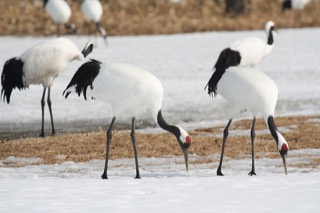
Red-crowned Crane (reference photo)
Photo: Alastair Rae from London, United Kingdom / CC BY-SA 2.0 / Source / cropped

Species Data

Classification
Gruiformes / Gruidae Source
Distribution
Breeds in Siberia, northeastern China, and occasionally Mongolia, wintering in Korea and east-central China, with a non-migratory resident population in eastern Hokkaido, Japan. Source

Did You Know?

  • In Japanese culture the crane is said to live for 1,000 years; monogamous pairs are believed to mate for life and perform synchronized duets to strengthen their bond. Source

Where to See This Species

17 facilities · 1 individuals

久留米市鳥類センター (Kurumeshichourui Center)Fukuoka所在地は福岡県久留米市東櫛原町1667・中央公園内。

No.0146In residence

Muko

ムコ

Red-crowned CraneGrus japonensis

Sex
Male
Born
Unknown
EN— Endangered

アドベンチャーワールド (Adobencha World)WakayamaOpened in 1978

アドベンチャーワールドのWikipedia記事に飼育種として記載 Source

いしかわ動物園 (Ishikawa Doubutsuen)Ishikawa

いしかわ動物園のWikipedia記事に飼育種として記載 Source

宇都宮動物園 (Utsunomiya Doubutsuen)Tochigi東北自動車道 宇都宮ICから約5分、駐車場は乗用車1,000台分が無料。

宇都宮動物園のWikipedia記事に飼育種として記載 Source

横浜市立よこはま動物園 (Yokohama Shiritsu Yokohama Doubutsuen)KanagawaOpened in 1999

横浜市立よこはま動物園のWikipedia記事に飼育種として記載 Source

京都市動物園 (Kyoutoshi Doubutsuen)KyotoOpened in 1903

京都市動物園のWikipedia記事に飼育種として記載 Source

釧路市動物園 (Kushiroshi Doubutsuen)HokkaidoJR釧路駅から阿寒バスで約55分、または自動車・タクシー・レンタカーで約27分(18km)。

釧路市動物園のWikipedia記事に飼育種として記載 Source

広島市安佐動物公園 (Hiroshimashiasa Doubutsu Kouen)Hiroshima

広島市安佐動物公園のWikipedia記事に飼育種として記載 Source

埼玉県こども動物自然公園 (Saitamakenkodomodoubutsu Shizen Kouen)SaitamaOpened in 1980

埼玉県こども動物自然公園のWikipedia記事に飼育種として記載 Source

札幌市円山動物園 (Sapporoshimaruyama Doubutsuen)HokkaidoOpened in 1951

札幌市円山動物園のWikipedia記事に飼育種として記載 Source

鯖江市西山動物園 (Sabaeshinishiyama Doubutsuen)FukuiOpened in 1985

鯖江市西山動物園のWikipedia記事に飼育種として記載 Source

Hirakawa ZooKagoshimaJR指宿枕崎線「五位野駅」から徒歩約20分、またはバスで「福平農協前」から「谷山・動物園行き」に乗車し終点下車。

鹿児島市平川動物公園のWikipedia記事に飼育種として記載 Source

千葉市動物公園 (Chibashi Doubutsu Kouen)ChibaOpened in 1985

千葉市動物公園のWikipedia記事に飼育種として記載 Source

Tennoji ZooOsakaOpened in 1915

天王寺動物園のWikipedia記事に飼育種として記載 Source

東京都恩賜上野動物園 (Toukyoutoonshiueno Doubutsuen)TokyoOpened in 1882

東京都恩賜上野動物園のWikipedia記事に飼育種として記載 Source

東武動物公園 (Toubu Doubutsu Kouen)Saitama東武動物公園駅(西口)下車、徒歩10分(600m)またはバス約5分。

東武動物公園のWikipedia記事に飼育種として記載 Source

Higashiyama Zoo and Botanical GardensAichiOpened in 1937

名古屋市東山動物園のWikipedia記事に飼育種として記載 Source

Latest news

3

Open the news index

Source links to official sites, official YouTube channels, and news aggregators such as Zoo Ring. Visit the publisher for the full item.

Conservation Story

Conservation Status

IUCNではEN(絶滅危機)です。日本では保護と生息地管理により個体数が回復してきました。

Habitat

湿原、河川、湖沼周辺、農地。

Threats

Conservation & Breeding Efforts

Sources

ja.wikipedia.org

Support Conservation

A visit is a small, positive way to support the daily lives of the animals you care about.

Visit
A visit itself helps support the facility.
Animal Supporter Programs & Giving
Find ways to support the facility through its official website.
Furusato Nozei
Municipally run facilities may share official guidance for this Japanese hometown-tax program.

FAQ

Why does the red-crowned crane have a red patch on its head?
The red crown is not feathers but bare skin with visible blood vessels. Source
How long do red-crowned cranes live?
In the wild they are thought to live 20–30 years, with one Hokkaido bird reaching 35; in captivity they can live up to 65 years, with a record of 46 years and 6 months. Source
Is the red-crowned crane endangered?
Yes, it is classified as Vulnerable by the IUCN, with an estimated 2,300 adults remaining worldwide. Source

Source: ja.wikipedia.org en.wikipedia.org