Sea Otterラッコ

Enhydra lutrisEN— Endangered

The sea otter is a marine mustelid of the North Pacific coast, prized for having the densest fur of any animal and famous for using rocks as tools to crack open shellfish while floating on its back. Hunted to near extinction for its pelt during the 18th to 20th centuries—when the population crashed from an estimated 150,000–300,000 to just 1,000–2,000 individuals—it has partially recovered to around 107,000 today but remains classified as Endangered by the IUCN.
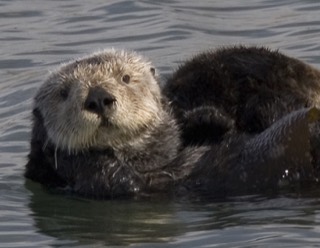
Sea Otter (reference photo)
Photo: Mike Baird from Morro Bay, USA / CC BY 2.0 / Source / cropped

Species Data

Classification
Carnivora / Mustelidae Source
Distribution
Native to the northern and eastern North Pacific, inhabiting coastal waters from Alaska through British Columbia, Washington, and California, as well as Russia's Far East coast and the Kuril Islands. Source

Did You Know?

  • Sea otters have up to 150,000 hairs per square centimeter of skin, giving them the densest fur of any animal—an adaptation essential for staying warm in cold Pacific waters. Source
  • Sea otters float on their backs and use a rock balanced on their chest as an anvil to crack open shellfish, making them one of the few mammal species known to use tools. Source
  • Resting sea otters in groups called rafts are famous for holding hands, or wrapping themselves in kelp, to keep from drifting apart while they sleep. Source

Where to See This Species

11 facilities · 2 individuals

Toba AquariumMieOpened in 1955

在籍個体を確認 Source

No.0109In residence

Mei

メイ

Sea OtterEnhydra lutris

Sex
Female
Born
May 9, 2004
EN— Endangered
No.0110In residence

Kira

キラ

Sea OtterEnhydra lutris

Sex
Female
Born
April 21, 2008
EN— Endangered

アドベンチャーワールド (Adobencha World)WakayamaOpened in 1978

アドベンチャーワールドのWikipedia記事に飼育種として記載 Source

サンシャイン水族館 (Sanshain Suizokukan)Tokyo池袋駅(35番出口)からサンシャイン60通りを通って来館。

サンシャイン水族館のWikipedia記事に飼育種として記載 Source

のとじま臨海公園水族館 (Notojimarinkai Kouen Suizokukan)Ishikawa最寄り駅は和倉温泉駅。

のとじま臨海公園水族館のWikipedia記事に飼育種として記載 Source

マリンピア松島水族館 (Marinpiamatsushima Suizokukan)MiyagiOpened in 1927

マリンピア松島水族館のWikipedia記事に飼育種として記載 Source

Osaka Aquarium KaiyukanOsakaOpened in 1990

海遊館のWikipedia記事に飼育種として記載 Source

宮島水族館 (Miyajima Suizokukan)HiroshimaOpened in 2011

宮島水族館のWikipedia記事に飼育種として記載 Source

江の島水族館 (Enoshima Suizokukan)KanagawaOpened in 1954

江の島水族館のWikipedia記事に飼育種として記載 Source

青森県営浅虫水族館 (Aomorikeneiasamushi Suizokukan)AomoriOpened in 1983

青森県営浅虫水族館のWikipedia記事に飼育種として記載 Source

Nagasaki Bio ParkNagasakiOpened in 1980

長崎バイオパークのWikipedia記事に飼育種として記載 Source

鶴岡市立加茂水族館 (Tsuruoka Shiritsu Kamo Suizokukan)YamagataJR鶴岡駅から庄内空港連絡バス湯野浜温泉行きで約40分、「加茂水族館」下車すぐ(善宝寺経由の便は停車しないため注意)。

鶴岡市立加茂水族館のWikipedia記事に飼育種として記載 Source

Latest news

4

Open the news index

Source links to official sites, official YouTube channels, and news aggregators such as Zoo Ring. Visit the publisher for the full item.

Conservation Story

Conservation Status

IUCNは絶滅危惧種(Endangered)に分類している。日本の環境省レッドリストでも絶滅危惧IA類に指定されている。

Habitat

北太平洋の沿岸海域、特に水深15〜23m程度のケルプ(海藻)帯を主な生息地とする。

Threats

Conservation & Breeding Efforts

Sources

en.wikipedia.org ja.wikipedia.org

Support Conservation

A visit is a small, positive way to support the daily lives of the animals you care about.

Visit
A visit itself helps support the facility.
Animal Supporter Programs & Giving
Find ways to support the facility through its official website.
Furusato Nozei
Municipally run facilities may share official guidance for this Japanese hometown-tax program.

FAQ

Why is sea otter fur so special?
Sea otters have up to 150,000 hairs per square centimeter of skin, the densest fur of any animal, which traps air for insulation since—unlike most marine mammals—they lack a thick blubber layer. Source
Are sea otters endangered?
Yes, the IUCN lists them as Endangered. The fur trade drove the global population from an estimated 150,000–300,000 down to just 1,000–2,000 individuals by the early 20th century; it has since recovered to roughly 107,000 but remains well below historical numbers. Source
Do sea otters really hold hands?
Yes. Sea otters resting in groups called rafts often hold hands or wrap themselves in kelp to avoid drifting apart while sleeping. Source

Source: aquarium.co.jp www.iucnredlist.org www.nikkei.com