Blue-and-yellow Macawルリコンゴウインコ
Ara araraunaLC— Least Concern
The blue-and-yellow macaw is a large, brilliantly colored parrot of South American swamp forests, prized for its vivid blue back and golden-yellow underparts. Highly social and long-lived, it typically pairs for life and can live 60 years or more in captivity.
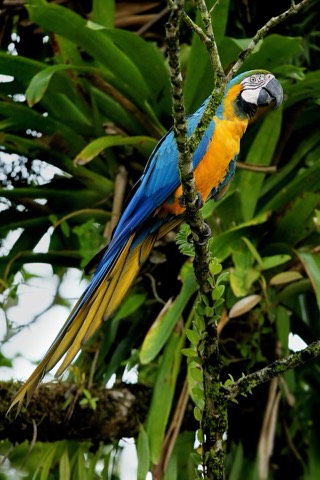 Blue-and-yellow Macaw (reference photo)
.jpg)
Species Data
- Classification
- Psittaciformes / Psittacidae Source
- Size
- 76–91 cm
- Weight
- 0.9–1.5 kg
- Lifespan
- 30–35 years in the wild; may live over 60 years in captivity
- Diet
- Herbivore Feeds mainly on nuts, along with seeds, fruit, and vegetables; cracks hard nut shells with its powerful bill
- Distribution
- Found from southern Panama through Colombia, Venezuela, the Guianas, Peru, Brazil, Bolivia, Ecuador, and Paraguay, typically in swampy or seasonally flooded forest. Source
- Sources
- ja.wikipedia.org en.wikipedia.org
Did You Know?
Where to See This Species
Operating facilities registered on this site: Japan 12
Adventure WorldWakayamaOpened in 1978
Izu Shaboten ZooShizuokaOpened in 1959
Okazakishihigashi Kouen DoubutsuenAichiAbout 1 km toward Toyota from the Okazaki IC on the Tomei Expressway.
Kiryuugaoka DoubutsuenGunmaIf driving, set your car navigation to "Kiryugaoka Amusement Park" (Kiryugaoka Yuenchi) rather than "Kiryugaoka Zoo" to reach the parking lot (searching by the zoo name may give an incorrect route).
Noichi Zoological Park of Kochi PrefectureKochiA 20-minute walk or 13-minute rental-bicycle ride from Noichi Station on the Tosa Kuroshio Railway Gomen-Nahari Line.
Saitamakenkodomodoubutsu Shizen KouenSaitamaOpened in 1980
Suzaka ZooNaganoFrom the Suzaka-Nagano-Higashi IC on the Joshin-etsu Expressway, take Route 403, turn right at the Kotaka-machi intersection, turn left at the Kami-Hatcho intersection, cross Garyu Bridge, and turn left for the south entrance.
TOBU ZOOSaitamaFrom Tobu-Dobutsu-Koen Station (west exit), about 10 minutes on foot (600 m) or about 5 minutes by bus.
Iida Shiritsu DoubutsuenNaganoAddress: 33 Ogimachi, Iida, Nagano.
Hamamatsu Zoological GardensShizuokaOpened in 1950
Fukuoka Zoo & Botanical GardenFukuokaOpened in 1953
Former facilities
North Safari SapporoHokkaidoOpened in 2005
Closed: 2025-09-30 Official Site
- イチャイチャするサニー&ライティ #東武動物公園 #動物 #zoo #かわいい#ベニコンゴウインコ#ルリコンゴウインコ
- ルリコンゴウインコ・ライティ はじめての氷体験 #東武動物公園 #ルリコンゴウインコ #ライティ #はじめての体験
- ルリコンゴウインコ レイニーが飛んできます! #東武動物公園 #zoo #アニマルパフォーマンス#ルリコンゴウインコ #レイニー
Source links to official sites, official YouTube channels, and news aggregators such as Zoo Ring. Visit the publisher for the full item.
Conservation Story
Conservation Status
Least Concern (LC)
Sources
Support Conservation
A visit is a small, positive way to support the daily lives of the animals you care about.
- Visit
- A visit itself helps support the facility.
- Animal Supporter Programs & Giving
- Find ways to support the facility through its official website.
- Furusato Nozei
- Municipally run facilities may share official guidance for this Japanese hometown-tax program.
- Support Adventure World
- Support Izu Shaboten Zoo
- Support Okazakishihigashi Kouen Doubutsuen
- Support Kiryuugaoka Doubutsuen
- Support Noichi Zoological Park of Kochi Prefecture
- Support Saitamakenkodomodoubutsu Shizen Kouen
- Support OJI ZOO
- Support Suzaka Zoo
- Support TOBU ZOO
- Support Iida Shiritsu Doubutsuen
- Support Hamamatsu Zoological Gardens
- Support Fukuoka Zoo & Botanical Garden
FAQ
- Why do blue-and-yellow macaws eat clay?
- They visit riverbank clay licks to ingest mineral-rich mud, which is thought to supplement their diet and help neutralize toxins found in the seeds and unripe fruit they eat. Source
- How long do blue-and-yellow macaws live?
- In the wild they typically live 30 to 35 years, while well-cared-for captive birds can live 60 years or longer. Source
- How many operating facilities are registered here?
- Operating facilities registered on this site: Japan 12 Source
Books & gear
Source: ja.wikipedia.org en.wikipedia.org