Chimpanzeeチンパンジー
Pan troglodytesEN— Endangered
The chimpanzee is a highly intelligent great ape native to the forests and savannas of equatorial Africa, sharing nearly 99% of its DNA with humans. It lives in complex, tool-using social groups, feeding mainly on fruit supplemented with leaves, insects, and occasionally hunted meat. Habitat loss, poaching, and disease have driven steep population declines across its range, and the IUCN classifies the species as Endangered.
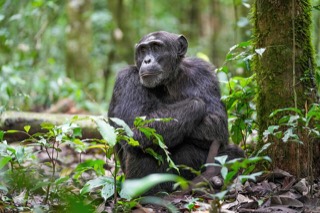 Chimpanzee (reference photo)

Species Data
- Classification
- Primates / Hominidae Source
- Size
- Males about 85 cm, females about 77.5 cm
- Weight
- Males about 40–60 kg, females about 32–47 kg (one large captive individual reached 136 kg)
- Lifespan
- Wild: average about 13–33 years (varies greatly between communities, with some exceeding 60); in captivity, the average in Japan is 28.3 years, individuals surviving to maturity reach about 40, and one overseas record reached 66 years
- Diet
- Omnivore Omnivorous, feeding mainly on fruit as well as seeds, flowers, leaves, bark, honey, insects, and small to medium mammals such as bushpigs, monkeys, and duikers
- Activity
- Diurnal; spends the day feeding and traveling and sleeps at night in nests built in the trees
- Distribution
- The chimpanzee is native to equatorial Africa's forests and savannas, ranging across roughly 18 West, Central, and East African countries; it is believed extinct in Togo, Burkina Faso, and Benin. Source
- Sources
- ja.wikipedia.org en.wikipedia.org
Did You Know?
- Chimpanzees share almost 99% of their DNA sequence with humans, yet they have 24 pairs of chromosomes compared to the human 23. Source
- Evidence shows chimpanzees have used stone tools for at least 4,300 years, among the longest documented tool-use traditions of any nonhuman animal. Source
- A chimpanzee named Ayumu became famous for a memory test in which he could correctly and quickly point to the positions of briefly flashed numbers in ascending order, outperforming human adults. Source
Where to See This Species
Operating facilities registered on this site: Japan 26
Adventure WorldWakayamaOpened in 1978
Ishikawa DoubutsuenIshikawaAbout 60 minutes from the Kanazawa-Morimoto Interchange on the Hokuriku Expressway, about 40 minutes from the Kanazawa-Nishi Interchange, and about 20 minutes from the Komatsu Interchange.
Izu Shaboten ZooShizuokaOpened in 1959
Utsunomiya DoubutsuenTochigiAbout 5 minutes from the Utsunomiya IC on the Tohoku Expressway; free parking for 1,000 cars.
Yokohama Shiritsu Yokohama DoubutsuenKanagawaOpened in 1999
Yokohama Shiritsu Nogeyama DoubutsuenKanagawaOpened in 1951
Iwate SafariParkIwateAbout 45 minutes from the Ichinoseki IC, about 30 minutes from the Wakayanagi-Kannari IC, or about 25 minutes via National Route 284.
Miyazakishifenikkusushizen DoubutsuenMiyazakiBuses bound for Phoenix Shizen Dobutsuen run from Miyako City or Miyazaki Station (check the Miyazaki Kotsu website for detailed timetables).
Kyoto City ZooKyotoOpened in 1903
Kumamotoshi DoushokubutsuenKumamotoTake the tram bound for Kengun and get off at the Doshokubutsuen-Iriguchi stop, then walk 10 minutes.
Hiroshima City Asa Zoological ParkHiroshimaFrom JR Hiroshima Station, take the Sanyo Main Line or Kabe Line to Shin-Hakushima Station, transfer to the Astram Line to Kamiyasu Station, then take a bus to "Asa Dobutsu Koen" (about 45 minutes in total).
Noichi Zoological Park of Kochi PrefectureKochiA 20-minute walk or 13-minute rental-bicycle ride from Noichi Station on the Tosa Kuroshio Railway Gomen-Nahari Line.
Sapporoshimaruyama DoubutsuenHokkaidoOpened in 1951
Hirakawa ZooKagoshimaAbout a 20-minute walk from Goino Station on the JR Ibusuki-Makurazaki Line, or take a bus bound for Taniyama / Dobutsuen from Fukuhira Nokyo-mae to the last stop.
Akitashioomoriyama DoubutsuenAkitaFrom bus stop 7 at the west exit of the JR Akita Station bus terminal, take the Akita Chuo Kotsu "Araya Line" bus for about 30 minutes.
Sendaishiyagiyama Doubutsu KouenMiyagiTake the Sendai Subway Tozai Line to Yagiyama Zoological Park Station; the zoo is right by the elevator from Central Exit 1 (about 12 minutes from Sendai Station).
Chiba Zoological ParkChibaOpened in 1985
Naganoshichausuyama DoubutsuenNaganoThe nearest station is JR Shinonoi Station.
Tennoji ZooOsakaOpened in 1915
Hitachishikamine DoubutsuenIbarakiAbout 5 minutes from the Hitachi-Chuo Interchange on the Joban Expressway via National Route 6.
Himeji Shiritsu DoubutsuenHyogoOpened in 1951
Hamamatsu Zoological GardensShizuokaOpened in 1950
Fukuoka Zoo & Botanical GardenFukuokaOpened in 1953
Higashiyama Zoo and Botanical GardensAichiOpened in 1937
- レモン、良いお母さんになってください🌸
- 【東山動植物園公式】チンパンジーのカズキ《 チンパンジー 》# サルの赤ちゃん
- (チンパンジーのお勉強)伸びるニイニ
- (チンパンジーのお勉強)コイコは横取りされるのが嫌
- 【東山動植物園公式】麻袋を、入れてみました。《チンパンジー》#shorts
- 【確保第一】ズーラシアで「おやつのパイナップルとチンパンジーたち」他 本日の注目情報セレクション
Source links to official sites, official YouTube channels, and news aggregators such as Zoo Ring. Visit the publisher for the full item.
Conservation Story
Conservation Status
Endangered (EN)
Sources
Support Conservation
A visit is a small, positive way to support the daily lives of the animals you care about.
- Visit
- A visit itself helps support the facility.
- Animal Supporter Programs & Giving
- Find ways to support the facility through its official website.
- Furusato Nozei
- Municipally run facilities may share official guidance for this Japanese hometown-tax program.
- Support Adventure World
- Support Ishikawa Doubutsuen
- Support Izu Shaboten Zoo
- Support Utsunomiya Doubutsuen
- Support Yokohama Shiritsu Yokohama Doubutsuen
- Support Yokohama Shiritsu Nogeyama Doubutsuen
- Support Iwate SafariPark
- Support Miyazakishifenikkusushizen Doubutsuen
- Support Kyoto City Zoo
- Support Kumamotoshi Doushokubutsuen
- Support Hiroshima City Asa Zoological Park
- Support Noichi Zoological Park of Kochi Prefecture
- Support Sapporoshimaruyama Doubutsuen
- Support Hirakawa Zoo
- Support Akitashioomoriyama Doubutsuen
- Support OJI ZOO
- Support Sendaishiyagiyama Doubutsu Kouen
- Support Chiba Zoological Park
- Support Naganoshichausuyama Doubutsuen
- Support Tennoji Zoo
- Support Ueno Zoo
- Support Hitachishikamine Doubutsuen
- Support Himeji Shiritsu Doubutsuen
- Support Hamamatsu Zoological Gardens
- Support Fukuoka Zoo & Botanical Garden
- Support Higashiyama Zoo and Botanical Gardens
FAQ
- How closely related are chimpanzees to humans?
- Chimpanzees share almost 99% of their DNA sequence with humans, making them one of our closest living relatives, though they have 24 pairs of chromosomes versus the human 23. Source
- Do chimpanzees use tools?
- Yes. Chimpanzees use tools such as stripped twigs to fish for termites and stones to crack nuts, and evidence shows this behavior dates back at least 4,300 years. Source
- Why are chimpanzees endangered?
- Habitat loss and fragmentation from logging and agriculture, poaching for bushmeat, and disease transmission from humans have all contributed to population declines, leading the IUCN to classify the species as Endangered. Source
- How many operating facilities are registered here?
- Operating facilities registered on this site: Japan 26 Source
Books & gear
Source: ja.wikipedia.org en.wikipedia.org