Mandrillマンドリル
Mandrillus sphinxVU— Vulnerable
The mandrill is the world's largest monkey and among its most colorful mammals, with adult males displaying vivid blue-and-red facial and hindquarter markings. Native to the rainforests of west-central Africa, mandrills live in enormous hordes that can number in the hundreds — the largest social groups of any primate. Hunting and habitat loss have driven a population decline of over 30% in recent decades, and the IUCN lists the species as Vulnerable.
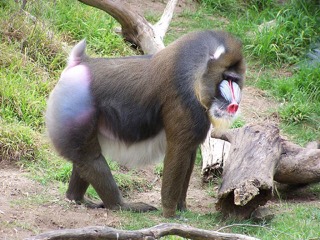 Mandrill (reference photo)

Species Data
- Classification
- Primates / Cercopithecidae Source
- Size
- Head-body length: males 70–95 cm, females 55–70 cm
- Weight
- Males 19–30 kg (maximum 54 kg), females 10–15 kg
- Lifespan
- Wild: 12–14 years / captive: 30–40 years
- Diet
- Omnivore Omnivorous, feeding mainly on fruit (50.7%), seeds (26.0%), and leaves (8.2%), as well as invertebrates
- Activity
- Diurnal; active about 10 hours a day from morning until sunset
- Distribution
- Found in west-central Africa across southern Cameroon, Equatorial Guinea, Gabon, and the Republic of the Congo. Source
- Sources
- ja.wikipedia.org en.wikipedia.org
Did You Know?
- Charles Darwin famously wrote that "no other member of the whole class of mammals is coloured in so extraordinary a manner as the adult male mandrill." Source
- In Gabon, mandrill hordes average around 620 individuals, with some groups reaching as many as 845 members — among the largest primate groupings known. Source
- Classified as Vulnerable by the IUCN, with the population estimated to have declined by more than 30% over the last 24 years. Source
Where to See This Species
Operating facilities registered on this site: Japan 9
Kyoto City ZooKyotoOpened in 1903
Noichi Zoological Park of Kochi PrefectureKochiA 20-minute walk or 13-minute rental-bicycle ride from Noichi Station on the Tosa Kuroshio Railway Gomen-Nahari Line.
Sapporoshimaruyama DoubutsuenHokkaidoOpened in 1951
Hirakawa ZooKagoshimaAbout a 20-minute walk from Goino Station on the JR Ibusuki-Makurazaki Line, or take a bus bound for Taniyama / Dobutsuen from Fukuhira Nokyo-mae to the last stop.
Chiba Zoological ParkChibaOpened in 1985
Omuta City ZooFukuokaOpened in 1941
TOBU ZOOSaitamaFrom Tobu-Dobutsu-Koen Station (west exit), about 10 minutes on foot (600 m) or about 5 minutes by bus.
Hamamatsu Zoological GardensShizuokaOpened in 1950
Higashiyama Zoo and Botanical GardensAichiOpened in 1937
- 【東山動植物園公式】2頭目育児 成長記5《 マンドリル サル 》
- 【東山動植物園公式】ある日のマンドリル一家~マンドリルの赤ちゃんの成長記3~《 マンドリル サル 》 #short
- マンドリル グルーミング母娘20260820
- 9月1日~ ビオトープの一般公開を開始します
- 【東山動植物園公式】マンドリルの赤ちゃんも忙しい~マンドリルの赤ちゃんの成長記2~《 マンドリル サル 》 #short
Source links to official sites, official YouTube channels, and news aggregators such as Zoo Ring. Visit the publisher for the full item.
Conservation Story
Conservation Status
Vulnerable (VU)
Sources
Support Conservation
A visit is a small, positive way to support the daily lives of the animals you care about.
- Visit
- A visit itself helps support the facility.
- Animal Supporter Programs & Giving
- Find ways to support the facility through its official website.
- Furusato Nozei
- Municipally run facilities may share official guidance for this Japanese hometown-tax program.
FAQ
- Why are male mandrills so colorful?
- The vivid blue and red coloring on a male mandrill's face and hindquarters signals dominance and health, and becomes more intense in higher-ranking males. Source
- How large are mandrill social groups?
- Mandrills live in some of the largest groups of any primate; hordes in Gabon average around 620 individuals and can exceed 800. Source
- Are mandrills endangered?
- The IUCN classifies mandrills as Vulnerable, with numbers estimated to have fallen more than 30% over the past 24 years due to hunting and habitat loss. Source
- How many operating facilities are registered here?
- Operating facilities registered on this site: Japan 9 Source
Books & gear
Source: ja.wikipedia.org en.wikipedia.org