Plains Zebraサバンナシマウマ

Equus quaggaNT— Near Threatened

The plains zebra is the most common and widespread zebra species, ranging across the savannas of eastern and southern Africa. Each individual carries a stripe pattern as unique as a fingerprint, and the species forms complex, multi-level social groups — small family harems that gather into much larger herds. Population declines in 10 of its 17 range countries have led the IUCN to classify it as Near Threatened.

Operating facilities registered on this site: Japan 21 (Noichi Zoological Park of Kochi Prefecture, Tennoji Zoo, Chiba Zoological Park, and 18 more). These facilities are confirmed by resident animal records or the facility’s official information.
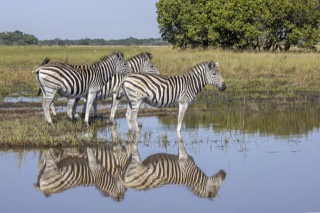
Plains Zebra (reference photo)
Photo: Charles J. Sharp / CC BY-SA 4.0 / Source / cropped

Species Data

Classification
Perissodactyla / Equidae Source
Size
Height 127–140 cm, body length 217–246 cm
Weight
Males 220–322 kg, females 175–250 kg
Lifespan
Wild: average 25 years
Diet
Herbivore Herbivorous, feeding mainly on grasses, and also on shrubs and leaves in the dry season
Distribution
Widespread across southern and eastern Africa south of the Sahara, though now extinct in Somalia, Burundi, and Lesotho. Source

Did You Know?

  • Each zebra's bold black-and-white stripe pattern is unique, functioning much like a fingerprint for individual identification. Source
  • Plains zebras form multi-level societies where family harems and bachelor groups gather into larger herds — a social structure otherwise seen in primates like the gelada. Source
  • The quagga, long thought to be a separate extinct species, was genetically confirmed to be a subspecies of the plains zebra. Source

Where to See This Species

Operating facilities registered on this site: Japan 21

Noichi Zoological Park of Kochi PrefectureKochiA 20-minute walk or 13-minute rental-bicycle ride from Noichi Station on the Tosa Kuroshio Railway Gomen-Nahari Line.

Source

No.0078In residence

Atsushi

アツシ

Plains ZebraEquus quagga

Sex
Male
Born
May 23, 2006
NT— Near Threatened
No.0399In residence

Itsuha

イツハ

Plains ZebraEquus quagga

Sex
Female
Born
January 28, 2026
NT— Near Threatened
No.0726In residence

Mirai

ミライ

Plains ZebraEquus quagga

Sex
Female
Born
June 3, 2011
NT— Near Threatened
No.0760In residence

Momiji

モミジ

Plains ZebraEquus quagga

Sex
Female
Born
October 24, 2014
NT— Near Threatened
No.1019In residence

Riku

リク

Plains ZebraEquus quagga

Sex
Male
Born
May 30, 2010
NT— Near Threatened

Tennoji ZooOsakaOpened in 1915

Source

No.0172In residence

Chisato

チサト

Plains ZebraEquus quagga

Sex
Female
Born
September 21, 2018
NT— Near Threatened

Chiba Zoological ParkChibaOpened in 1985

Source

No.0888In residence

Pearl

パール

Plains ZebraEquus quagga

Sex
Female
Born
October 20, 2016
NT— Near Threatened
No.1062In residence

Ruby

ルビー

Plains ZebraEquus quagga

Sex
Female
Born
May 19, 2019
NT— Near Threatened

Gunma Safari ParkGunmaOpened in 1979

Source

No.0897In residence

Peace

ピース

Plains ZebraEquus quagga

Sex
Male
Born
April 13, 2009
NT— Near Threatened
No.1264In residence

Tiara

ティアラ

Plains ZebraEquus quagga

Sex
Female
Born
Unknown
NT— Near Threatened

Adventure WorldWakayamaOpened in 1978

Source

Hirakawa ZooKagoshimaAbout a 20-minute walk from Goino Station on the JR Ibusuki-Makurazaki Line, or take a bus bound for Taniyama / Dobutsuen from Fukuhira Nokyo-mae to the last stop.

Source

ITOZU NO MORI Zoological ParkFukuokaOpened in 2002

Source

Sapporo Maruyama ZooHokkaidoOpened in 1951

Source

ZoorasiaKanagawaOpened in 1999

Source

Akiyoshidai Safari LandYamaguchiOpened in 1978

Source

Hiroshima City Asa Zoological ParkHiroshimaFrom JR Hiroshima Station, take the Sanyo Main Line or Kabe Line to Shin-Hakushima Station, transfer to the Astram Line to Kamiyasu Station, then take a bus to "Asa Dobutsu Koen" (about 45 minutes in total).

Source

Hamura ZooTokyoAbout a 20-minute walk from the East Exit of Hamura Station on the JR Ome Line.

Source

HIMEJI CENTRAL PARKHyogoFrom the north exit of JR Himeji Station, take the Shinki Bus bound for Himeji Central Park (fare: adults ¥590, children ¥300).

Source

IKEDA ZOOOkayamaFrom the West Exit of JR Okayama Station, take an Okaden Bus bound for Chuo Byoin (Central Hospital) to the Kyoyama Iriguchi stop, then walk about 12 minutes.

Source

Izu Animal KingdomShizuokaOpened in 1977

Source

Kushiro ZooHokkaidoOpened in 1975

Source

Morioka ZooIwateOpened in 1989

Source

Obihiro ZooHokkaidoFrom Obihiro Station, take the Tokachi Bus (Route 70, bound for Ozora Danchi) for about 18 minutes to the Dobutsuen-mae stop, then walk about 300 m; or take the Takushoku Bus for about 16 minutes to the Midorigaoka 6-chome Hakubutsukan Iriguchi stop, then walk about 600 m.

Source

Nonhoi ParkAichiAbout a 6-minute walk from the South Exit of Futagawa Station on the JR Tokaido Main Line.

Source

Latest news

3

Open the news index

Source links to official sites, official YouTube channels, and news aggregators such as Zoo Ring. Visit the publisher for the full item.

Conservation Story

Conservation Status

Near Threatened (NT)

Sources

ja.wikipedia.org en.wikipedia.org

Support Conservation

A visit is a small, positive way to support the daily lives of the animals you care about.

Visit
A visit itself helps support the facility.
Animal Supporter Programs & Giving
Find ways to support the facility through its official website.
Furusato Nozei
Municipally run facilities may share official guidance for this Japanese hometown-tax program.

FAQ

Where can I see Plains Zebra in Japan?
Operating facilities registered on this site: Japan 21 (Noichi Zoological Park of Kochi Prefecture, Tennoji Zoo, Chiba Zoological Park, and 18 more). These facilities are confirmed by resident animal records or the facility’s official information. Source
Is every zebra's stripe pattern different?
Yes. No two plains zebras have identical stripe patterns, and researchers use these unique markings to identify individuals in the field. Source
Is the plains zebra endangered?
The IUCN lists it as Near Threatened. Although still numbering around 500,000, populations have declined in 10 of the 17 countries where it occurs. Source
Was the extinct quagga a different species from the plains zebra?
No. Genetic studies confirmed the quagga, which went extinct in the 19th century, was actually a subspecies of the plains zebra rather than a separate species. Source

Books & gear

Source: ja.wikipedia.org en.wikipedia.org