Ring-tailed Lemurワオキツネザル
Lemur cattaEN— Endangered
The ring-tailed lemur is a highly social, diurnal primate endemic to southern and southwestern Madagascar, instantly recognizable by its long tail banded in black and white. It lives in female-dominated troops of around 13–15 individuals and is famous for its sunbathing posture and scent-based "stink fights" between males. With the wild population estimated at only about 2,000 individuals as of 2017, it has been classified as Endangered by the IUCN since 2014.
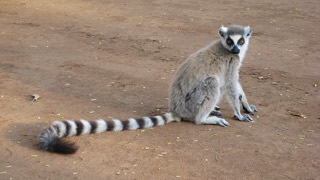 Ring-tailed Lemur (reference photo)

Species Data
- Classification
- Primates / Lemuridae Source
- Size
- Body length 38.5–46 cm, tail 56–63 cm
- Weight
- About 2.2–3.5 kg
- Lifespan
- Wild: females rarely exceed 16 years (record 20 years) / captive: record of 27 years
- Diet
- Omnivore Omnivorous, eating fruit, flowers, leaves, herbs, insects, and chameleons; in the dry season tamarind fruit can make up as much as 50% of the diet, and it travels about 5.6 km a day to forage
- Activity
- Diurnal; in early morning it sunbathes with its belly turned toward the sun
- Distribution
- Endemic to southern and southwestern Madagascar, inhabiting deciduous forests, gallery forests, and spiny scrublands across a range of protected areas. Source
- Sources
- ja.wikipedia.org en.wikipedia.org
Did You Know?
- The tail is ringed with 12–13 white and 13–14 black bands and is longer than the body itself; lemurs hold it aloft as a visual signal to keep the group together. Source
- Unlike most primates, females socially dominate males, controlling feeding priority and enforcing a clear hierarchy within groups of roughly 13–15 individuals. Source
- Males engage in "stink fights," dousing their tails with scent from forearm glands and wafting them at rivals to settle territorial disputes without physical combat. Source
Where to See This Species
Operating facilities registered on this site: Japan 26
Adventure WorldWakayamaOpened in 1978
Ishikawa DoubutsuenIshikawaAbout 60 minutes from the Kanazawa-Morimoto Interchange on the Hokuriku Expressway, about 40 minutes from the Kanazawa-Nishi Interchange, and about 20 minutes from the Komatsu Interchange.
Gokatsuraike Animal ParkMieAbout 10 minutes from the Seiwa-Taki Interchange.
Tobe Zoological Park of Ehime PrefectureEhimeOpened in 1988
Asahiyama ZooHokkaidoOpened in 1967
Izu Shaboten ZooShizuokaOpened in 1959
Utsunomiya DoubutsuenTochigiAbout 5 minutes from the Utsunomiya IC on the Tohoku Expressway; free parking for 1,000 cars.
Yokohama Shiritsu Nogeyama DoubutsuenKanagawaOpened in 1951
Iwate SafariParkIwateAbout 45 minutes from the Ichinoseki IC, about 30 minutes from the Wakayanagi-Kannari IC, or about 25 minutes via National Route 284.
Kyoto City ZooKyotoOpened in 1903
Kumamotoshi DoushokubutsuenKumamotoTake the tram bound for Kengun and get off at the Doshokubutsuen-Iriguchi stop, then walk 10 minutes.
Noichi Zoological Park of Kochi PrefectureKochiA 20-minute walk or 13-minute rental-bicycle ride from Noichi Station on the Tosa Kuroshio Railway Gomen-Nahari Line.
Saitamakenkodomodoubutsu Shizen KouenSaitamaOpened in 1980
Sapporoshimaruyama DoubutsuenHokkaidoOpened in 1951
Hirakawa ZooKagoshimaAbout a 20-minute walk from Goino Station on the JR Ibusuki-Makurazaki Line, or take a bus bound for Taniyama / Dobutsuen from Fukuhira Nokyo-mae to the last stop.
Akitashioomoriyama DoubutsuenAkitaFrom bus stop 7 at the west exit of the JR Akita Station bus terminal, take the Akita Chuo Kotsu "Araya Line" bus for about 30 minutes.
Suzaka ZooNaganoFrom the Suzaka-Nagano-Higashi IC on the Joshin-etsu Expressway, take Route 403, turn right at the Kotaka-machi intersection, turn left at the Kami-Hatcho intersection, cross Garyu Bridge, and turn left for the south entrance.
Chiba Zoological ParkChibaOpened in 1985
TOBU ZOOSaitamaFrom Tobu-Dobutsu-Koen Station (west exit), about 10 minutes on foot (600 m) or about 5 minutes by bus.
Himeji Shiritsu DoubutsuenHyogoOpened in 1951
Hamamatsu Zoological GardensShizuokaOpened in 1950
Toyamashifamiri ParkToyamaOpened in 1984
Fuji Safari ParkShizuokaOpened in 1980
Higashiyama Zoo and Botanical GardensAichiOpened in 1937
Japan Monkey CentreAichiAbout a 20-minute walk from the East Exit of Meitetsu Inuyama Station (go straight along the tree-lined road for about 300 m, turn left at the Umetsubo Kosenkyo Kita intersection, and follow the road for a little over 1 km).
Former facilities
North Safari SapporoHokkaidoOpened in 2005
Closed: 2025-09-30 Official Site
Temporarily closed facilities
Temporarily closed Official Site
- 飼育員が作るごはん【ワオキツネザル編】🐒
- ワオキツネザル ヤマボウシ20260917e
- 【キュレーターブログ】ワオキツネザルのマーキングその2
- 【ぷくっ】日本モンキーセンターで「ほお袋を持たないワオキツネザルたちのほっぺ」他 本日の注目情報セレクション
- ワオキツネザルの子ども×ジャンプ #japanmonkeycentre #日本モンキーセンター #ワオキツネザル
- 人間でいうと、なんと約110〜120歳!! 35歳のワオキツネザルの「ミナ」🐒✨ #アドベンチャーワールド
Source links to official sites, official YouTube channels, and news aggregators such as Zoo Ring. Visit the publisher for the full item.
Conservation Story
Conservation Status
Endangered (EN)
Sources
Support Conservation
A visit is a small, positive way to support the daily lives of the animals you care about.
- Visit
- A visit itself helps support the facility.
- Animal Supporter Programs & Giving
- Find ways to support the facility through its official website.
- Furusato Nozei
- Municipally run facilities may share official guidance for this Japanese hometown-tax program.
- Support Adventure World
- Support Ishikawa Doubutsuen
- Support Gokatsuraike Animal Park
- Support Tobe Zoological Park of Ehime Prefecture
- Support Asahiyama Zoo
- Support Izu Shaboten Zoo
- Support Utsunomiya Doubutsuen
- Support Yokohama Shiritsu Nogeyama Doubutsuen
- Support Iwate SafariPark
- Support Kyoto City Zoo
- Support Kumamotoshi Doushokubutsuen
- Support Noichi Zoological Park of Kochi Prefecture
- Support Saitamakenkodomodoubutsu Shizen Kouen
- Support Sapporoshimaruyama Doubutsuen
- Support Hirakawa Zoo
- Support Akitashioomoriyama Doubutsuen
- Support Suzaka Zoo
- Support Chiba Zoological Park
- Support Ueno Zoo
- Support TOBU ZOO
- Support Himeji Shiritsu Doubutsuen
- Support Hamamatsu Zoological Gardens
- Support Toyamashifamiri Park
- Support Fuji Safari Park
- Support Higashiyama Zoo and Botanical Gardens
- Support Japan Monkey Centre
FAQ
- Why do ring-tailed lemurs sunbathe?
- They sit upright facing the sun with arms outstretched in a distinctive "sun-worshipping" posture during cool mornings, a behavior thought to help them warm up after the night. Source
- Are ring-tailed lemurs endangered?
- Yes. The IUCN has classified them as Endangered since 2014, with the wild population estimated at only around 2,000 individuals as of 2017 due to habitat loss and hunting. Source
- Do male or female ring-tailed lemurs lead the group?
- Females are dominant. Unlike most primate species, female ring-tailed lemurs outrank males socially, getting feeding priority and enforcing hierarchy within the troop. Source
- How many operating facilities are registered here?
- Operating facilities registered on this site: Japan 26 Source
Books & gear
Source: ja.wikipedia.org en.wikipedia.org