Sika Deerニホンジカ
Cervus nipponLC— Least Concern
The sika deer is a medium-sized deer native to East Asia, from the Russian Far East to northern Vietnam, including Japan, and now widely introduced across Europe, North America, and Oceania. It is one of the few deer species to keep its white-spotted coat into adulthood and is remarkably vocal, with more than ten distinct calls. Though classified as Least Concern overall, some native populations—most famously the sacred deer of Nara—have been culturally protected for over a millennium.
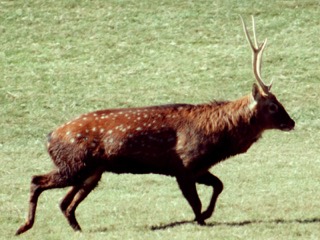 Sika Deer (reference photo)

Species Data
- Classification
- Artiodactyla / Cervidae Source
- Size
- Body length: males 90–190 cm, females 90–150 cm; shoulder height: males 70–130 cm, females 60–110 cm
- Weight
- Males 50–200 kg, females 25–80 kg (varies greatly by subspecies)
- Lifespan
- Records: males about 15 years, females about 20 years (one captive record of 25 years 5 months)
- Diet
- Herbivore Strongly herbivorous omnivore, eating grasses, dwarf bamboo leaves, nuts, and bark; may eat bark during periods of snow cover
- Activity
- Crepuscular, most active around sunrise and sunset, but tends toward nocturnal habits in areas with heavy hunting pressure
- Distribution
- Native from the Russian Far East south to northern Vietnam, including Japan. Introduced populations are now established across Europe, North America, New Zealand, and Australia. Source
- Sources
- ja.wikipedia.org en.wikipedia.org
Did You Know?
- Unlike most deer species, the sika deer is one of the few that retains its white spots into adulthood, visible in its summer coat. Source
- Sika deer are highly vocal, producing more than 10 distinct calls ranging from soft whistles to loud screams, including a distinctive courtship call from rutting males. Source
- The sika deer of Nara, Japan, are designated a national natural monument and have been protected for over a thousand years as sacred messengers of Kasuga Shrine. Source
Where to See This Species
Operating facilities registered on this site: Japan 8
Adventure WorldWakayamaOpened in 1978
Utsunomiya DoubutsuenTochigiAbout 5 minutes from the Utsunomiya IC on the Tohoku Expressway; free parking for 1,000 cars.
Okazakishihigashi Kouen DoubutsuenAichiAbout 1 km toward Toyota from the Okazaki IC on the Tomei Expressway.
Suzaka ZooNaganoFrom the Suzaka-Nagano-Higashi IC on the Joshin-etsu Expressway, take Route 403, turn right at the Kotaka-machi intersection, turn left at the Kami-Hatcho intersection, cross Garyu Bridge, and turn left for the south entrance.
Moriokashi Doubutsu KouenIwateOpened in 1989
Naganoshichausuyama DoubutsuenNaganoThe nearest station is JR Shinonoi Station.
Iida Shiritsu DoubutsuenNaganoAddress: 33 Ogimachi, Iida, Nagano.
Toyamashifamiri ParkToyamaOpened in 1984
Temporarily closed facilities
Satsukiyama DAYZOOOsakaOpened in 1957
Temporarily closed Official Site
Source links to official sites, official YouTube channels, and news aggregators such as Zoo Ring. Visit the publisher for the full item.
Conservation Story
Conservation Status
Least Concern (LC)
Sources
Support Conservation
A visit is a small, positive way to support the daily lives of the animals you care about.
- Visit
- A visit itself helps support the facility.
- Animal Supporter Programs & Giving
- Find ways to support the facility through its official website.
- Furusato Nozei
- Municipally run facilities may share official guidance for this Japanese hometown-tax program.
FAQ
- Do sika deer keep their spots as adults?
- Yes, unlike most deer species that lose their spots at maturity, sika deer retain white spotting in their summer coat throughout adulthood. Source
- Why are the deer in Nara, Japan special?
- Nara's sika deer are designated a national natural monument and have been protected for more than 1,000 years as sacred messengers of Kasuga Shrine, and they roam freely as a famous tourist attraction. Source
- How vocal are sika deer?
- They are highly vocal, with more than 10 distinct calls ranging from soft whistles to loud screams, including a distinctive courtship call given by males during the autumn rut. Source
- How many operating facilities are registered here?
- Operating facilities registered on this site: Japan 8 Source
Books & gear
Source: ja.wikipedia.org en.wikipedia.org