Greater Flamingoオオフラミンゴ
Phoenicopterus roseusLC— Least Concern
The greater flamingo is the largest and most widespread flamingo species, found from southern Europe and Africa to South Asia. It nests in enormous colonies of up to 200,000 pairs on mudflat mounds, laying a single chalky-white egg, and can live for decades—one Adelaide Zoo individual reached at least 83 years old.
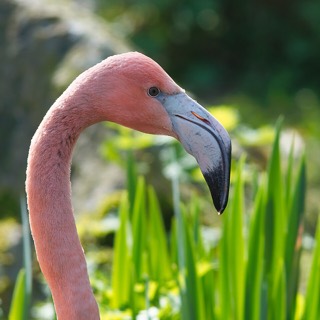 Greater Flamingo (reference photo)

Species Data
- Classification
- Phoenicopteriformes / Phoenicopteridae Source
- Size
- 120–150 cm
- Weight
- 2–4 kg
- Lifespan
- Average 30–40 years in the wild; some captive birds have lived over 60 years, with a record of 83 years (Adelaide Zoo)
- Diet
- Filter feeder Filter feeds on crustaceans such as small shrimp and brine shrimp, seeds (including rice), cyanobacteria, microorganisms such as diatoms, midge larvae, and mollusks
- Distribution
- Found across parts of Africa, southwestern and southern Asia including India, and southern Europe, with the northernmost breeding colonies at Lake Tengiz in Kazakhstan around 50°N. Source
- Sources
- ja.wikipedia.org en.wikipedia.org
Did You Know?
Where to See This Species
Operating facilities registered on this site: Japan 1
Fukuoka Zoo & Botanical GardenFukuokaOpened in 1953
Conservation Story
Conservation Status
Least Concern (LC)
Sources
Support Conservation
A visit is a small, positive way to support the daily lives of the animals you care about.
- Visit
- A visit itself helps support the facility.
- Animal Supporter Programs & Giving
- Find ways to support the facility through its official website.
- Furusato Nozei
- Municipally run facilities may share official guidance for this Japanese hometown-tax program.
FAQ
- How long do greater flamingos live?
- They are exceptionally long-lived, averaging 30 to 40 years in the wild and living over 60 years in captivity, with one Adelaide Zoo bird documented living at least 83 years. Source
- Do greater flamingos mate for life?
- No — unlike many long-lived birds, they do not maintain the same pair bond across consecutive breeding seasons, tending instead to choose a similarly aged partner each year. Source
- How many operating facilities are registered here?
- Operating facilities registered on this site: Japan 1 Source
Books & gear
Source: ja.wikipedia.org en.wikipedia.org