African Spurred Tortoiseケヅメリクガメ
Centrochelys sulcataEN— Endangered
The African spurred tortoise is the third-largest tortoise species in the world, native to the Sahel region south of the Sahara Desert. It can grow to a shell length of over 80 cm and a weight exceeding 100 kg, grazing mainly on grasses and succulent plants. Habitat loss, desertification, and overcollection for food and the pet trade have led the IUCN to classify it as Endangered.
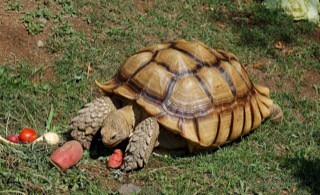 African Spurred Tortoise (reference photo)

Species Data
- Classification
- Testudines / Testudinidae Source
- Size
- Carapace length up to about 86 cm (males)
- Weight
- Males average about 81 kg, with some exceeding 120 kg; hatchlings weigh only about 40 g
- Lifespan
- Details unknown in the wild but thought to exceed 75 years; about 54 years in captivity
- Diet
- Herbivore Herbivorous, feeding mainly on grasses and succulents, and occasionally on carrion
- Distribution
- Native to the Sahel region south of the Sahara Desert, ranging across countries including Eritrea, Ethiopia, Sudan, Senegal, Chad, Niger, and Mali. Source
- Sources
- ja.wikipedia.org en.wikipedia.org
Did You Know?
- It is the third-largest tortoise species in the world, and once an individual exceeds 30 kg it is nearly immune to natural predators. Source
- Its name comes from the spur-like projections on its hind legs, while the species name "sulcata" (Latin for "furrowed") refers to the grooves on its shell scutes. Source
Where to See This Species
Operating facilities registered on this site: Japan 23
NasudoubutsuoukokuTochigiAbout 50 minutes by car from Nasu-Shiobara Station on the Tohoku Shinkansen (a free shuttle bus is available; online reservation required by 17:00 the day before).
Adventure WorldWakayamaOpened in 1978
Ishikawa DoubutsuenIshikawaAbout 60 minutes from the Kanazawa-Morimoto Interchange on the Hokuriku Expressway, about 40 minutes from the Kanazawa-Nishi Interchange, and about 20 minutes from the Komatsu Interchange.
Gokatsuraike Animal ParkMieAbout 10 minutes from the Seiwa-Taki Interchange.
Wan Park Kouchianimaru LandKochiAddress: 6-9-1 Sanbashi-dori, Kochi (inside Wanpark Kochi).
Echizen Matsushima AquariumFukuiOpened in 1959
Okazakishihigashi Kouen DoubutsuenAichiAbout 1 km toward Toyota from the Okazaki IC on the Tomei Expressway.
Kyoto City ZooKyotoOpened in 1903
Kiryuugaoka DoubutsuenGunmaIf driving, set your car navigation to "Kiryugaoka Amusement Park" (Kiryugaoka Yuenchi) rather than "Kiryugaoka Zoo" to reach the parking lot (searching by the zoo name may give an incorrect route).
Noichi Zoological Park of Kochi PrefectureKochiA 20-minute walk or 13-minute rental-bicycle ride from Noichi Station on the Tosa Kuroshio Railway Gomen-Nahari Line.
Saitamakenkodomodoubutsu Shizen KouenSaitamaOpened in 1980
Chiba Zoological ParkChibaOpened in 1985
Naganoshichausuyama DoubutsuenNaganoThe nearest station is JR Shinonoi Station.
TOBU ZOOSaitamaFrom Tobu-Dobutsu-Koen Station (west exit), about 10 minutes on foot (600 m) or about 5 minutes by bus.
Iida Shiritsu DoubutsuenNaganoAddress: 33 Ogimachi, Iida, Nagano.
Akitashioomoriyama DoubutsuenAkitaFrom bus stop 7 at the west exit of the JR Akita Station bus terminal, take the Akita Chuo Kotsu "Araya Line" bus for about 30 minutes.
Shibukawa Doubutsu KouenOkayamaOpened in 1988
KOBE ANIMAL KINGDOMHyogoRight by Keisan Kagaku Center Station (Kobe Animal Kingdom / Fugaku-mae) on the Port Liner.
Oouchiyama DoubutsuenMieAbout a 30-minute walk from Ouchiyama Station on the JR Kisei Main Line (the zoo's own directions also describe it as about 1 km).
Omuta City ZooFukuokaOpened in 1941
ITOZU NO MORI Zoological ParkFukuokaOpened in 2002
Fukuyama Shiritsu DoubutsuenHiroshimaThere is no public transportation; access is by car.
Former facilities
North Safari SapporoHokkaidoOpened in 2005
Closed: 2025-09-30 Official Site
Misaki KouenOsakaOpened in 1957
Closed: 2020-03-31 Official Site
Temporarily closed facilities
Satsukiyama DAYZOOOsakaOpened in 1957
Temporarily closed Official Site
- 【謎解き】園内のあちこちにある穴の正体は…?【動画あり】
- おはようございます!朝から掘っとけないケヅメリクガメ🐢⛏️ #サユリワールド #sayuriworld
- きゅうりがおいしすぎる! #ケヅメリクガメ #ムツアシガメ
- 緑いっぱいプロジェクト~ケヅメリクガメ編~
Source links to official sites, official YouTube channels, and news aggregators such as Zoo Ring. Visit the publisher for the full item.
Conservation Story
Conservation Status
Endangered (EN)
Support Conservation
A visit is a small, positive way to support the daily lives of the animals you care about.
- Visit
- A visit itself helps support the facility.
- Animal Supporter Programs & Giving
- Find ways to support the facility through its official website.
- Furusato Nozei
- Municipally run facilities may share official guidance for this Japanese hometown-tax program.
- Support iZoo
- Support Nasudoubutsuoukoku
- Support Adventure World
- Support Ishikawa Doubutsuen
- Support Gokatsuraike Animal Park
- Support Wan Park Kouchianimaru Land
- Support Echizen Matsushima Aquarium
- Support Okazakishihigashi Kouen Doubutsuen
- Support Kyoto City Zoo
- Support Kiryuugaoka Doubutsuen
- Support Noichi Zoological Park of Kochi Prefecture
- Support Saitamakenkodomodoubutsu Shizen Kouen
- Support Chiba Zoological Park
- Support Naganoshichausuyama Doubutsuen
- Support TOBU ZOO
- Support Iida Shiritsu Doubutsuen
- Support Akitashioomoriyama Doubutsuen
- Support Shibukawa Doubutsu Kouen
- Support KOBE ANIMAL KINGDOM
- Support Oouchiyama Doubutsuen
- Support Omuta City Zoo
- Support ITOZU NO MORI Zoological Park
- Support Fukuyama Shiritsu Doubutsuen
FAQ
- How big does the African spurred tortoise get?
- Males can reach a shell length of about 86 cm and weigh over 120 kg, making it the third-largest tortoise species in the world. Source
- Why is it endangered?
- Habitat destruction, desertification of the Sahel, and overcollection for the food and pet trade have driven wild populations down to an estimated 18,000–20,000 individuals. Source
- How many operating facilities are registered here?
- Operating facilities registered on this site: Japan 23 Source
Books & gear
Source: ja.wikipedia.org en.wikipedia.org