Asian Black Bearツキノワグマ
Ursus thibetanusVU— Vulnerable
The Asian black bear, also called the moon bear for the pale crescent on its chest, ranges across forested habitats from Iran through the Himalayas to East Asia and Japan. A largely herbivorous omnivore and skilled climber, it faces mounting pressure from deforestation, human conflict, and poaching for body parts used in traditional medicine. The IUCN classifies it as Vulnerable.
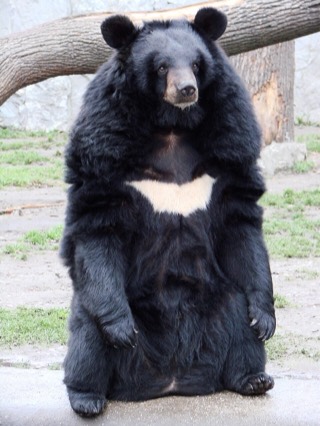 Asian Black Bear (reference photo)
.JPG)
Species Data
- Classification
- Carnivora / Ursidae Source
- Size
- Head-body length about 120–190 cm
- Weight
- Males about 60–200 kg (average 135 kg), females about 40–125 kg
- Lifespan
- About 25 years in the wild; one captive individual reached 44 years
- Diet
- Omnivore Largely plant-based omnivore, feeding mainly on leaves, fruit, and seeds; eats large quantities of insects such as ants in early summer and occasionally takes ungulates
- Activity
- Basically diurnal, but may become more nocturnal in areas with heavy human activity
- Distribution
- The Asian black bear ranges from southeastern Iran through the Himalayas across mainland Southeast Asia, China, Korea, Taiwan, and Japan's Honshu and Shikoku islands. Source
- Sources
- ja.wikipedia.org en.wikipedia.org
Did You Know?
- Asian black bears are exceptional climbers that reportedly spend nearly half their lives in trees, often leaving behind 'bear nests' of broken branches where they have sat and fed. Source
- Asian black bears are notably more aggressive toward humans than related species; a hospital in Srinagar reportedly received dozens of attack victims annually around the turn of the 20th century. Source
- In traditional Japanese hunting culture, killing an all-black bear lacking the distinctive white chest crescent was believed to anger mountain spirits, and some hunters permanently gave up hunting after doing so. Source
Where to See This Species
Operating facilities registered on this site: Japan 15
Noboribetsu BearParkHokkaidoOpened in 1958
OkuhidakumabokujouGifu2535 Hitoegane, Okuhida Onsengo, Takayama, Gifu.
Kahokuchoujidou DoubutsuenYamagata81 Yachi-Bo, Kahoku-machi, Nishimurayama-gun, Yamagata.
Gunmasafari ParkGunmaOpened in 1979
Hiroshima City Asa Zoological ParkHiroshimaFrom JR Hiroshima Station, take the Sanyo Main Line or Kabe Line to Shin-Hakushima Station, transfer to the Astram Line to Kamiyasu Station, then take a bus to "Asa Dobutsu Koen" (about 45 minutes in total).
Hirakawa ZooKagoshimaAbout a 20-minute walk from Goino Station on the JR Ibusuki-Makurazaki Line, or take a bus bound for Taniyama / Dobutsuen from Fukuhira Nokyo-mae to the last stop.
Akitashioomoriyama DoubutsuenAkitaFrom bus stop 7 at the west exit of the JR Akita Station bus terminal, take the Akita Chuo Kotsu "Araya Line" bus for about 30 minutes.
Suzaka ZooNaganoFrom the Suzaka-Nagano-Higashi IC on the Joshin-etsu Expressway, take Route 403, turn right at the Kotaka-machi intersection, turn left at the Kami-Hatcho intersection, cross Garyu Bridge, and turn left for the south entrance.
Moriokashi Doubutsu KouenIwateOpened in 1989
Hitachishikamine DoubutsuenIbarakiAbout 5 minutes from the Hitachi-Chuo Interchange on the Joban Expressway via National Route 6.
Hamamatsu Zoological GardensShizuokaOpened in 1950
Toyamashifamiri ParkToyamaOpened in 1984
Wakayamajou Kouen DoubutsuenWakayamaOpened in 1919
Kyoto City ZooKyotoOpened in 1903
Former facilities
North Safari SapporoHokkaidoOpened in 2005
Closed: 2025-09-30 Official Site
- リンゴを食べるツキノワグマの赤ちゃん【ユートピアショート】
- 【東山動植物園公式】ルイ、ニンジンを食べる2《 ニッポンツキノワグマ ツキノワグマ クマ 》 #動物 #animals #shorts #asmr
- 岡山と言えば清水白桃じゃな🐻 #池田動物園 #岡山 #ツキノワグマ
- ツキノワグマ ホノカ ヤマボウシ食べる20260911e
- 休日の私みたいだ♨ #ツキノワグマ #池田動物園 #岡山
- メロンを食べるツキノワグマ(赤ちゃん)
Source links to official sites, official YouTube channels, and news aggregators such as Zoo Ring. Visit the publisher for the full item.
Conservation Story
Conservation Status
Vulnerable (VU)
Sources
Support Conservation
A visit is a small, positive way to support the daily lives of the animals you care about.
- Visit
- A visit itself helps support the facility.
- Animal Supporter Programs & Giving
- Find ways to support the facility through its official website.
- Furusato Nozei
- Municipally run facilities may share official guidance for this Japanese hometown-tax program.
- Support Noboribetsu BearPark
- Support Okuhidakumabokujou
- Support Kahokuchoujidou Doubutsuen
- Support Gunmasafari Park
- Support Hiroshima City Asa Zoological Park
- Support Hirakawa Zoo
- Support Akitashioomoriyama Doubutsuen
- Support Suzaka Zoo
- Support Moriokashi Doubutsu Kouen
- Support Ueno Zoo
- Support Hitachishikamine Doubutsuen
- Support Hamamatsu Zoological Gardens
- Support Toyamashifamiri Park
- Support Wakayamajou Kouen Doubutsuen
- Support Kyoto City Zoo
FAQ
- Why is the Asian black bear called the moon bear?
- It gets the nickname from the pale, crescent-moon-shaped patch of fur on its chest, which contrasts with its otherwise black coat. Source
- Why is the Asian black bear considered Vulnerable?
- Habitat loss from deforestation, poaching for gall bladders and other body parts used in traditional medicine, and conflict with humans over livestock and crops have all driven population declines. Source
- Are Asian black bears good climbers?
- Yes — they are among the most arboreal of the world's bears and reportedly spend close to half their lives in trees. Source
- How many operating facilities are registered here?
- Operating facilities registered on this site: Japan 15 Source
Books & gear
Source: ja.wikipedia.org en.wikipedia.org