Asian Elephantアジアゾウ

Elephas maximusEN— Endangered

The Asian elephant is the largest land animal native to Asia, ranging across grasslands and forests from India to Borneo. It is a highly intelligent, social herbivore capable of tool use and complex emotional behavior, and has been domesticated for labor for over 5,000 years. Habitat loss, fragmentation, and poaching have driven a roughly 50% population decline over the past 60 to 75 years, and the IUCN lists it as Endangered.
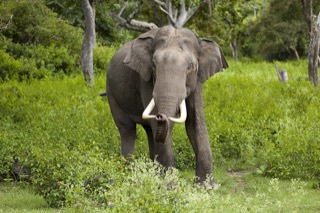
Asian Elephant (reference photo)
Photo: Yathin S Krishnappa / CC BY-SA 3.0 / Source / cropped

Species Data

Classification
Proboscidea / Elephantidae Source
Size
Body length (including trunk) about 5.5–8 m; shoulder height about 2.75 m in males and about 2.4 m in females
Weight
Males average about 4.0 tons, females about 2.7 tons
Lifespan
Said to average about 60 years in the wild, but studies show a median of about 41.6 years in protected-area populations and about 18.9 years in zoo populations, with large differences by environment
Diet
Herbivore Herbivorous, eating at least 112 plant species, mainly grasses as well as branches, leaves, bark, roots, and fruit; consumes up to 150 kg a day
Activity
Crepuscular, most active at dawn and dusk
Distribution
The Asian elephant ranges across the Indian subcontinent and Southeast Asia, from India in the west to Borneo in the east, and from Nepal in the north to Sumatra in the south. Source

Did You Know?

  • Asian elephants have a large, highly developed neocortex and display complex behaviors including grief, learning, imitation, play, altruism, and tool use. Source
  • Evidence from the Indus Valley Civilization shows that Asian elephants were domesticated and used for labor more than 5,000 years ago. Source
  • The Asian elephant is the national animal of Thailand and Laos, and has been designated India's national heritage animal. Source

Where to See This Species

Operating facilities registered on this site: Japan 27

Ueno ZooTokyoOpened in 1882

Source

No.0161In residence

Arun

アルン

Asian ElephantElephas maximus

Sex
Male
Born
October 31, 2020
EN— Endangered
No.0162In residence

Utai

ウタイ

Asian ElephantElephas maximus

Sex
Female
Born
February 7, 1998
EN— Endangered

Sapporoshimaruyama DoubutsuenHokkaidoOpened in 1951

Source

No.0163In residence

Tao

タオ

Asian ElephantElephas maximus

Sex
Unknown
Born
August 19, 2023
EN— Endangered
No.0164In residence

Paru

パール

Asian ElephantElephas maximus

Sex
Female
Born
September 12, 2003
EN— Endangered
No.0165In residence

Shishu

シーシュ

Asian ElephantElephas maximus

Sex
Male
Born
August 4, 2008
EN— Endangered

Higashiyama Zoo and Botanical GardensAichiOpened in 1937

Source

No.0166In residence

Anura

アヌラ

Asian ElephantElephas maximus

Sex
Female
Born
October 20, 2001
EN— Endangered
No.0167In residence

Sakura

さくら

Asian ElephantElephas maximus

Sex
Female
Born
January 29, 2013
EN— Endangered
No.0168In residence

Urara

うらら

Asian ElephantElephas maximus

Sex
Female
Born
June 26, 2022
EN— Endangered

ICHIHARA Elephant KingdomChibaOpened in 1989

No.0169In residence

Yumeka

ゆめ花

Asian ElephantElephas maximus

Sex
Female
Born
May 3, 2007
EN— Endangered

Adventure WorldWakayamaOpened in 1978

Source

Ishikawa DoubutsuenIshikawaAbout 60 minutes from the Kanazawa-Morimoto Interchange on the Hokuriku Expressway, about 40 minutes from the Kanazawa-Nishi Interchange, and about 20 minutes from the Komatsu Interchange.

Source

Asahiyama ZooHokkaidoOpened in 1967

Source

Utsunomiya DoubutsuenTochigiAbout 5 minutes from the Utsunomiya IC on the Tohoku Expressway; free parking for 1,000 cars.

Source

Okazakishihigashi Kouen DoubutsuenAichiAbout 1 km toward Toyota from the Okazaki IC on the Tomei Expressway.

Source

Iwate SafariParkIwateAbout 45 minutes from the Ichinoseki IC, about 30 minutes from the Wakayanagi-Kannari IC, or about 25 minutes via National Route 284.

Source

Kyoto City ZooKyotoOpened in 1903

Source

Kiryuugaoka DoubutsuenGunmaIf driving, set your car navigation to "Kiryugaoka Amusement Park" (Kiryugaoka Yuenchi) rather than "Kiryugaoka Zoo" to reach the parking lot (searching by the zoo name may give an incorrect route).

Source

African safariOitaBy car, the park is about 6 km (about 7 minutes) from the Beppu-wan Smart IC.

Source

OJI ZOOHyogo3 minutes on foot west from Oji-Koen Station on the Hankyu line.

Source

Sendaishiyagiyama Doubutsu KouenMiyagiTake the Sendai Subway Tozai Line to Yagiyama Zoological Park Station; the zoo is right by the elevator from Central Exit 1 (about 12 minutes from Sendai Station).

Source

Chiba Zoological ParkChibaOpened in 1985

Source

Naganoshichausuyama DoubutsuenNaganoThe nearest station is JR Shinonoi Station.

Source

Tennoji ZooOsakaOpened in 1915

Source

Tohoku SafariParkFukushimaAddress: 1 Sawamatsukura, Nihonmatsu, Fukushima.

Source

HIMEJI CENTRAL PARKHyogoFrom the north exit of JR Himeji Station, take the Shinki Bus bound for Himeji Central Park (fare: adults ¥590, children ¥300).

Source

Himeji Shiritsu DoubutsuenHyogoOpened in 1951

Source

Hamamatsu Zoological GardensShizuokaOpened in 1950

Source

Fuji Safari ParkShizuokaOpened in 1980

Source

Fukuoka Zoo & Botanical GardenFukuokaOpened in 1953

Source

Fukuyama Shiritsu DoubutsuenHiroshimaThere is no public transportation; access is by car.

Source

Temporarily closed facilities

Temporarily closed Official Site

Latest news

6

Open the news index

Source links to official sites, official YouTube channels, and news aggregators such as Zoo Ring. Visit the publisher for the full item.

Conservation Story

Conservation Status

Endangered (EN)

Sources

ja.wikipedia.org en.wikipedia.org

Support Conservation

A visit is a small, positive way to support the daily lives of the animals you care about.

Visit
A visit itself helps support the facility.
Animal Supporter Programs & Giving
Find ways to support the facility through its official website.
Furusato Nozei
Municipally run facilities may share official guidance for this Japanese hometown-tax program.

FAQ

Why is the Asian elephant endangered?
Habitat loss, degradation, and fragmentation, combined with poaching for ivory and skin, have driven a population decline of roughly 50% over the past 60 to 75 years. Source
How intelligent are Asian elephants?
Very intelligent — they have a large, highly developed neocortex and display behaviors such as tool use, imitation, play, altruism, and apparent grief. Source
How long have Asian elephants been domesticated?
Evidence from the Indus Valley Civilization shows Asian elephants were domesticated and used for work more than 5,000 years ago. Source
How many operating facilities are registered here?
Operating facilities registered on this site: Japan 27 Source

Books & gear

Source: ja.wikipedia.org en.wikipedia.org