Polar Bearホッキョクグマ

Ursus maritimusVU— Vulnerable

The polar bear is the largest living bear and land carnivore, ranging across the Arctic sea ice of Greenland, Canada, Alaska, Russia, and Svalbard. Its transparent, hollow fur appears white through light scattering, and it relies almost entirely on hunting ringed seals from the ice. Sea ice loss driven by climate change is its primary threat, with a 2008 study projecting that two-thirds of the world's polar bears could vanish by 2050; the IUCN currently lists the species as Vulnerable.
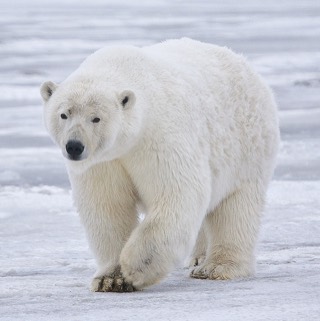
Polar Bear (reference photo)
Photo: Alan Wilson / CC BY-SA 3.0 / Source / cropped

Species Data

Classification
Carnivora / Ursidae Source
Size
Body length: males 200–250 cm, females 180–200 cm
Weight
Males 300–800 kg (average 385–410 kg), females 150–300 kg
Lifespan
Wild: 25–30 years
Diet
Carnivore Carnivorous, preying mainly on ringed seals as well as bearded seals and walruses
Distribution
Found across the Arctic in Greenland, Canada, Alaska, Russia, and the Svalbard Archipelago. Source

Did You Know?

  • Its fur is actually transparent and hollow, appearing white because it scatters incoming light. Source
  • Polar bears are thought to have diverged from a common ancestor with brown bears roughly 150,000 years ago, evolving highly specialized adaptations to Arctic life. Source
  • A 2008 study projected that two-thirds of the world's polar bears could disappear by 2050 due to climate-driven sea ice loss. Source

Where to See This Species

Operating facilities registered on this site: Japan 18

Tennoji ZooOsakaOpened in 1915

Source

No.0091In residence

Hochan

ホウちゃん

Polar BearUrsus maritimus

Sex
Female
Born
November 25, 2020
VU— Vulnerable

Yokohama Shiritsu Yokohama DoubutsuenKanagawaOpened in 1999

Source

No.0092In residence

Itchan

イッちゃん

Polar BearUrsus maritimus

Sex
Female
Born
around 2013
VU— Vulnerable
No.0093In residence

Rai

ライ

Polar BearUrsus maritimus

Sex
Male
Born
November 18, 2024
VU— Vulnerable

Asahiyama ZooHokkaidoOpened in 1967

Source

No.0095In residence

Hokuto

ホクト

Polar BearUrsus maritimus

Sex
Male
Born
around 2000
VU— Vulnerable
No.0096In residence

Pirika

ピリカ

Polar BearUrsus maritimus

Sex
Female
Born
December 15, 2005
VU— Vulnerable

OJI ZOOHyogo3 minutes on foot west from Oji-Koen Station on the Hankyu line.

Source

No.0097In residence

Yume

ゆめ

Polar BearUrsus maritimus

Sex
Female
Born
December 10, 2021
VU— Vulnerable

Hamamatsu Zoological GardensShizuokaOpened in 1950

Source

No.0098In residence

Yuki

ユキ

Polar BearUrsus maritimus

Sex
Female
Born
November 26, 1999
VU— Vulnerable

Oga Suizokukan GaoAkitaOpened in 2004

Source

No.0100In residence

Gota

豪太

Polar BearUrsus maritimus

Sex
Male
Born
November 26, 2003
VU— Vulnerable
No.0101In residence

Momo

モモ

Polar BearUrsus maritimus

Sex
Female
Born
November 25, 2014
VU— Vulnerable
No.0102In residence

Momota

モモ太

Polar BearUrsus maritimus

Sex
Male
Born
December 4, 2025
VU— Vulnerable

Sapporoshimaruyama DoubutsuenHokkaidoOpened in 1951

Source

No.0104In residence

Lara

ララ

Polar BearUrsus maritimus

Sex
Female
Born
November 20, 1994
VU— Vulnerable
No.0106In residence

Rira

リラ

Polar BearUrsus maritimus

Sex
Female
Born
December 21, 2014
VU— Vulnerable
No.0107In residence

Light

ライト

Polar BearUrsus maritimus

Sex
Male
Born
November 21, 2013
VU— Vulnerable

Tokushima ZooTokushima

Source

No.0108In residence

Pororo

ポロロ

Polar BearUrsus maritimus

Sex
Female
Born
around 2012
VU— Vulnerable

Adventure WorldWakayamaOpened in 1978

Source

Obihiro DoubutsuenHokkaidoFrom Obihiro Station, take the Tokachi Bus (Route 70, bound for Ozora Danchi) for about 18 minutes to the Dobutsuen-mae stop, then walk about 300 m; or take the Takushoku Bus for about 16 minutes to the Midorigaoka 6-chome Hakubutsukan Iriguchi stop, then walk about 600 m.

Source

Hirakawa ZooKagoshimaAbout a 20-minute walk from Goino Station on the JR Ibusuki-Makurazaki Line, or take a bus bound for Taniyama / Dobutsuen from Fukuhira Nokyo-mae to the last stop.

Source

Shuunanshitokuyama DoubutsuenYamaguchiOpened in 1960

Source

Sendaishiyagiyama Doubutsu KouenMiyagiTake the Sendai Subway Tozai Line to Yagiyama Zoological Park Station; the zoo is right by the elevator from Central Exit 1 (about 12 minutes from Sendai Station).

Source

Ueno ZooTokyoOpened in 1882

Source

Himeji Shiritsu DoubutsuenHyogoOpened in 1951

Source

Latest news

6

Open the news index

Source links to official sites, official YouTube channels, and news aggregators such as Zoo Ring. Visit the publisher for the full item.

Conservation Story

Conservation Status

Vulnerable (VU)

Sources

ja.wikipedia.org en.wikipedia.org

Support Conservation

A visit is a small, positive way to support the daily lives of the animals you care about.

Visit
A visit itself helps support the facility.
Animal Supporter Programs & Giving
Find ways to support the facility through its official website.
Furusato Nozei
Municipally run facilities may share official guidance for this Japanese hometown-tax program.

Individuals Remembered

No.0094In memoriam

Gogo

ゴーゴ

Polar BearUrsus maritimus

Yokohama Shiritsu Yokohama Doubutsuen

Sex
Male
Born
December 3, 2004
VU— Vulnerable
No.0099In memoriam

Baffin

バフィン

Polar BearUrsus maritimus

Hamamatsu Zoological Gardens

Sex
Female
Born
December 9, 1991
VU— Vulnerable
No.0103In memoriam

Kurumi

クルミ

Polar BearUrsus maritimus

Oga Suizokukan Gao

Sex
Female
Born
December 26, 1996
VU— Vulnerable
No.0105In memoriam

Denali

デナリ

Polar BearUrsus maritimus

Sapporoshimaruyama Doubutsuen

Sex
Male
Born
November 9, 1993
VU— Vulnerable

FAQ

Why does polar bear fur look white if the hairs are actually transparent?
Each hair is hollow and transparent; the fur appears white because it scatters visible light, similar to how snow appears white. Source
Why is climate change such a threat to polar bears?
Polar bears depend on sea ice as a platform to hunt seals. As Arctic sea ice shrinks and breaks up earlier each year, bears have less time and opportunity to hunt, threatening their survival. Source
How many polar bears are left in the wild?
The global population is estimated at roughly 22,000 to 31,000 individuals, and the IUCN classifies the species as Vulnerable. Source
How many operating facilities are registered here?
Operating facilities registered on this site: Japan 18 Source

Books & gear

Source: www.iucnredlist.org www.city.sapporo.jp tokushimazoo.jp