Domestic Goatヤギ
Capra hircusNE— Not Evaluated
The domestic goat is one of humanity's oldest domesticated animals, bred from the wild bezoar goat of Southwest Asia roughly 10,000 years ago. Highly adaptable browsers, goats eat a remarkably wide range of vegetation and thrive in habitats from arid mountains to small farms, which has made them both an agricultural staple and, when feral, a serious threat to island ecosystems. As a domestic species the goat is not evaluated by the IUCN, but its global population now exceeds 1.1 billion.
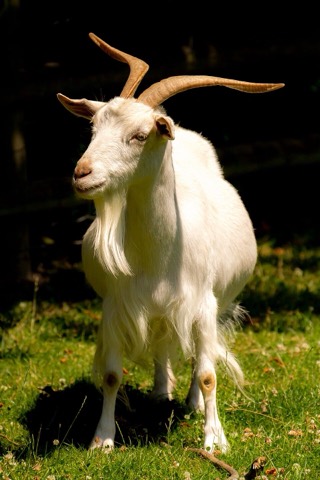 Domestic Goat (reference photo)

Species Data
- Classification
- Cetartiodactyla / Bovidae Source
- Size
- Varies greatly by breed; the small Shiba goat weighs about 20–30 kg
- Weight
- About 20–27 kg for females of small breeds; males of large breeds can exceed 140 kg
- Lifespan
- Average about 10–18 years (varies by source and breed)
- Diet
- Herbivore Browsing herbivore that prefers leaves and vegetation growing high up; known for voracious feeding on almost anything, sometimes stripping bark and roots entirely
- Activity
- Diurnal, curious, and social, living in herds; highly agile and able to climb steep rocky terrain
- Distribution
- The domestic goat was domesticated from the wild goat (Capra aegagrus) of Southwest Asia and Eastern Europe around 10,000 years ago in what is now Iran, making it one of the first animals ever domesticated. It is now raised worldwide, with over 1.1 billion goats recorded in 2022. Source
- Sources
- ja.wikipedia.org en.wikipedia.org
Did You Know?
- Goats have horizontal, rectangular pupils that can rotate to stay level even when the head is tilted more than 50 degrees, giving them an unusually wide field of view. Source
- Studies have shown goats can distinguish between photos of happy and angry human faces, suggesting they may be able to perceive human emotional states. Source
- Feral goats have devastated native vegetation on many islands, leading the species to be listed among the '100 of the World's Worst Invasive Alien Species.' Source
Where to See This Species
Operating facilities registered on this site: Japan 19
Adventure WorldWakayamaOpened in 1978
Gokatsuraike Animal ParkMieAbout 10 minutes from the Seiwa-Taki Interchange.
Shirotori ZooKagawaBy car, about 10 minutes from the Hiketa Interchange on the Takamatsu Expressway via National Route 11 toward Takamatsu.
Tobe Zoological Park of Ehime PrefectureEhimeOpened in 1988
Utsunomiya DoubutsuenTochigiAbout 5 minutes from the Utsunomiya IC on the Tohoku Expressway; free parking for 1,000 cars.
Kyoto City ZooKyotoOpened in 1903
Sayama Shiritsu Chikouzan Kouen Kodomo DoubutsuenSaitamaFrom the west exit of Sayamashi Station on the Seibu Shinjuku Line, take the Seibu Bus bound for Chikozan Koen to the last stop, or the bus bound for Saiboku and get off at Kamijuku, then walk 15 minutes.
Kiryuugaoka DoubutsuenGunmaIf driving, set your car navigation to "Kiryugaoka Amusement Park" (Kiryugaoka Yuenchi) rather than "Kiryugaoka Zoo" to reach the parking lot (searching by the zoo name may give an incorrect route).
Saitamakenkodomodoubutsu Shizen KouenSaitamaOpened in 1980
Ichikawashi DoushokubutsuenChibaAddress: 284-1 Omachi, Ichikawa, Chiba.
Shuunanshitokuyama DoubutsuenYamaguchiOpened in 1960
Sendaishiyagiyama Doubutsu KouenMiyagiTake the Sendai Subway Tozai Line to Yagiyama Zoological Park Station; the zoo is right by the elevator from Central Exit 1 (about 12 minutes from Sendai Station).
Chiba Zoological ParkChibaOpened in 1985
IKEDA ZOOOkayamaFrom the West Exit of JR Okayama Station, take an Okaden Bus bound for Chuo Byoin (Central Hospital) to the Kyoyama Iriguchi stop, then walk about 12 minutes.
Tennoji ZooOsakaOpened in 1915
Iida Shiritsu DoubutsuenNaganoAddress: 33 Ogimachi, Iida, Nagano.
Himeji Shiritsu DoubutsuenHyogoOpened in 1951
Hamamatsu Zoological GardensShizuokaOpened in 1950
Former facilities
North Safari SapporoHokkaidoOpened in 2005
Closed: 2025-09-30 Official Site
Temporarily closed facilities
Temporarily closed Official Site
- ヤギ(ワカバ、モエ)20260722e
- 【第2弾】仔ヤギの愛称が決まりました!
- 【8/15 限定!コラボワークショップ】自分だけの動物図鑑づくり開催のお知らせ
- 【第1弾】仔ヤギの愛称が決まりました!
- 【飼育員シリーズ】ヤギのスペシャルトーク
- 【第2弾】仔ヤギ2頭の愛称を募集します!
Source links to official sites, official YouTube channels, and news aggregators such as Zoo Ring. Visit the publisher for the full item.
Conservation Story
Conservation Status
Not Evaluated (NE)
Sources
Support Conservation
A visit is a small, positive way to support the daily lives of the animals you care about.
- Visit
- A visit itself helps support the facility.
- Animal Supporter Programs & Giving
- Find ways to support the facility through its official website.
- Furusato Nozei
- Municipally run facilities may share official guidance for this Japanese hometown-tax program.
- Support Adventure World
- Support Gokatsuraike Animal Park
- Support Shirotori Zoo
- Support Tobe Zoological Park of Ehime Prefecture
- Support Utsunomiya Doubutsuen
- Support Kyoto City Zoo
- Support Sayama Shiritsu Chikouzan Kouen Kodomo Doubutsuen
- Support Kiryuugaoka Doubutsuen
- Support Saitamakenkodomodoubutsu Shizen Kouen
- Support Ichikawashi Doushokubutsuen
- Support Shuunanshitokuyama Doubutsuen
- Support Sendaishiyagiyama Doubutsu Kouen
- Support Chiba Zoological Park
- Support IKEDA ZOO
- Support Tennoji Zoo
- Support Ueno Zoo
- Support Iida Shiritsu Doubutsuen
- Support Himeji Shiritsu Doubutsuen
- Support Hamamatsu Zoological Gardens
FAQ
- When were goats first domesticated?
- Goats were domesticated from the wild bezoar goat (Capra aegagrus) around 10,000 years ago in the region of present-day Iran, making them one of the first animals ever domesticated by humans. Source
- Why do goats have rectangular pupils?
- Their horizontal, rectangular pupils can rotate to stay level even when the head tilts more than 50 degrees, giving them a wide, near-panoramic field of view that helps them spot predators. Source
- Can goats recognize human emotions?
- Research has shown goats can distinguish between photographs of happy and angry human facial expressions, suggesting some ability to perceive human emotional states. Source
- How many operating facilities are registered here?
- Operating facilities registered on this site: Japan 19 Source
Books & gear
Source: ja.wikipedia.org en.wikipedia.org