Emuエミュー

Dromaius novaehollandiaeLC— Least Concern

The emu is the world's second-tallest living bird after the ostrich, a flightless giant endemic to Australia that can sprint at up to 50 km/h. Roaming the continent's grasslands and open country, it famously bested the Australian army in the 1932 "Emu War."

Operating facilities registered on this site: Japan 23 (Omuta City Zoo, Utsunomiya Zoo, Zoorasia, and 20 more). These facilities are confirmed by resident animal records or the facility’s official information.
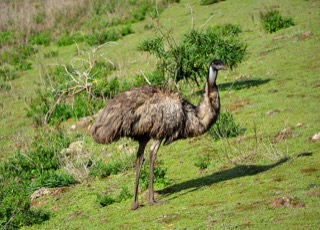
Emu (reference photo)
Photo: fry_theonly / CC BY-SA 2.0 / Source / cropped

Species Data

Classification
Casuariiformes / Dromaiidae Source
Size
Height about 1.6–2.0 m (body length 139–164 cm)
Weight
40–60 kg
Lifespan
Over 10 years in the wild, up to about 20 years in captivity
Diet
Omnivore Omnivorous, eating plants such as acacia, fruit and seeds, and insects such as grasshoppers; swallows small stones to aid digestion
Distribution
Endemic to Australia, ranging across most of the mainland's grasslands and open country. Source

Did You Know?

  • Though flightless, the emu can run at speeds of up to 50 km/h, using its powerful legs to cover long distances. Source
  • In 1932, Australian military personnel armed with machine guns attempted to cull crop-destroying emus in Western Australia in the famous "Emu War," but the birds largely evaded the hunters thanks to their speed and unpredictable movement. Source

Where to See This Species

Operating facilities registered on this site: Japan 23

Omuta City ZooFukuokaOpened in 1941

No.0418In residence

Jin

ジン

EmuDromaius novaehollandiae

Sex
Male
Born
Unknown
LC— Least Concern

Utsunomiya ZooTochigiAbout 5 minutes from the Utsunomiya IC on the Tohoku Expressway; free parking for 1,000 cars.

Source

ZoorasiaKanagawaOpened in 1999

Source

Kyoto City ZooKyotoOpened in 1903

Source

Hirakawa ZooKagoshimaAbout a 20-minute walk from Goino Station on the JR Ibusuki-Makurazaki Line, or take a bus bound for Taniyama / Dobutsuen from Fukuhira Nokyo-mae to the last stop.

Source

Matsue Vogel ParkShimaneOpened in 2001

Source

Chiba Zoological ParkChibaOpened in 1985

Source

Tennoji ZooOsakaOpened in 1915

Source

Ueno ZooTokyoOpened in 1882

Source

Tama ZooTokyoOpened in 1958

Source

Akiyoshidai Safari LandYamaguchiOpened in 1978

Source

Fukuchiyama City ZooKyotoInside Sandanike Park.

Source

Fukuyama City ZooHiroshimaThere is no public transportation; access is by car.

Source

Hamura ZooTokyoAbout a 20-minute walk from the East Exit of Hamura Station on the JR Ome Line.

Source

HIMEJI CENTRAL PARKHyogoFrom the north exit of JR Himeji Station, take the Shinki Bus bound for Himeji Central Park (fare: adults ¥590, children ¥300).

Source

Kakegawa KachoenShizuokaOpened in 2003

Source

Kurume City Bird CenterFukuokaLocated at 1667 Higashi-Kushihara-machi, Kurume, Fukuoka, inside Chuo Park.

Source

Morioka ZooIwateOpened in 1989

Source

Nasu SafariParkTochigiAbout 15 minutes from the Nasu IC or about 25 minutes from the Kuroiso-Itamuro IC on the Tohoku Expressway.

Source

Neo Park OkinawaOkinawaAbout 15 minutes by car from the Kyoda Interchange on the Okinawa Expressway.

Source

Nonhoi ParkAichiAbout a 6-minute walk from the South Exit of Futagawa Station on the JR Tokaido Main Line.

Source

Possible records, not yet confirmed: 12

These facilities are not confirmed by an official animal list. They appear in secondary sources such as Wikipedia; check the facility’s official website for current exhibits.

Adventure WorldWakayamaOpened in 1978

(Not confirmed by official sources) Source

Ishikawa ZooIshikawaAbout 60 minutes from the Kanazawa-Morimoto Interchange on the Hokuriku Expressway, about 40 minutes from the Kanazawa-Nishi Interchange, and about 20 minutes from the Komatsu Interchange.

(Not confirmed by official sources) Source

Izu Shaboten ZooShizuokaOpened in 1959

(Not confirmed by official sources) Source

Iwate SafariParkIwateAbout 45 minutes from the Ichinoseki IC, about 30 minutes from the Wakayanagi-Kannari IC, or about 25 minutes via National Route 284.

(Not confirmed by official sources) Source

Noichi Zoological Park of Kochi PrefectureKochiA 20-minute walk or 13-minute rental-bicycle ride from Noichi Station on the Tosa Kuroshio Railway Gomen-Nahari Line.

(Not confirmed by official sources) Source

Saitama Children's ZooSaitamaOpened in 1980

(Not confirmed by official sources) Source

Ichikawa Zoological & Botanical GardenChibaAddress: 284-1 Omachi, Ichikawa, Chiba.

(Not confirmed by official sources) Source

Sendai Yagiyama Zoological ParkMiyagiTake the Sendai Subway Tozai Line to Yagiyama Zoological Park Station; the zoo is right by the elevator from Central Exit 1 (about 12 minutes from Sendai Station).

(Not confirmed by official sources) Source

TOBU ZOOSaitamaFrom Tobu-Dobutsu-Koen Station (west exit), about 10 minutes on foot (600 m) or about 5 minutes by bus.

(Not confirmed by official sources) Source

Iida City ZooNaganoAddress: 33 Ogimachi, Iida, Nagano.

(Not confirmed by official sources) Source

Fukuoka Zoo & Botanical GardenFukuokaOpened in 1953

(Not confirmed by official sources) Source

Wakayama Castle Park ZooWakayamaOpened in 1919

(Not confirmed by official sources) Source

Former facilities

North Safari SapporoHokkaidoOpened in 2005

(Not confirmed by official sources) Source

Closed: 2025-09-30 Official Site

Temporarily closed facilities

Satsukiyama DAYZOOOsakaOpened in 1957

(Not confirmed by official sources) Source

No.0225In residence

Don

ドン

EmuDromaius novaehollandiae

Sex
Male
Born
around 1991
LC— Least Concern
No.0286In residence

Gen

ゲン

EmuDromaius novaehollandiae

Sex
Male
Born
November 21, 2009
LC— Least Concern
No.0314In residence

Haku

ハク

EmuDromaius novaehollandiae

Sex
Male
Born
November 19, 2009
LC— Least Concern
No.1122In residence

Sei

セイ

EmuDromaius novaehollandiae

Sex
Female
Born
November 19, 2009
LC— Least Concern

Temporarily closed Official Site

Latest news

2

Open the news index

Source links to official sites, official YouTube channels, and news aggregators such as Zoo Ring. Visit the publisher for the full item.

Conservation Story

Conservation Status

Least Concern (LC)

Sources

ja.wikipedia.org

Support Conservation

A visit is a small, positive way to support the daily lives of the animals you care about.

Visit
A visit itself helps support the facility.
Animal Supporter Programs & Giving
Find ways to support the facility through its official website.
Furusato Nozei
Municipally run facilities may share official guidance for this Japanese hometown-tax program.

FAQ

Where can I see Emu in Japan?
Operating facilities registered on this site: Japan 23 (Omuta City Zoo, Utsunomiya Zoo, Zoorasia, and 20 more). These facilities are confirmed by resident animal records or the facility’s official information. Source
Can emus fly?
No, emus are flightless, but they compensate with powerful legs that let them run at speeds up to 50 km/h. Source
What was the Emu War?
In 1932, the Australian military used machine guns in an attempt to control emus damaging crops in Western Australia, but the birds proved too fast and unpredictable, and the campaign is remembered as a famous failure. Source

Books & gear

Source: ja.wikipedia.org en.wikipedia.org