Chilean Flamingoチリーフラミンゴ
Phoenicopterus chilensisNT— Near Threatened
The Chilean flamingo is a pale pink filter-feeding flamingo of the South American Andes and southern cone, distinguished by its grey legs with pink joints. Listed as Near Threatened, it faces pressure from mining and irrigation projects that disturb the shallow saline lakes where it breeds.
Operating facilities registered on this site: Japan 26 (Utsunomiya Zoo, Kyoto City Zoo, Saitama Children's Zoo, and 23 more). These facilities are confirmed by resident animal records or the facility’s official information.
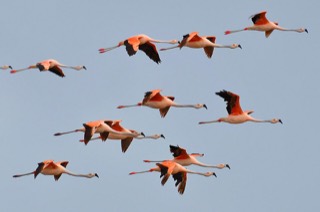 Chilean Flamingo (reference photo)

Species Data
- Classification
- Phoenicopteriformes / Phoenicopteridae Source
- Size
- 110–130 cm
- Weight
- 2.5–3.5 kg
- Lifespan
- About 50 years in the wild, about 40 years in captivity
- Diet
- Filter feeder Filter feeds on algae, plankton, crustaceans, aquatic insects, and mollusks, eating about 10% of its body weight a day
- Distribution
- Ranges across South America from Peru and Bolivia through Chile and Argentina, wintering in Uruguay and southern Brazil. Source
- Sources
- ja.wikipedia.org en.wikipedia.org
Did You Know?
Where to See This Species
Operating facilities registered on this site: Japan 26
Utsunomiya ZooTochigiAbout 5 minutes from the Utsunomiya IC on the Tohoku Expressway; free parking for 1,000 cars.
Kyoto City ZooKyotoOpened in 1903
Saitama Children's ZooSaitamaOpened in 1980
Sapporo Maruyama ZooHokkaidoOpened in 1951
Hirakawa ZooKagoshimaAbout a 20-minute walk from Goino Station on the JR Ibusuki-Makurazaki Line, or take a bus bound for Taniyama / Dobutsuen from Fukuhira Nokyo-mae to the last stop.
Chiba Zoological ParkChibaOpened in 1985
Hamamatsu Zoological GardensShizuokaOpened in 1950
Toyama Municipal Family Park ZooToyamaOpened in 1984
Asahiyama ZooHokkaidoOpened in 1967
Akiyoshidai Safari LandYamaguchiOpened in 1978
Hiroshima City Asa Zoological ParkHiroshimaFrom JR Hiroshima Station, take the Sanyo Main Line or Kabe Line to Shin-Hakushima Station, transfer to the Astram Line to Kamiyasu Station, then take a bus to "Asa Dobutsu Koen" (about 45 minutes in total).
Fukuchiyama City ZooKyotoInside Sandanike Park.
Fukuyama City ZooHiroshimaThere is no public transportation; access is by car.
Gunma Safari ParkGunmaOpened in 1979
HIMEJI CENTRAL PARKHyogoFrom the north exit of JR Himeji Station, take the Shinki Bus bound for Himeji Central Park (fare: adults ¥590, children ¥300).
Hitachi Kamine ZooIbarakiAbout 5 minutes from the Hitachi-Chuo Interchange on the Joban Expressway via National Route 6.
IKEDA ZOOOkayamaFrom the West Exit of JR Okayama Station, take an Okaden Bus bound for Chuo Byoin (Central Hospital) to the Kyoyama Iriguchi stop, then walk about 12 minutes.
Izu Animal KingdomShizuokaOpened in 1977
Kurume City Bird CenterFukuokaLocated at 1667 Higashi-Kushihara-machi, Kurume, Fukuoka, inside Chuo Park.
Nagano City Jōyama ZooNaganoOpened in 1961
Obihiro ZooHokkaidoFrom Obihiro Station, take the Tokachi Bus (Route 70, bound for Ozora Danchi) for about 18 minutes to the Dobutsuen-mae stop, then walk about 300 m; or take the Takushoku Bus for about 16 minutes to the Midorigaoka 6-chome Hakubutsukan Iriguchi stop, then walk about 600 m.
Zoo in Okazaki, AichiAichiAbout 1 km toward Toyota from the Okazaki IC on the Tomei Expressway.
TAKAOKA KOJYO ZOOToyamaOpened in 1951
Tokushima ZooTokushima
Zoo in Ube, YamaguchiYamaguchiOpened in 1964
Yumemigasaki Zoological ParkKanagawaAbout 20 minutes on foot from Kashimada Station on the JR Nambu Line, or about 15 minutes on foot from Shin-Kawasaki Station on the JR Yokosuka Line and Shonan-Shinjuku Line.
Possible records, not yet confirmed: 9
These facilities are not confirmed by an official animal list. They appear in secondary sources such as Wikipedia; check the facility’s official website for current exhibits.
Adventure WorldWakayamaOpened in 1978
(Not confirmed by official sources) Source
Zoo in Kiryū, GunmaGunmaOpened in 1953
(Not confirmed by official sources) Source
Noichi Zoological Park of Kochi PrefectureKochiA 20-minute walk or 13-minute rental-bicycle ride from Noichi Station on the Tosa Kuroshio Railway Gomen-Nahari Line.
(Not confirmed by official sources) Source
Suzaka ZooNaganoFrom the Suzaka-Nagano-Higashi IC on the Joshin-etsu Expressway, take Route 403, turn right at the Kotaka-machi intersection, turn left at the Kami-Hatcho intersection, cross Garyu Bridge, and turn left for the south entrance.
(Not confirmed by official sources) Source
Tennoji ZooOsakaOpened in 1915
(Not confirmed by official sources) Source
TOBU ZOOSaitamaFrom Tobu-Dobutsu-Koen Station (west exit), about 10 minutes on foot (600 m) or about 5 minutes by bus.
(Not confirmed by official sources) Source
Fukuoka Zoo & Botanical GardenFukuokaOpened in 1953
(Not confirmed by official sources) Source
Higashiyama Zoo and Botanical GardensAichiOpened in 1937
(Not confirmed by official sources) Source
Echizen Matsushima AquariumFukuiOpened in 1959
(Not confirmed by official sources) Source
Source links to official sites, official YouTube channels, and news aggregators such as Zoo Ring. Visit the publisher for the full item.
Conservation Story
Conservation Status
Near Threatened (NT)
Sources
Support Conservation
A visit is a small, positive way to support the daily lives of the animals you care about.
- Visit
- A visit itself helps support the facility.
- Animal Supporter Programs & Giving
- Find ways to support the facility through its official website.
- Furusato Nozei
- Municipally run facilities may share official guidance for this Japanese hometown-tax program.
- Support Utsunomiya Zoo
- Support Kyoto City Zoo
- Support Saitama Children's Zoo
- Support Sapporo Maruyama Zoo
- Support Hirakawa Zoo
- Support Chiba Zoological Park
- Support Hamamatsu Zoological Gardens
- Support Toyama Municipal Family Park Zoo
- Support Asahiyama Zoo
- Support Akiyoshidai Safari Land
- Support Hiroshima City Asa Zoological Park
- Support Fukuchiyama City Zoo
- Support Fukuyama City Zoo
- Support Gunma Safari Park
- Support HIMEJI CENTRAL PARK
- Support Hitachi Kamine Zoo
- Support IKEDA ZOO
- Support Izu Animal Kingdom
- Support Kurume City Bird Center
- Support Nagano City Jōyama Zoo
- Support Obihiro Zoo
- Support Zoo in Okazaki, Aichi
- Support TAKAOKA KOJYO ZOO
- Support Tokushima Zoo
- Support Zoo in Ube, Yamaguchi
- Support Yumemigasaki Zoological Park
FAQ
- Where can I see Chilean Flamingo in Japan?
- Operating facilities registered on this site: Japan 26 (Utsunomiya Zoo, Kyoto City Zoo, Saitama Children's Zoo, and 23 more). These facilities are confirmed by resident animal records or the facility’s official information. Source
- Why is the Chilean flamingo Near Threatened?
- Habitat disturbance from mining and irrigation, along with historical egg collecting and hunting, has pressured its population, which is especially vulnerable because of its naturally low breeding rate. Source
- How can you tell a Chilean flamingo from other flamingos?
- It has notably grey legs with pink "knees" (ankle joints) and grey-tipped feet, unlike the all-pink legs of many other flamingo species. Source
Books & gear
Source: ja.wikipedia.org en.wikipedia.org