Japanese Macaqueニホンザル
Macaca fuscataLC— Least Concern
The Japanese macaque (Macaca fuscata) is the northernmost-living non-human primate in the world, found across Honshu, Shikoku, Kyushu, and surrounding islands, with some populations enduring snowy winters as far north as the Shimokita Peninsula. Famous for bathing in hot springs and for the sweet-potato-washing tradition passed down through generations on Koshima Island, it is classified as Least Concern by the IUCN.
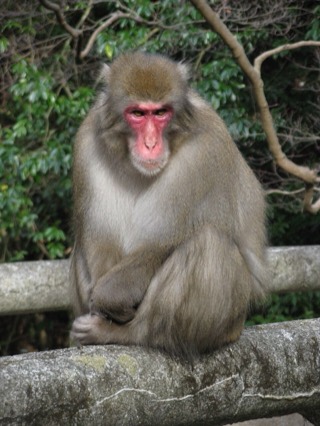 Japanese Macaque (reference photo)

Species Data
- Classification
- Primates / Cercopithecidae Source
- Size
- Males 53–60 cm, females 47–55 cm (tail 6–11 cm)
- Weight
- Males 6–18 kg, females 6–14 kg
- Lifespan
- Wild: mostly under 25 years / provisioned troops include individuals over 30
- Diet
- Omnivore Omnivorous, feeding mainly on fruit as well as leaves, flowers, seeds, mushrooms, eggs, and insects; 192 food items have been recorded at Arashiyama in Kyoto
- Activity
- Diurnal; in snowy regions it curtails activity even by day during blizzards
- Distribution
- Found on Honshu, Shikoku, Kyushu, and surrounding islands, with the Shimokita Peninsula population representing the northernmost- and coldest-living non-human primate in the world. Source
- Sources
- ja.wikipedia.org en.wikipedia.org
Did You Know?
- On Koshima Island, a female named Imo began washing sweet potatoes in seawater, a behavior that spread through her troop across generations—a famous example of animal culture. Source
- Famous for bathing in hot springs during winter, troops also show regional vocal 'accents' that differ from one population to another. Source
Where to See This Species
Operating facilities registered on this site: Japan 23
Adventure WorldWakayamaOpened in 1978
Asahiyama ZooHokkaidoOpened in 1967
Utsunomiya DoubutsuenTochigiAbout 5 minutes from the Utsunomiya IC on the Tohoku Expressway; free parking for 1,000 cars.
Yokohama Shiritsu Yokohama DoubutsuenKanagawaOpened in 1999
Okazakishihigashi Kouen DoubutsuenAichiAbout 1 km toward Toyota from the Okazaki IC on the Tomei Expressway.
Iwate SafariParkIwateAbout 45 minutes from the Ichinoseki IC, about 30 minutes from the Wakayanagi-Kannari IC, or about 25 minutes via National Route 284.
Kiryuugaoka DoubutsuenGunmaIf driving, set your car navigation to "Kiryugaoka Amusement Park" (Kiryugaoka Yuenchi) rather than "Kiryugaoka Zoo" to reach the parking lot (searching by the zoo name may give an incorrect route).
Takasakiyamashizen DoubutsuenOitaOpened in 1953
Noichi Zoological Park of Kochi PrefectureKochiA 20-minute walk or 13-minute rental-bicycle ride from Noichi Station on the Tosa Kuroshio Railway Gomen-Nahari Line.
Sapporoshimaruyama DoubutsuenHokkaidoOpened in 1951
Ichikawashi DoushokubutsuenChibaAddress: 284-1 Omachi, Ichikawa, Chiba.
Hirakawa ZooKagoshimaAbout a 20-minute walk from Goino Station on the JR Ibusuki-Makurazaki Line, or take a bus bound for Taniyama / Dobutsuen from Fukuhira Nokyo-mae to the last stop.
Suzaka ZooNaganoFrom the Suzaka-Nagano-Higashi IC on the Joshin-etsu Expressway, take Route 403, turn right at the Kotaka-machi intersection, turn left at the Kami-Hatcho intersection, cross Garyu Bridge, and turn left for the south entrance.
Moriokashi Doubutsu KouenIwateOpened in 1989
Chiba Zoological ParkChibaOpened in 1985
Naganoshichausuyama DoubutsuenNaganoThe nearest station is JR Shinonoi Station.
Hitachishikamine DoubutsuenIbarakiAbout 5 minutes from the Hitachi-Chuo Interchange on the Joban Expressway via National Route 6.
Iida Shiritsu DoubutsuenNaganoAddress: 33 Ogimachi, Iida, Nagano.
Hamamatsu Zoological GardensShizuokaOpened in 1950
Toyamashifamiri ParkToyamaOpened in 1984
Fukuoka Zoo & Botanical GardenFukuokaOpened in 1953
Fukuyama Shiritsu DoubutsuenHiroshimaThere is no public transportation; access is by car.
Former facilities
North Safari SapporoHokkaidoOpened in 2005
Closed: 2025-09-30 Official Site
- フルーツ入りの氷を作って #ニホンザル にあげました。
- いっぱいお水飲んでえらいね🐵 #池田動物園 #岡山 #ニホンザル
- ヤクシマザル♀ノノハナ×シラカシの葉#ニホンザル #ヤクシマザル #japanmonkeycentre #日本モンキーセンター #monkey
- 【東山動植物園公式】知れば知るほど(3)《 ホンドザル サル ニホンザル 》
- #ニホンザル にマンゴーを入れた氷を与えました。
- 【東山動植物園公式】知れば知るほど(2)《 ホンドザル サル ニホンザル 》
Source links to official sites, official YouTube channels, and news aggregators such as Zoo Ring. Visit the publisher for the full item.
Conservation Story
Conservation Status
Least Concern (LC)
Sources
Support Conservation
A visit is a small, positive way to support the daily lives of the animals you care about.
- Visit
- A visit itself helps support the facility.
- Animal Supporter Programs & Giving
- Find ways to support the facility through its official website.
- Furusato Nozei
- Municipally run facilities may share official guidance for this Japanese hometown-tax program.
- Support Adventure World
- Support Asahiyama Zoo
- Support Utsunomiya Doubutsuen
- Support Yokohama Shiritsu Yokohama Doubutsuen
- Support Okazakishihigashi Kouen Doubutsuen
- Support Iwate SafariPark
- Support Kiryuugaoka Doubutsuen
- Support Takasakiyamashizen Doubutsuen
- Support Noichi Zoological Park of Kochi Prefecture
- Support Sapporoshimaruyama Doubutsuen
- Support Ichikawashi Doushokubutsuen
- Support Hirakawa Zoo
- Support Suzaka Zoo
- Support Moriokashi Doubutsu Kouen
- Support Chiba Zoological Park
- Support Naganoshichausuyama Doubutsuen
- Support Ueno Zoo
- Support Hitachishikamine Doubutsuen
- Support Iida Shiritsu Doubutsuen
- Support Hamamatsu Zoological Gardens
- Support Toyamashifamiri Park
- Support Fukuoka Zoo & Botanical Garden
- Support Fukuyama Shiritsu Doubutsuen
FAQ
- Why is the Japanese macaque famous for hot springs?
- Populations in Japan's snowy regions, such as those at Jigokudani, are known for bathing in natural hot springs during winter to stay warm. Source
- What is the potato-washing behavior?
- On Koshima Island, a female named Imo began washing sweet potatoes in seawater before eating them, and the behavior spread through her troop over generations, becoming a landmark example of animal culture. Source
- How many operating facilities are registered here?
- Operating facilities registered on this site: Japan 23 Source
Books & gear
Source: ja.wikipedia.org en.wikipedia.org