Meerkatミーアキャット
Suricata suricattaLC— Least Concern
The meerkat is a small, highly social mongoose native to the arid grasslands of southern Africa, living in cooperative groups where only the dominant pair typically breeds. Famous for its upright, sun-facing sentinel posture, it forages by day for insects and other small prey while other group members stand guard against predators. It is common and classified as Least Concern by the IUCN.
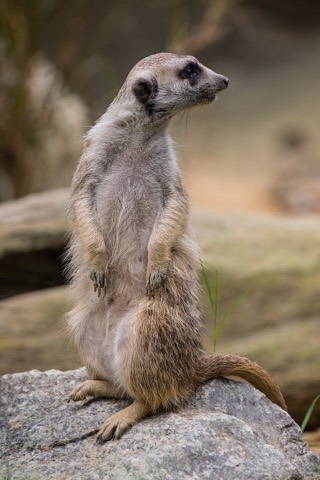 Meerkat (reference photo)

Species Data
- Classification
- Carnivora / Herpestidae Source
- Size
- Body length 24–35 cm
- Weight
- Males 626–797 g, females 620–969 g
- Lifespan
- Wild: 5–15 years / captive: record of 20.6 years
- Diet
- Insectivore Insectivorous, feeding mainly on beetles and moth and butterfly larvae; also eats amphibians, small birds, reptiles, and plants
- Activity
- Diurnal, with activity peaks in early morning and evening
- Distribution
- Found in southwestern Botswana, western and southern Namibia, and northern and western South Africa, with a marginal range into southwestern Angola. Source
- Sources
- ja.wikipedia.org en.wikipedia.org
Did You Know?
- Only the dominant male and female in a group typically breed, while subordinate members act as helpers, babysitting and even nursing the pups. Source
- Meerkats often stand upright facing the sun, propped on their tails — a posture that combines sentinel duty with thermoregulation. Source
- Their burrow systems have two to three levels of tunnels that maintain a comfortable microclimate away from the extreme surface heat. Source
Where to See This Species
Operating facilities registered on this site: Japan 21
Adventure WorldWakayamaOpened in 1978
Ishikawa DoubutsuenIshikawaAbout 60 minutes from the Kanazawa-Morimoto Interchange on the Hokuriku Expressway, about 40 minutes from the Kanazawa-Nishi Interchange, and about 20 minutes from the Komatsu Interchange.
Tokushima ZooTokushima
Izu Shaboten ZooShizuokaOpened in 1959
Utsunomiya DoubutsuenTochigiAbout 5 minutes from the Utsunomiya IC on the Tohoku Expressway; free parking for 1,000 cars.
Yokohama Shiritsu Yokohama DoubutsuenKanagawaOpened in 1999
Okazakishihigashi Kouen DoubutsuenAichiAbout 1 km toward Toyota from the Okazaki IC on the Tomei Expressway.
Kyoto City ZooKyotoOpened in 1903
Kiryuugaoka DoubutsuenGunmaIf driving, set your car navigation to "Kiryugaoka Amusement Park" (Kiryugaoka Yuenchi) rather than "Kiryugaoka Zoo" to reach the parking lot (searching by the zoo name may give an incorrect route).
Noichi Zoological Park of Kochi PrefectureKochiA 20-minute walk or 13-minute rental-bicycle ride from Noichi Station on the Tosa Kuroshio Railway Gomen-Nahari Line.
Saitamakenkodomodoubutsu Shizen KouenSaitamaOpened in 1980
Sapporoshimaruyama DoubutsuenHokkaidoOpened in 1951
Hirakawa ZooKagoshimaAbout a 20-minute walk from Goino Station on the JR Ibusuki-Makurazaki Line, or take a bus bound for Taniyama / Dobutsuen from Fukuhira Nokyo-mae to the last stop.
Chiba Zoological ParkChibaOpened in 1985
TOBU ZOOSaitamaFrom Tobu-Dobutsu-Koen Station (west exit), about 10 minutes on foot (600 m) or about 5 minutes by bus.
Iida Shiritsu DoubutsuenNaganoAddress: 33 Ogimachi, Iida, Nagano.
Himeji Shiritsu DoubutsuenHyogoOpened in 1951
Hamamatsu Zoological GardensShizuokaOpened in 1950
Fuji Safari ParkShizuokaOpened in 1980
Toyamashifamiri ParkToyamaOpened in 1984
Former facilities
North Safari SapporoHokkaidoOpened in 2005
Closed: 2025-09-30 Official Site
- 道草食っとるな🤣 #池田動物園 #岡山 #ミーアキャット
- 顔を砂だらけにして #ミーアキャット が餌を探しています。
- #ミーアキャット のケージトレーニング、継続中です!
- なにかおるかな? #池田動物園 #岡山 #ミーアキャット
- ミーアキャットにアイスをプレゼントしました!(ご報告)
- 7月25日(土)からミーアキャット「ウコン」の展示を開始します!
Source links to official sites, official YouTube channels, and news aggregators such as Zoo Ring. Visit the publisher for the full item.
Conservation Story
Conservation Status
Least Concern (LC)
Sources
Support Conservation
A visit is a small, positive way to support the daily lives of the animals you care about.
- Visit
- A visit itself helps support the facility.
- Animal Supporter Programs & Giving
- Find ways to support the facility through its official website.
- Furusato Nozei
- Municipally run facilities may share official guidance for this Japanese hometown-tax program.
- Support Adventure World
- Support Ishikawa Doubutsuen
- Support Tokushima Zoo
- Support Izu Shaboten Zoo
- Support Utsunomiya Doubutsuen
- Support Yokohama Shiritsu Yokohama Doubutsuen
- Support Okazakishihigashi Kouen Doubutsuen
- Support Kyoto City Zoo
- Support Kiryuugaoka Doubutsuen
- Support Noichi Zoological Park of Kochi Prefecture
- Support Saitamakenkodomodoubutsu Shizen Kouen
- Support Sapporoshimaruyama Doubutsuen
- Support Hirakawa Zoo
- Support Chiba Zoological Park
- Support Ueno Zoo
- Support TOBU ZOO
- Support Iida Shiritsu Doubutsuen
- Support Himeji Shiritsu Doubutsuen
- Support Hamamatsu Zoological Gardens
- Support Fuji Safari Park
- Support Toyamashifamiri Park
FAQ
- Why do meerkats stand up on their hind legs?
- Standing upright, propped on the tail, lets meerkats scan for predators as sentinels while also warming themselves in the sun. Source
- Do all meerkats in a group have pups?
- No. Typically only the dominant male and female breed, while other group members help raise the pups by babysitting, guarding, and even nursing. Source
- What do meerkats eat?
- They are mainly insectivorous, feeding heavily on beetles and moth larvae, and also eat small reptiles, amphibians, birds, and some plant matter. Source
- How many operating facilities are registered here?
- Operating facilities registered on this site: Japan 21 Source
Books & gear
Source: ja.wikipedia.org en.wikipedia.org