Guinea Pigモルモット
Cavia porcellusNE— Not Evaluated
The guinea pig (Cavia porcellus) is a domesticated rodent originally from the Andes of South America, where it was raised for food as early as 5000 BC before spreading to Europe in the 1500s. A social, herbivorous animal, it cannot synthesize vitamin C and must obtain it from food, much like humans. It is now kept worldwide both as a beloved pet and in scientific research.
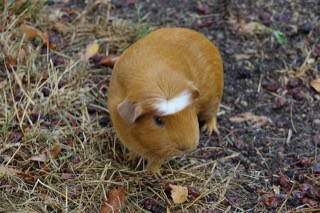 Guinea Pig (reference photo)
_(2).jpg)
Species Data
- Classification
- Rodentia / Caviidae Source
- Size
- About 20–25 cm
- Weight
- 700–1,200 g (livestock breeds up to 3 kg)
- Lifespan
- Average 4–5 years, up to about 8 years (record 14 years 10 months)
- Diet
- Herbivore Herbivorous, with hay as the staple; also eats wild greens, vegetables, and fruit. Cannot synthesize vitamin C and must obtain it from food
- Activity
- Crepuscular
- Distribution
- Originated in the Andean region of South America (southern Peru, southern Bolivia, northern Argentina, and northern Chile), where it was domesticated for food around 5000 BC; it was introduced to Europe in the early 1500s. Source
- Sources
- en.wikipedia.org ja.wikipedia.org
Did You Know?
- Like humans, guinea pigs cannot synthesize their own vitamin C, a rare trait among rodents that has made them valuable in medical research since the 17th century. Source
- It communicates through a rich vocal repertoire including a distinctive 'wheek' call and is highly social, thriving in pairs or groups. Source
Where to See This Species
Operating facilities registered on this site: Japan 24
Ishikawa DoubutsuenIshikawaAbout 60 minutes from the Kanazawa-Morimoto Interchange on the Hokuriku Expressway, about 40 minutes from the Kanazawa-Nishi Interchange, and about 20 minutes from the Komatsu Interchange.
Gokatsuraike Animal ParkMieAbout 10 minutes from the Seiwa-Taki Interchange.
Wan Park Kouchianimaru LandKochiAddress: 6-9-1 Sanbashi-dori, Kochi (inside Wanpark Kochi).
Tobe Zoological Park of Ehime PrefectureEhimeOpened in 1988
Utsunomiya DoubutsuenTochigiAbout 5 minutes from the Utsunomiya IC on the Tohoku Expressway; free parking for 1,000 cars.
Okazakishihigashi Kouen DoubutsuenAichiAbout 1 km toward Toyota from the Okazaki IC on the Tomei Expressway.
Iwate SafariParkIwateAbout 45 minutes from the Ichinoseki IC, about 30 minutes from the Wakayanagi-Kannari IC, or about 25 minutes via National Route 284.
African safariOitaBy car, the park is about 6 km (about 7 minutes) from the Beppu-wan Smart IC.
Noichi Zoological Park of Kochi PrefectureKochiA 20-minute walk or 13-minute rental-bicycle ride from Noichi Station on the Tosa Kuroshio Railway Gomen-Nahari Line.
Saitamakenkodomodoubutsu Shizen KouenSaitamaOpened in 1980
Ichikawashi DoushokubutsuenChibaAddress: 284-1 Omachi, Ichikawa, Chiba.
KOMORO ZOONaganoAddress: 311 Cho, Komoro, Nagano Prefecture (inside Kaikoen).
Suzaka ZooNaganoFrom the Suzaka-Nagano-Higashi IC on the Joshin-etsu Expressway, take Route 403, turn right at the Kotaka-machi intersection, turn left at the Kami-Hatcho intersection, cross Garyu Bridge, and turn left for the south entrance.
Naganoshichausuyama DoubutsuenNaganoThe nearest station is JR Shinonoi Station.
Tennoji ZooOsakaOpened in 1915
TOBU ZOOSaitamaFrom Tobu-Dobutsu-Koen Station (west exit), about 10 minutes on foot (600 m) or about 5 minutes by bus.
Hitachishikamine DoubutsuenIbarakiAbout 5 minutes from the Hitachi-Chuo Interchange on the Joban Expressway via National Route 6.
Iida Shiritsu DoubutsuenNaganoAddress: 33 Ogimachi, Iida, Nagano.
Himeji Shiritsu DoubutsuenHyogoOpened in 1951
Hamamatsu Zoological GardensShizuokaOpened in 1950
Fuji Safari ParkShizuokaOpened in 1980
Higashiyama Zoo and Botanical GardensAichiOpened in 1937
Nomaumahai LandEhimeBy train, about 40 minutes (about 30 minutes by limited express) from Matsuyama Station or Niihama Station to Imabari Station, then about 10 minutes by car.
Former facilities
North Safari SapporoHokkaidoOpened in 2005
Closed: 2025-09-30 Official Site
Temporarily closed facilities
Satsukiyama DAYZOOOsakaOpened in 1957
Temporarily closed Official Site
Temporarily closed Official Site
- 10月から午後の「ウサギとモルモットのふれあい」を屋外のふれあいランドで実施します
- ニュースフラッシュ 2026年9月28日号
- 【総勢28頭】モルモットの早食い王決定戦!トーナメントを制する最強の食いしん坊は誰だ!?
- PUIPUI橋 #モルモット #guineapig
- ニュースフラッシュ 2026年8月31日号
- とんがりの水飲み #モルモット #guineapig
Source links to official sites, official YouTube channels, and news aggregators such as Zoo Ring. Visit the publisher for the full item.
Conservation Story
Conservation Status
Not Evaluated (NE)
Sources
Support Conservation
A visit is a small, positive way to support the daily lives of the animals you care about.
- Visit
- A visit itself helps support the facility.
- Animal Supporter Programs & Giving
- Find ways to support the facility through its official website.
- Furusato Nozei
- Municipally run facilities may share official guidance for this Japanese hometown-tax program.
- Support Ishikawa Doubutsuen
- Support Gokatsuraike Animal Park
- Support Wan Park Kouchianimaru Land
- Support Tobe Zoological Park of Ehime Prefecture
- Support Utsunomiya Doubutsuen
- Support Okazakishihigashi Kouen Doubutsuen
- Support Iwate SafariPark
- Support African safari
- Support Noichi Zoological Park of Kochi Prefecture
- Support Saitamakenkodomodoubutsu Shizen Kouen
- Support Ichikawashi Doushokubutsuen
- Support KOMORO ZOO
- Support Suzaka Zoo
- Support Naganoshichausuyama Doubutsuen
- Support Tennoji Zoo
- Support Ueno Zoo
- Support TOBU ZOO
- Support Hitachishikamine Doubutsuen
- Support Iida Shiritsu Doubutsuen
- Support Himeji Shiritsu Doubutsuen
- Support Hamamatsu Zoological Gardens
- Support Fuji Safari Park
- Support Higashiyama Zoo and Botanical Gardens
- Support Nomaumahai Land
FAQ
- Where do guinea pigs come from?
- They were domesticated from wild cavies in the Andes of South America around 5000 BC for food, later spreading to Europe in the early 1500s. Source
- Why do guinea pigs need vitamin C in their diet?
- Like humans, guinea pigs cannot synthesize vitamin C internally, so they must get it from fresh vegetables or fortified food. Source
- How many operating facilities are registered here?
- Operating facilities registered on this site: Japan 24 Source
Books & gear
Source: ja.wikipedia.org en.wikipedia.org