Reticulated Giraffeアミメキリン

Giraffa reticulataEN— Endangered

The reticulated giraffe is a giraffe species native to northern and northeastern Kenya, easily recognized by its bold, polygonal orange-brown patches outlined by thin white lines. Long treated as a subspecies, it was formally recognized as a distinct species by the IUCN in August 2025. Its wild population has declined by more than 40% over 35 years to roughly 20,900 individuals, and it is now classified as Endangered.
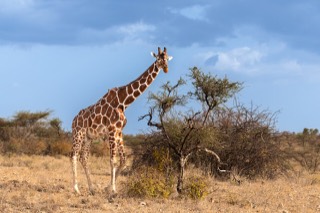
Reticulated Giraffe (reference photo)
Photo: Payamfarahani / CC BY-SA 4.0 / Source / cropped

Species Data

Classification
Artiodactyla / Giraffidae Source
Distribution
Primarily found in northern and northeastern Kenya, with populations concentrated around Samburu National Reserve, Meru National Park, and the area north of Mount Kenya. Small populations may also persist in southern Somalia and Ethiopia. Source

Did You Know?

  • Reticulated giraffes are identified by their large, polygonal, block-like orange-brown patches, sharply outlined by a network of thin white lines—much less white than in other giraffe coat patterns. Source
  • In August 2025, the IUCN officially recognized the reticulated giraffe as a distinct species rather than a subspecies of the giraffe. Source
  • The wild population has fallen by more than 40%, from an estimated 36,000 individuals 35 years ago to about 20,900 today, and over 95% of its range lies outside government-managed protected areas. Source

Where to See This Species

41 facilities · 1 individuals

群馬サファリパーク (Gunmasafari Park)GunmaOpened in 1979

No.0145In residence

Suzumaru

スズマル

Reticulated GiraffeGiraffa reticulata

Sex
Male
Born
May 16, 2025
EN— Endangered

アドベンチャーワールド (Adobencha World)WakayamaOpened in 1978

アドベンチャーワールドのWikipedia記事に飼育種として記載 Source

いしかわ動物園 (Ishikawa Doubutsuen)Ishikawa

いしかわ動物園のWikipedia記事に飼育種として記載 Source

とくしま動物園 (Tokushima Doubutsuen)Tokushima

とくしま動物園のWikipedia記事に飼育種として記載 Source

ノースサファリサッポロ (Nosusafarisapporo)Hokkaido

ノースサファリサッポロのWikipedia記事に飼育種として記載 Source

愛媛県立とべ動物園 (Ehime Kenritsu Tobe Doubutsuen)EhimeOpened in 1988

愛媛県立とべ動物園のWikipedia記事に飼育種として記載 Source

伊豆シャボテン動物公園 (Izushaboten Doubutsu Kouen)ShizuokaOpened in 1959

伊豆シャボテン動物公園のWikipedia記事に飼育種として記載 Source

宇都宮動物園 (Utsunomiya Doubutsuen)Tochigi東北自動車道 宇都宮ICから約5分、駐車場は乗用車1,000台分が無料。

宇都宮動物園のWikipedia記事に飼育種として記載 Source

横浜市立よこはま動物園 (Yokohama Shiritsu Yokohama Doubutsuen)KanagawaOpened in 1999

横浜市立よこはま動物園のWikipedia記事に飼育種として記載 Source

横浜市立野毛山動物園 (Yokohama Shiritsu Nogeyama Doubutsuen)KanagawaOpened in 1951

横浜市立野毛山動物園のWikipedia記事に飼育種として記載 Source

岩手サファリパーク (Iwatesafari Park)Iwate一関ICから約45分、若柳金成ICから約30分、国道284号経由で約25分。

岩手サファリパークのWikipedia記事に飼育種として記載 Source

京都市動物園 (Kyoutoshi Doubutsuen)KyotoOpened in 1903

京都市動物園のWikipedia記事に飼育種として記載 Source

桐生が岡動物園 (Kiryuugaoka Doubutsuen)Gunma自動車の場合、カーナビ検索は「桐生が岡動物園」ではなく「桐生が岡遊園地」で設定すると駐車場に到着できる(動物園名で検索すると誤った経路になる場合がある)。

桐生が岡動物園のWikipedia記事に飼育種として記載 Source

広島市安佐動物公園 (Hiroshimashiasa Doubutsu Kouen)Hiroshima

広島市安佐動物公園のWikipedia記事に飼育種として記載 Source

高知県立のいち動物公園 (Kouchi Kenritsu Noichi Doubutsu Kouen)Kochi土佐くろしお鉄道ごめん・なはり線「のいち駅」から徒歩20分またはレンタサイクル13分。

高知県立のいち動物公園のWikipedia記事に飼育種として記載 Source

埼玉県こども動物自然公園 (Saitamakenkodomodoubutsu Shizen Kouen)SaitamaOpened in 1980

埼玉県こども動物自然公園のWikipedia記事に飼育種として記載 Source

札幌市円山動物園 (Sapporoshimaruyama Doubutsuen)HokkaidoOpened in 1951

札幌市円山動物園のWikipedia記事に飼育種として記載 Source

Hirakawa ZooKagoshimaJR指宿枕崎線「五位野駅」から徒歩約20分、またはバスで「福平農協前」から「谷山・動物園行き」に乗車し終点下車。

鹿児島市平川動物公園のWikipedia記事に飼育種として記載 Source

周南市徳山動物園 (Shuunanshitokuyama Doubutsuen)YamaguchiOpened in 1960

周南市徳山動物園のWikipedia記事に飼育種として記載 Source

秋田市大森山動物園 (Akitashioomoriyama Doubutsuen)AkitaJR秋田駅前バスターミナル西口7番線から秋田中央交通「新屋線」で約30分。

秋田市大森山動物園のWikipedia記事に飼育種として記載 Source

神戸市立王子動物園 (Koube Shiritsu Ouji Doubutsuen)Hyogo阪急「王子公園」駅から西へ徒歩3分。

神戸市立王子動物園のWikipedia記事に飼育種として記載 Source

西海国立公園九十九島動植物園 (Saikaikokuritsu Kouen Kujuukushima Doushokubutsuen)NagasakiOpened in 1961

西海国立公園九十九島動植物園のWikipedia記事に飼育種として記載 Source

千葉市動物公園 (Chibashi Doubutsu Kouen)ChibaOpened in 1985

千葉市動物公園のWikipedia記事に飼育種として記載 Source

Omuta City ZooFukuokaOpened in 1941

大牟田市動物園のWikipedia記事に飼育種として記載 Source

池田動物園 (Ikeda Doubutsuen)OkayamaJR岡山駅西口から岡電バス「中央病院行き」で「京山入口」下車、徒歩約12分。

池田動物園のWikipedia記事に飼育種として記載 Source

Nagasaki Bio ParkNagasakiOpened in 1980

長崎バイオパークのWikipedia記事に飼育種として記載 Source

長野市茶臼山動物園 (Naganoshichausuyama Doubutsuen)NaganoJR篠ノ井駅が最寄り駅。

長野市茶臼山動物園のWikipedia記事に飼育種として記載 Source

Tennoji ZooOsakaOpened in 1915

天王寺動物園のWikipedia記事に飼育種として記載 Source

東京都恩賜上野動物園 (Toukyoutoonshiueno Doubutsuen)TokyoOpened in 1882

東京都恩賜上野動物園のWikipedia記事に飼育種として記載 Source

東武動物公園 (Toubu Doubutsu Kouen)Saitama東武動物公園駅(西口)下車、徒歩10分(600m)またはバス約5分。

東武動物公園のWikipedia記事に飼育種として記載 Source

那須サファリパーク (Nasusafari Park)Tochigi東北自動車道「那須IC」から約15分、「黒磯板室IC」から約25分。

那須サファリパークのWikipedia記事に飼育種として記載 Source

日立市かみね動物園 (Hitachishikamine Doubutsuen)Ibaraki常磐自動車道 日立中央ICから国道6号経由で約5分。

日立市かみね動物園のWikipedia記事に飼育種として記載 Source

姫路市立動物園 (Himeji Shiritsu Doubutsuen)HyogoOpened in 1951

姫路市立動物園のWikipedia記事に飼育種として記載 Source

浜松市動物園 (Hamamatsushi Doubutsuen)ShizuokaOpened in 1950

浜松市動物園のWikipedia記事に飼育種として記載 Source

富山市ファミリーパーク (Toyamashifamiri Park)ToyamaOpened in 1984

富山市ファミリーパークのWikipedia記事に飼育種として記載 Source

富士自然動物公園 (Fujishizen Doubutsu Kouen)ShizuokaOpened in 1980

富士自然動物公園のWikipedia記事に飼育種として記載 Source

福岡市動物園 (Fukuokashi Doubutsuen)FukuokaOpened in 1953

福岡市動物園のWikipedia記事に飼育種として記載 Source

福山市立動物園 (Fukuyama Shiritsu Doubutsuen)Hiroshima公共交通機関はなく車でのアクセスが必要。

福山市立動物園のWikipedia記事に飼育種として記載 Source

宝塚ファミリーランド (Takarazukafamiri Land)Hyogo

宝塚ファミリーランドのWikipedia記事に飼育種として記載 Source

Higashiyama Zoo and Botanical GardensAichiOpened in 1937

名古屋市東山動物園のWikipedia記事に飼育種として記載 Source

東京都多摩動物公園 (Toukyoutotama Doubutsu Kouen)TokyoOpened in 1958

アミメキリンのWikipedia記事に飼育施設として記載 Source

Latest news

6

Open the news index

Source links to official sites, official YouTube channels, and news aggregators such as Zoo Ring. Visit the publisher for the full item.

Conservation Story

Conservation Status

IUCNではEN(絶滅危機)。野生個体群の減少が懸念されています。

Habitat

東アフリカの乾燥したサバンナ、低木地、開けた森林。

Threats

Conservation & Breeding Efforts

Sources

ja.wikipedia.org en.wikipedia.org

Support Conservation

A visit is a small, positive way to support the daily lives of the animals you care about.

Visit
A visit itself helps support the facility.
Animal Supporter Programs & Giving
Find ways to support the facility through its official website.
Furusato Nozei
Municipally run facilities may share official guidance for this Japanese hometown-tax program.

FAQ

How is the reticulated giraffe different from other giraffes?
It has large, polygonal, block-like orange-brown patches separated by a fine network of white lines, with much less white showing between patches than in other giraffe coat patterns, and it was recognized as its own species by the IUCN in August 2025. Source
Where do reticulated giraffes live?
They live mainly in northern and northeastern Kenya, especially around Samburu National Reserve, Meru National Park, and north of Mount Kenya, with small populations possibly remaining in Somalia and Ethiopia. Source
Why is the reticulated giraffe endangered?
Its wild population has dropped by more than 40% over the past 35 years, from about 36,000 to roughly 20,900 individuals, largely due to habitat loss and illegal hunting, with over 95% of its range outside formally protected areas. Source

Source: ja.wikipedia.org en.wikipedia.org