Lionライオン
Panthera leoVU— Vulnerable
The lion is Africa's largest big cat and the only wild cat that lives in stable social groups called prides. Once ranging across Africa, the Middle East, and southern Eurasia, it is now largely restricted to sub-Saharan Africa, with a single surviving Asiatic population in India's Gir Forest. African lion numbers have fallen roughly 43% since the early 1990s, and the IUCN lists the species as Vulnerable.
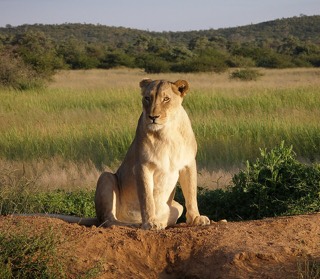 Lion (reference photo)

Species Data
- Classification
- Carnivora / Felidae Source
- Size
- Head-body length: males 184–208 cm, females 160–184 cm
- Weight
- Southern African averages: males about 186.6–225 kg, females about 118.4–143.5 kg
- Lifespan
- Wild: 12–17 years / captive: over 20 years
- Diet
- Carnivore Carnivorous, preying mainly on medium to large ungulates such as wildebeest and zebra; also scavenges carrion
- Activity
- Spends about 20 hours a day resting and becomes active from dusk into the night
- Distribution
- Today confined mainly to sub-Saharan Africa, with a single relict population of the Asiatic subspecies in India's Gir Forest; historically it ranged across Africa, the Middle East, and southern Eurasia. Source
- Sources
- ja.wikipedia.org en.wikipedia.org
Did You Know?
- The lion is the most social of all wild cats, forming prides of roughly 15 individuals built around stable groups of related females. Source
- The mane not only protects the neck in fights but also signals a male's health and testosterone levels to potential mates. Source
- Skeletal muscle makes up 58.8% of a male lion's body weight — the highest proportion recorded among mammals. Source
Where to See This Species
Operating facilities registered on this site: Japan 42
Adventure WorldWakayamaOpened in 1978
Ishikawa DoubutsuenIshikawaAbout 60 minutes from the Kanazawa-Morimoto Interchange on the Hokuriku Expressway, about 40 minutes from the Kanazawa-Nishi Interchange, and about 20 minutes from the Komatsu Interchange.
Obihiro DoubutsuenHokkaidoFrom Obihiro Station, take the Tokachi Bus (Route 70, bound for Ozora Danchi) for about 18 minutes to the Dobutsuen-mae stop, then walk about 300 m; or take the Takushoku Bus for about 16 minutes to the Midorigaoka 6-chome Hakubutsukan Iriguchi stop, then walk about 600 m.
Gokatsuraike Animal ParkMieAbout 10 minutes from the Seiwa-Taki Interchange.
Shirotori ZooKagawaBy car, about 10 minutes from the Hiketa Interchange on the Takamatsu Expressway via National Route 11 toward Takamatsu.
Tokushima ZooTokushima
Wan Park Kouchianimaru LandKochiAddress: 6-9-1 Sanbashi-dori, Kochi (inside Wanpark Kochi).
Tobe Zoological Park of Ehime PrefectureEhimeOpened in 1988
Asahiyama ZooHokkaidoOpened in 1967
Utsunomiya DoubutsuenTochigiAbout 5 minutes from the Utsunomiya IC on the Tohoku Expressway; free parking for 1,000 cars.
Yokohama Shiritsu Yokohama DoubutsuenKanagawaOpened in 1999
Yokohama Shiritsu Nogeyama DoubutsuenKanagawaOpened in 1951
Okinawa Zoo & MuseumOkinawaOpened in 1970
Iwate SafariParkIwateAbout 45 minutes from the Ichinoseki IC, about 30 minutes from the Wakayanagi-Kannari IC, or about 25 minutes via National Route 284.
Kyoto City ZooKyotoOpened in 1903
Kiryuugaoka DoubutsuenGunmaIf driving, set your car navigation to "Kiryugaoka Amusement Park" (Kiryugaoka Yuenchi) rather than "Kiryugaoka Zoo" to reach the parking lot (searching by the zoo name may give an incorrect route).
African safariOitaBy car, the park is about 6 km (about 7 minutes) from the Beppu-wan Smart IC.
Kumamotoshi DoushokubutsuenKumamotoTake the tram bound for Kengun and get off at the Doshokubutsuen-Iriguchi stop, then walk 10 minutes.
Hiroshima City Asa Zoological ParkHiroshimaFrom JR Hiroshima Station, take the Sanyo Main Line or Kabe Line to Shin-Hakushima Station, transfer to the Astram Line to Kamiyasu Station, then take a bus to "Asa Dobutsu Koen" (about 45 minutes in total).
Sapporoshimaruyama DoubutsuenHokkaidoOpened in 1951
Hirakawa ZooKagoshimaAbout a 20-minute walk from Goino Station on the JR Ibusuki-Makurazaki Line, or take a bus bound for Taniyama / Dobutsuen from Fukuhira Nokyo-mae to the last stop.
Akitashioomoriyama DoubutsuenAkitaFrom bus stop 7 at the west exit of the JR Akita Station bus terminal, take the Akita Chuo Kotsu "Araya Line" bus for about 30 minutes.
KOMORO ZOONaganoAddress: 311 Cho, Komoro, Nagano Prefecture (inside Kaikoen).
Saikaikokuritsu Kouen Kujuukushima DoushokubutsuenNagasakiOpened in 1961
Sendaishiyagiyama Doubutsu KouenMiyagiTake the Sendai Subway Tozai Line to Yagiyama Zoological Park Station; the zoo is right by the elevator from Central Exit 1 (about 12 minutes from Sendai Station).
Chiba Zoological ParkChibaOpened in 1985
Oouchiyama DoubutsuenMieAbout a 30-minute walk from Ouchiyama Station on the JR Kisei Main Line (the zoo's own directions also describe it as about 1 km).
Omuta City ZooFukuokaOpened in 1941
Naganoshichausuyama DoubutsuenNaganoThe nearest station is JR Shinonoi Station.
Tennoji ZooOsakaOpened in 1915
TOBU ZOOSaitamaFrom Tobu-Dobutsu-Koen Station (west exit), about 10 minutes on foot (600 m) or about 5 minutes by bus.
Tohoku SafariParkFukushimaAddress: 1 Sawamatsukura, Nihonmatsu, Fukushima.
Nasu SafariParkTochigiAbout 15 minutes from the Nasu IC or about 25 minutes from the Kuroiso-Itamuro IC on the Tohoku Expressway.
Himeji Shiritsu DoubutsuenHyogoOpened in 1951
Hamamatsu Zoological GardensShizuokaOpened in 1950
Fuji Safari ParkShizuokaOpened in 1980
Fukuoka Zoo & Botanical GardenFukuokaOpened in 1953
Fukuyama Shiritsu DoubutsuenHiroshimaThere is no public transportation; access is by car.
Higashiyama Zoo and Botanical GardensAichiOpened in 1937
Former facilities
North Safari SapporoHokkaidoOpened in 2005
Closed: 2025-09-30 Official Site
Temporarily closed facilities
Temporarily closed Official Site
- 百獣の王のヘソ天 #東武動物公園 #ライオン #トーゴ #ヘソ天 #zoo #動物園
- 東武のライオン若群れチーム #東武動物公園 #zoo #動物園 #かわいい #ライオン #アレ #アニモ #トーゴ #animals #癒し
- 【必殺】到津の森公園で「強打! 猫パンチ!」他 本日の注目情報セレクション
- 9月21日~23日のイベントスケジュール
- 9月5日(土)ライオンの屠体給餌を実施します
- ライオン赤ちゃんの成長記録🦁 #富士サファリパーク #動物 #animals
Source links to official sites, official YouTube channels, and news aggregators such as Zoo Ring. Visit the publisher for the full item.
Conservation Story
Conservation Status
Vulnerable (VU)
Sources
Support Conservation
A visit is a small, positive way to support the daily lives of the animals you care about.
- Visit
- A visit itself helps support the facility.
- Animal Supporter Programs & Giving
- Find ways to support the facility through its official website.
- Furusato Nozei
- Municipally run facilities may share official guidance for this Japanese hometown-tax program.
- Support Adventure World
- Support Ishikawa Doubutsuen
- Support Obihiro Doubutsuen
- Support Gokatsuraike Animal Park
- Support Shirotori Zoo
- Support Tokushima Zoo
- Support Wan Park Kouchianimaru Land
- Support Tobe Zoological Park of Ehime Prefecture
- Support Asahiyama Zoo
- Support Utsunomiya Doubutsuen
- Support Yokohama Shiritsu Yokohama Doubutsuen
- Support Yokohama Shiritsu Nogeyama Doubutsuen
- Support Okinawa Zoo & Museum
- Support Iwate SafariPark
- Support Kyoto City Zoo
- Support Kiryuugaoka Doubutsuen
- Support African safari
- Support Kumamotoshi Doushokubutsuen
- Support Hiroshima City Asa Zoological Park
- Support Sapporoshimaruyama Doubutsuen
- Support Hirakawa Zoo
- Support Akitashioomoriyama Doubutsuen
- Support KOMORO ZOO
- Support OJI ZOO
- Support Saikaikokuritsu Kouen Kujuukushima Doushokubutsuen
- Support Sendaishiyagiyama Doubutsu Kouen
- Support Chiba Zoological Park
- Support Oouchiyama Doubutsuen
- Support Omuta City Zoo
- Support Naganoshichausuyama Doubutsuen
- Support Tennoji Zoo
- Support Ueno Zoo
- Support TOBU ZOO
- Support Tohoku SafariPark
- Support Nasu SafariPark
- Support Himeji Shiritsu Doubutsuen
- Support Hamamatsu Zoological Gardens
- Support Fuji Safari Park
- Support Fukuoka Zoo & Botanical Garden
- Support Fukuyama Shiritsu Doubutsuen
- Support Higashiyama Zoo and Botanical Gardens
- Support Tama Zoo
FAQ
- Why do lions live in groups when most cats are solitary?
- Lions form prides of related females and a small number of males because cooperative hunting and cub defense improve survival on the open savanna, a strategy unique among wild cats. Source
- Are lions endangered?
- The IUCN lists the lion as Vulnerable. African populations have declined by about 43% since the early 1990s due to habitat loss and conflict with humans. Source
- Where do wild lions live today?
- Almost all wild lions now live in sub-Saharan Africa, with a single small population of the Asiatic subspecies surviving in India's Gir Forest National Park. Source
- How many operating facilities are registered here?
- Operating facilities registered on this site: Japan 42 Source
Books & gear
Source: ja.wikipedia.org en.wikipedia.org