Tigerトラ
Panthera tigrisEN— Endangered
The tiger is the largest living cat species, historically ranging across much of Asia but now confined to less than 7 percent of its former range due to habitat loss and poaching. An apex predator, it hunts mainly large ungulates such as deer and wild boar, relying on its uniquely patterned stripes for camouflage. The IUCN lists the tiger as Endangered, with populations having declined 53 to 68 percent since the late 1990s.
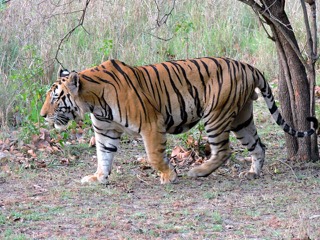 Tiger (reference photo)

Species Data
- Classification
- Carnivora / Felidae Source
- Size
- Males 189–229 cm / females 146–177 cm; tail 60–110 cm
- Weight
- Males about 90–306 kg / females about 65–167 kg
- Lifespan
- Captive: about 20–26 years
- Diet
- Carnivore Carnivorous, feeding mainly on medium to large ungulates such as deer and wild cattle; eats an average of 6–7 kg of meat a day and can consume 25 kg in a single meal
- Activity
- Mainly crepuscular, but also active at night and during the day
- Distribution
- Tigers now occupy less than 7 percent of their historical range, surviving mainly across the Indian subcontinent, the Indochinese Peninsula, Sumatra, northeastern China, and the Russian Far East. Source
- Sources
- ja.wikipedia.org en.wikipedia.org
Did You Know?
- Each tiger has a unique stripe pattern, used like a fingerprint for individual identification, which also provides effective camouflage in vertically striped vegetation. Source
- Hunting success rates are estimated to range widely from about 5 to 50 percent, meaning many hunts fail. Source
- Unlike male lions, male tigers are known to share their kills with females and cubs within their territory. Source
Where to See This Species
Operating facilities registered on this site: Japan 38
Adventure WorldWakayamaOpened in 1978
Ishikawa DoubutsuenIshikawaAbout 60 minutes from the Kanazawa-Morimoto Interchange on the Hokuriku Expressway, about 40 minutes from the Kanazawa-Nishi Interchange, and about 20 minutes from the Komatsu Interchange.
Obihiro DoubutsuenHokkaidoFrom Obihiro Station, take the Tokachi Bus (Route 70, bound for Ozora Danchi) for about 18 minutes to the Dobutsuen-mae stop, then walk about 300 m; or take the Takushoku Bus for about 16 minutes to the Midorigaoka 6-chome Hakubutsukan Iriguchi stop, then walk about 600 m.
Gokatsuraike Animal ParkMieAbout 10 minutes from the Seiwa-Taki Interchange.
Shirotori ZooKagawaBy car, about 10 minutes from the Hiketa Interchange on the Takamatsu Expressway via National Route 11 toward Takamatsu.
Wan Park Kouchianimaru LandKochiAddress: 6-9-1 Sanbashi-dori, Kochi (inside Wanpark Kochi).
Tobe Zoological Park of Ehime PrefectureEhimeOpened in 1988
Asahiyama ZooHokkaidoOpened in 1967
Utsunomiya DoubutsuenTochigiAbout 5 minutes from the Utsunomiya IC on the Tohoku Expressway; free parking for 1,000 cars.
Yokohama Shiritsu Yokohama DoubutsuenKanagawaOpened in 1999
Iwate SafariParkIwateAbout 45 minutes from the Ichinoseki IC, about 30 minutes from the Wakayanagi-Kannari IC, or about 25 minutes via National Route 284.
Kyoto City ZooKyotoOpened in 1903
African safariOitaBy car, the park is about 6 km (about 7 minutes) from the Beppu-wan Smart IC.
Kushiroshi DoubutsuenHokkaidoAbout 55 minutes from JR Kushiro Station by Akan Bus, or about 27 minutes (18 km) by car, taxi, or rental car.
Kumamotoshi DoushokubutsuenKumamotoTake the tram bound for Kengun and get off at the Doshokubutsuen-Iriguchi stop, then walk 10 minutes.
Gunmasafari ParkGunmaOpened in 1979
Sapporoshimaruyama DoubutsuenHokkaidoOpened in 1951
Hirakawa ZooKagoshimaAbout a 20-minute walk from Goino Station on the JR Ibusuki-Makurazaki Line, or take a bus bound for Taniyama / Dobutsuen from Fukuhira Nokyo-mae to the last stop.
Shuunanshitokuyama DoubutsuenYamaguchiOpened in 1960
Akitashioomoriyama DoubutsuenAkitaFrom bus stop 7 at the west exit of the JR Akita Station bus terminal, take the Akita Chuo Kotsu "Araya Line" bus for about 30 minutes.
Suzaka ZooNaganoFrom the Suzaka-Nagano-Higashi IC on the Joshin-etsu Expressway, take Route 403, turn right at the Kotaka-machi intersection, turn left at the Kami-Hatcho intersection, cross Garyu Bridge, and turn left for the south entrance.
Sendaishiyagiyama Doubutsu KouenMiyagiTake the Sendai Subway Tozai Line to Yagiyama Zoological Park Station; the zoo is right by the elevator from Central Exit 1 (about 12 minutes from Sendai Station).
Oouchiyama DoubutsuenMieAbout a 30-minute walk from Ouchiyama Station on the JR Kisei Main Line (the zoo's own directions also describe it as about 1 km).
Omuta City ZooFukuokaOpened in 1941
IKEDA ZOOOkayamaFrom the West Exit of JR Okayama Station, take an Okaden Bus bound for Chuo Byoin (Central Hospital) to the Kyoyama Iriguchi stop, then walk about 12 minutes.
Naganoshichausuyama DoubutsuenNaganoThe nearest station is JR Shinonoi Station.
Tennoji ZooOsakaOpened in 1915
Tohoku SafariParkFukushimaAddress: 1 Sawamatsukura, Nihonmatsu, Fukushima.
Nasu SafariParkTochigiAbout 15 minutes from the Nasu IC or about 25 minutes from the Kuroiso-Itamuro IC on the Tohoku Expressway.
Himeji Shiritsu DoubutsuenHyogoOpened in 1951
Hamamatsu Zoological GardensShizuokaOpened in 1950
Toyamashifamiri ParkToyamaOpened in 1984
Fuji Safari ParkShizuokaOpened in 1980
Fukuoka Zoo & Botanical GardenFukuokaOpened in 1953
Fukuyama Shiritsu DoubutsuenHiroshimaThere is no public transportation; access is by car.
Higashiyama Zoo and Botanical GardensAichiOpened in 1937
Former facilities
North Safari SapporoHokkaidoOpened in 2005
Closed: 2025-09-30 Official Site
- 快適な睡眠にはちょうどいい枕を #東武動物公園 #ホワイトタイガー #ベンガルトラ #コタ #zoo #動物園
- 【東山動植物園公式】アロナ本気で遊ぶ《 スマトラトラ トラ 》 #short
- 人間は隠れているつもりでも、アムールトラには丸見えです。
- のんびりソルティ #東武動物公園 #ホワイトタイガー #ベンガルトラ #ソルティ #動物 #zoo #動物園
- スマトラトラ「バユ」20歳の誕生日
- ホワイトタイガー・コタくんと… #東武動物公園 #ホワイトタイガー #ベンガルトラ #コタ #ハク #動物 #zoo #動物園
Source links to official sites, official YouTube channels, and news aggregators such as Zoo Ring. Visit the publisher for the full item.
Conservation Story
Conservation Status
Endangered (EN)
Sources
Support Conservation
A visit is a small, positive way to support the daily lives of the animals you care about.
- Visit
- A visit itself helps support the facility.
- Animal Supporter Programs & Giving
- Find ways to support the facility through its official website.
- Furusato Nozei
- Municipally run facilities may share official guidance for this Japanese hometown-tax program.
- Support Adventure World
- Support Ishikawa Doubutsuen
- Support Obihiro Doubutsuen
- Support Gokatsuraike Animal Park
- Support Shirotori Zoo
- Support Wan Park Kouchianimaru Land
- Support Tobe Zoological Park of Ehime Prefecture
- Support Asahiyama Zoo
- Support Utsunomiya Doubutsuen
- Support Yokohama Shiritsu Yokohama Doubutsuen
- Support Iwate SafariPark
- Support Kyoto City Zoo
- Support African safari
- Support Kushiroshi Doubutsuen
- Support Kumamotoshi Doushokubutsuen
- Support Gunmasafari Park
- Support Sapporoshimaruyama Doubutsuen
- Support Hirakawa Zoo
- Support Shuunanshitokuyama Doubutsuen
- Support Akitashioomoriyama Doubutsuen
- Support OJI ZOO
- Support Suzaka Zoo
- Support Sendaishiyagiyama Doubutsu Kouen
- Support Oouchiyama Doubutsuen
- Support Omuta City Zoo
- Support IKEDA ZOO
- Support Naganoshichausuyama Doubutsuen
- Support Tennoji Zoo
- Support Ueno Zoo
- Support Tohoku SafariPark
- Support Nasu SafariPark
- Support Himeji Shiritsu Doubutsuen
- Support Hamamatsu Zoological Gardens
- Support Toyamashifamiri Park
- Support Fuji Safari Park
- Support Fukuoka Zoo & Botanical Garden
- Support Fukuyama Shiritsu Doubutsuen
- Support Higashiyama Zoo and Botanical Gardens
FAQ
- Why are tigers endangered?
- Tiger populations have declined sharply due to habitat destruction, poaching for body parts, and conflict with humans, and they now occupy less than 7 percent of their historical range. Source
- What do tigers eat?
- Tigers are carnivores that primarily hunt large and medium-sized hoofed mammals such as deer, wild boar, and gaur, eating an average of 6 to 7 kg of meat per day. Source
- Are a tiger's stripes unique to each individual?
- Yes, each tiger has a distinct stripe pattern, much like a human fingerprint, which researchers can use to identify individuals. Source
- How many operating facilities are registered here?
- Operating facilities registered on this site: Japan 38 Source
Books & gear
Source: ja.wikipedia.org en.wikipedia.org